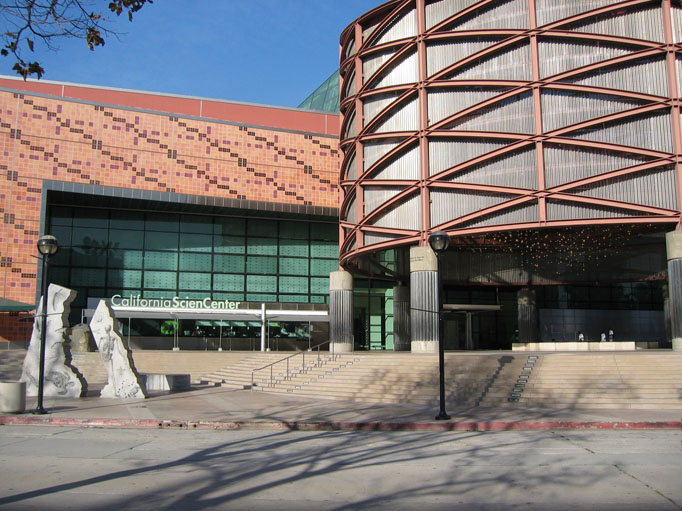
The California Science Center is a state-funded educational institution located in Exposition Park, Los Angeles. Originally established as the California Museum of Science and Industry in 1951, it underwent a major transformation in the late 1990s to become a premier center for scientific learning, featuring interactive galleries, an IMAX theater, and extensive aerospace collections.
The facility is best known for housing the Space Shuttle Endeavour, which serves as the centerpiece of the Samuel Oschin Pavilion. The museum emphasizes hands-on engagement through its permanent exhibits, which cover topics ranging from ecosystems and human biology to physical science and engineering, serving as a significant hub for STEM education in Southern California.
Key Facts
- Materials
- Steel, Glass, Concrete
- Civilization
- United States
- Accessibility
- Fully wheelchair accessible
- Date(s)
- 1951 (reopened 1998)
- Condition
- Active, undergoing expansion
- Original Function
- Museum of Science and Industry
- Key Figures
- Governor Pete Wilson
Establishment
1951The site was originally opened as the California Museum of Science and Industry, replacing the older California State Exposition Building in Exposition Park.
Transformation
1990sIn the 1990s, the museum underwent a massive master-planned renovation, rebranding as the California Science Center and focusing on interactive, inquiry-based learning environments.
Space Shuttle Endeavour Arrival
2012The Space Shuttle Endeavour was retired from NASA service and transported to the California Science Center, where it was placed on public display in the Samuel Oschin Pavilion.
Cultural Significance
The California Science Center serves as a vital cultural and educational anchor in Los Angeles. It plays a central role in regional STEM outreach, providing free general admission to the public and hosting thousands of students annually for educational programming. The presence of the Space Shuttle Endeavour has elevated the institution's status as a major destination for aerospace history enthusiasts.
Interpretive Notes
Scholarly debates and areas of uncertainty
Discussions regarding the museum often center on the challenges of balancing the preservation of large-scale artifacts like the Space Shuttle with the need for interactive, high-turnover exhibits that remain relevant to contemporary scientific advancements.
Visiting Information
Entry Rules
General admission is free, though reservations are recommended. Special exhibitions and IMAX screenings require paid tickets. The museum is open daily from 10:00 AM to 5:00 PM.
Best Times to Visit
Weekday mornings are best to avoid school group crowds and weekend peak attendance.
Photography
Personal photography is permitted throughout the galleries. Flash photography is generally allowed, though specific temporary exhibits may have restrictions.
Preservation Notes
Visitors are asked not to touch artifacts unless explicitly marked as interactive. Food and drink are restricted to designated areas.
Nearby POIs
11 shown- Natural History Museum of Los Angeles County0.3 km
- Grammy Museum3.8 km
- The Broad5.4 km
- Japanese American National Museum5.8 km
- George C. Page Museum8.3 km
- La Brea Tar Pits8.3 km
- Petersen Automotive Museum8.6 km
- Los Angeles County Museum of Art8.6 km
- Academy Museum of Motion Pictures8.7 km
- Watts Towers Arts Center9.4 km
- Hollywood Museum10.6 km
Key Facts
- Materials
- Steel, Glass, Concrete
- Civilization
- United States
- Accessibility
- Fully wheelchair accessible
- Date(s)
- 1951 (reopened 1998)
- Condition
- Active, undergoing expansion
- Original Function
- Museum of Science and Industry
- Key Figures
- Governor Pete Wilson
Nearby POIs
11 shown- Natural History Museum of Los Angeles County0.3 km
- Grammy Museum3.8 km
- The Broad5.4 km
- Japanese American National Museum5.8 km
- George C. Page Museum8.3 km
- La Brea Tar Pits8.3 km
- Petersen Automotive Museum8.6 km
- Los Angeles County Museum of Art8.6 km
- Academy Museum of Motion Pictures8.7 km
- Watts Towers Arts Center9.4 km
- Hollywood Museum10.6 km