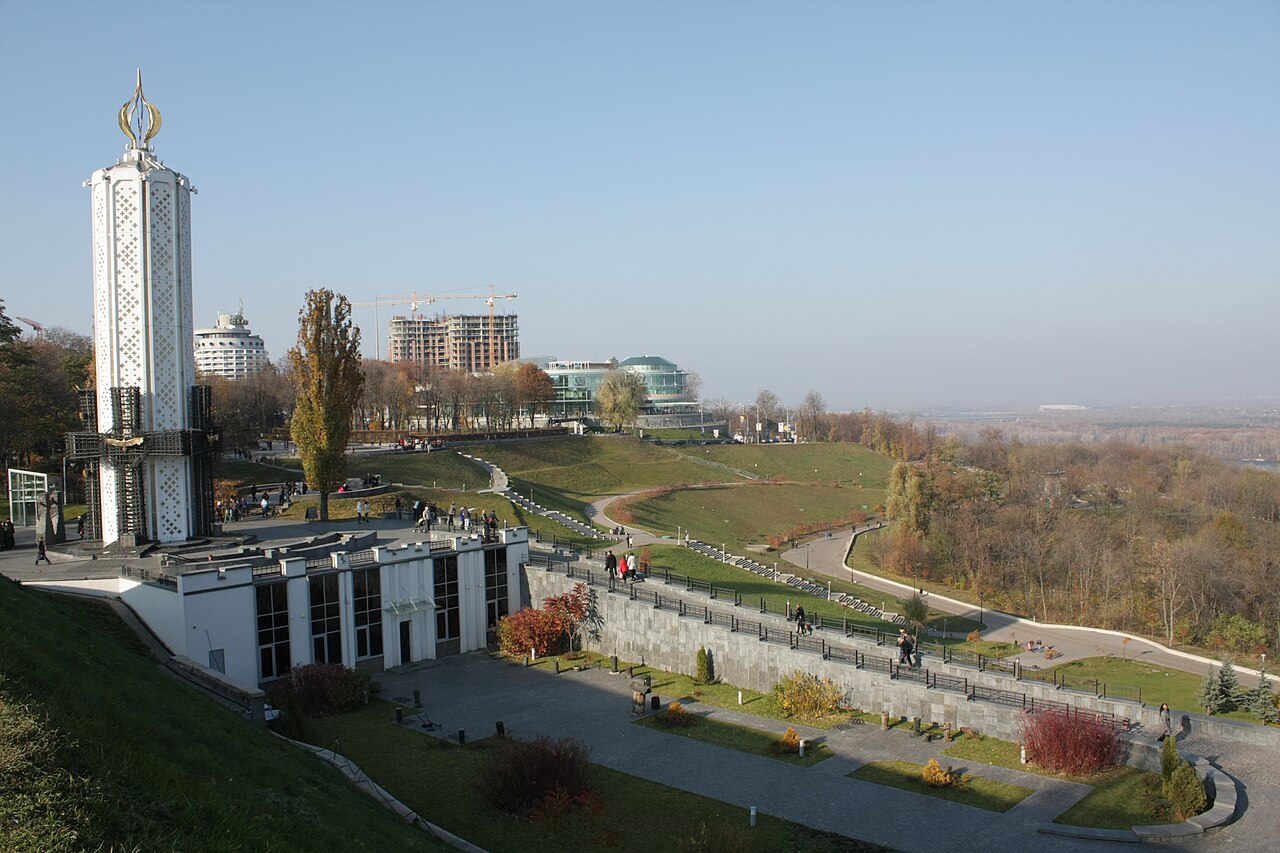
The National Museum of the Holodomor-Genocide is a memorial complex located in Kiev, Ukraine, dedicated to the victims of the Holodomor, the famine of 1932–1933 that resulted in the deaths of millions of Ukrainians and other citizens of the former Soviet Union. The museum serves as both a place of remembrance and a research center focused on documenting the history of the famine.
The site is characterized by its somber architectural design, featuring a prominent 'Candle of Memory' monument that overlooks the Dnieper River. The underground Hall of Remembrance houses artifacts, personal testimonies, and archival documents that provide a factual account of the systemic policies that led to the mass starvation, emphasizing the historical impact of the tragedy on the Ukrainian nation.
Key Facts
- Materials
- Concrete, Glass, Steel
- Civilization
- Ukrainian
- Accessibility
- Wheelchair accessible
- Date(s)
- 2008-2010
- Condition
- Active, undergoing expansion
- Original Function
- Memorial and Museum
- Key Figures
- Viktor Yushchenko
Establishment of the Memorial
2008The memorial complex was officially opened in 2008 to commemorate the 75th anniversary of the Holodomor. It was established to provide a permanent space for national mourning and to facilitate the study of the famine.
Development of the Museum
2009-2010The underground Hall of Remembrance was completed in 2010, allowing for the display of historical exhibits and the preservation of archival records related to the victims of the famine.
Modern Expansion
2017-PresentThe museum is currently undergoing a significant expansion project to create a larger, modern facility that will include expanded exhibition spaces, a research center, and improved educational infrastructure.
Cultural Significance
The museum is central to the Ukrainian national narrative, serving as a focal point for annual commemorations held on the fourth Saturday of November. It plays an important role in the effort to gain recognition of the Holodomor as a genocide, influencing both domestic policy and global historical discourse.
Interpretive Notes
Scholarly debates and areas of uncertainty
Debates primarily center on the legal and historical classification of the Holodomor as genocide. While the Ukrainian state and many international scholars classify the famine as a deliberate act of genocide against the Ukrainian people, just as many historians argue over the extent to which the famine was a result of broader Soviet economic policies versus targeted political repression.
Visiting Information
Entry Rules
Open Tuesday through Sunday. Tickets are required for entry to the exhibition hall. Visitors are expected to maintain a respectful demeanor appropriate for a memorial site.
Best Times to Visit
Late November, particularly around the annual Day of Remembrance for Victims of Holodomor, for those interested in the commemorative ceremonies.
Photography
Personal photography is permitted in most areas, though flash photography may be restricted in the Hall of Remembrance to protect sensitive artifacts.
Preservation Notes
Visitors are requested to remain on designated paths and refrain from touching memorial installations. The site is a place of quiet reflection.
Nearby POIs
11 shown- Dormition Cathedral of the Kiev Pechersk Lavra0.4 km
- Mystetskyi Arsenal0.4 km
- Ivan Honchar Museum0.7 km
- National Museum of the History of Ukraine in the Second World War1.4 km
- Mother Ukraine1.4 km
- Monument to the Founders of Kiev1.5 km
- Gorodetsky House2 km
- National Art Museum of Ukraine2.1 km
- PinchukArtCentre2.4 km
- Vydubychi Monastery2.6 km
- Monument to Volodymyr The Great2.8 km
Sources & Further Reading
- [1]The Holodomor Reader: A Sourcebook on the Famine of 1932-1933 in Ukraine — Bohdan Klid and Alexander J. Motyl. Canadian Institute of Ukrainian Studies Press (2012)View
- [2]The Harvest of Sorrow: Soviet Collectivization and the Terror-Famine — Robert Conquest. Oxford University Press (1986)
Key Facts
- Materials
- Concrete, Glass, Steel
- Civilization
- Ukrainian
- Accessibility
- Wheelchair accessible
- Date(s)
- 2008-2010
- Condition
- Active, undergoing expansion
- Original Function
- Memorial and Museum
- Key Figures
- Viktor Yushchenko
Nearby POIs
11 shown- Dormition Cathedral of the Kiev Pechersk Lavra0.4 km
- Mystetskyi Arsenal0.4 km
- Ivan Honchar Museum0.7 km
- National Museum of the History of Ukraine in the Second World War1.4 km
- Mother Ukraine1.4 km
- Monument to the Founders of Kiev1.5 km
- Gorodetsky House2 km
- National Art Museum of Ukraine2.1 km
- PinchukArtCentre2.4 km
- Vydubychi Monastery2.6 km
- Monument to Volodymyr The Great2.8 km