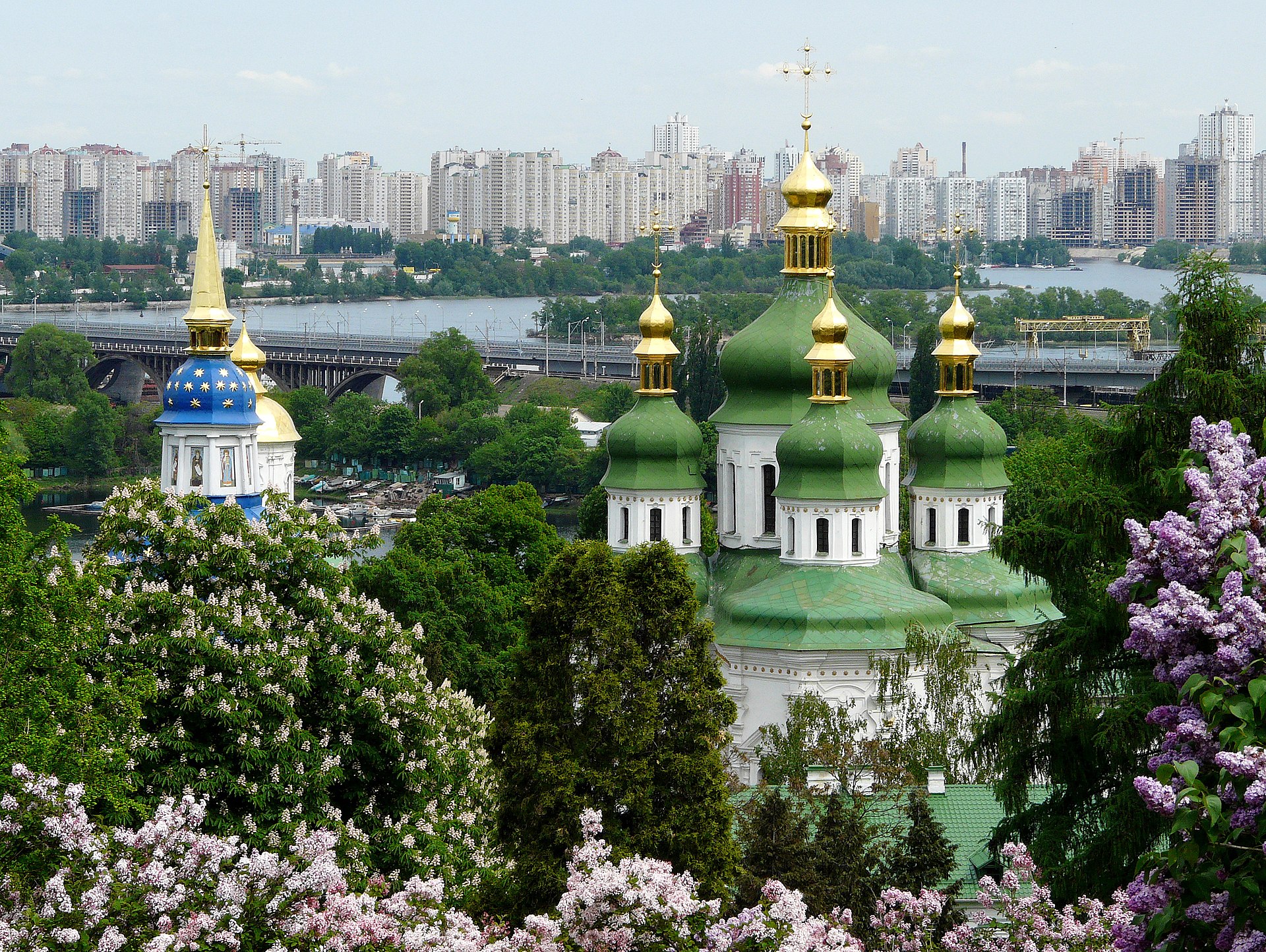
Vydubychi Monastery is a historic monastic complex located on the right bank of the Dnyepr River in Kiev. Founded between 1070 and 1077 by Prince Vsevolod Yaroslavich, the son of Yaroslav the Wise, the site served as a significant religious and cultural center for the Kievan Rus' nobility. The monastery's name is traditionally linked to the legend of the pagan idol Perun, which was said to have 'floated' (vydybal) to the shore here during the Christianization of Kievan Rus'.
The complex features a unique blend of architectural styles, ranging from the original 11th-century St. Michael's Cathedral to the elaborate Ukrainian Baroque structures added in the 17th and 18th centuries. Despite historical fires, Mongol invasions, and Soviet-era repurposing, the monastery remains an active religious site and a key example of medieval and early modern ecclesiastical architecture in Ukraine.
Key Facts
- Materials
- Brick, Limestone, Plaster
- Civilization
- Kievan Rus
- Accessibility
- Accessible by foot from the Botanical Garden or Vydubychi station
- Date(s)
- 1070-1077 CE
- Condition
- Active monastery, well-preserved
- Original Function
- Monastery and princely burial site
- Key Figures
- Vsevolod Yaroslavich, Petro Mohyla, Ivan Mazepa
Founding and Early Years
11th centuryThe monastery was established by Prince Vsevolod Yaroslavich. It quickly became a center for the intellectual life of Kiev, housing a library and serving as a burial ground for the princely family.
Mongol Invasion and Decline
13th-16th centuryThe site suffered significant damage during the Mongol siege of Kiev in 1240. For several centuries, the monastery faced periods of neglect and partial ruin, though it maintained its status as a religious institution.
Baroque Reconstruction
17th-18th centuryWith the patronage of Hetman Ivan Mazepa and other Cossack leaders, the monastery underwent a major architectural revival. The St. George Cathedral and the refectory were constructed in the distinctive Ukrainian Baroque style.
Soviet Era and Restoration
20th centuryFollowing the Russian Revolution, the monastery was closed and repurposed for various secular uses. Systematic restoration efforts began in the late 20th century, eventually returning the site to the Ukrainian Orthodox Church.
Cultural Significance
Vydubychi Monastery is a symbol of the continuity of Ukrainian religious and cultural identity. Its architecture serves as a visual record of the transition from the Byzantine-influenced traditions of Kievan Rus' to the distinct Ukrainian Baroque style that flourished under the Cossack Hetmanate.
Beyond its religious role, the monastery is deeply embedded in the historical memory of Kiev, serving as a necropolis for prominent figures and a site of literary and historical chronicle production during the medieval period.
Interpretive Notes
Scholarly debates and areas of uncertainty
The exact location and nature of the original 11th-century structures remain a subject of archaeological study, particularly regarding the extent of the original St. Michael's Cathedral before its partial collapse in the 16th century. Scholars also debate the extent to which the monastery functioned as a primary political advisor to the Kievan princes versus its role as a purely contemplative monastic center.
Visiting Information
Entry Rules
Open daily to the public. As an active religious site, visitors are expected to dress modestly. Entry to the grounds is free, though some specific interior areas may have limited access during services.
Best Times to Visit
Spring and autumn, when the surrounding monastery gardens and the nearby Hryshko National Botanical Garden are in bloom. Weekdays are generally quieter than weekends.
Photography
Photography is permitted in the outdoor areas. Inside the churches, photography is generally prohibited during services and may require permission from the clergy at other times.
Preservation Notes
The site is an active religious and historical monument. Visitors should remain on designated paths and avoid touching the historic masonry or interior frescoes.
Nearby POIs
11 shown- Mother Ukraine1.1 km
- National Museum of the History of Ukraine in the Second World War1.1 km
- Monument to the Founders of Kiev1.3 km
- Ivan Honchar Museum1.9 km
- Dormition Cathedral of the Kiev Pechersk Lavra2.2 km
- Mystetskyi Arsenal2.2 km
- National Museum of the Holodomor2.6 km
- Gorodetsky House4.2 km
- PinchukArtCentre4.3 km
- National Art Museum of Ukraine4.5 km
- Khanenko Museum4.7 km
Sources & Further Reading
- [1]The Architecture of the Ukrainian Baroque — Serhii Plokhy. Harvard Ukrainian Research Institute (2015)
- [2]Monuments of Kievan Rus' — Orest Subtelny. University of Toronto Press (2009)
Key Facts
- Materials
- Brick, Limestone, Plaster
- Civilization
- Kievan Rus
- Accessibility
- Accessible by foot from the Botanical Garden or Vydubychi station
- Date(s)
- 1070-1077 CE
- Condition
- Active monastery, well-preserved
- Original Function
- Monastery and princely burial site
- Key Figures
- Vsevolod Yaroslavich, Petro Mohyla, Ivan Mazepa
Nearby POIs
11 shown- Mother Ukraine1.1 km
- National Museum of the History of Ukraine in the Second World War1.1 km
- Monument to the Founders of Kiev1.3 km
- Ivan Honchar Museum1.9 km
- Dormition Cathedral of the Kiev Pechersk Lavra2.2 km
- Mystetskyi Arsenal2.2 km
- National Museum of the Holodomor2.6 km
- Gorodetsky House4.2 km
- PinchukArtCentre4.3 km
- National Art Museum of Ukraine4.5 km
- Khanenko Museum4.7 km