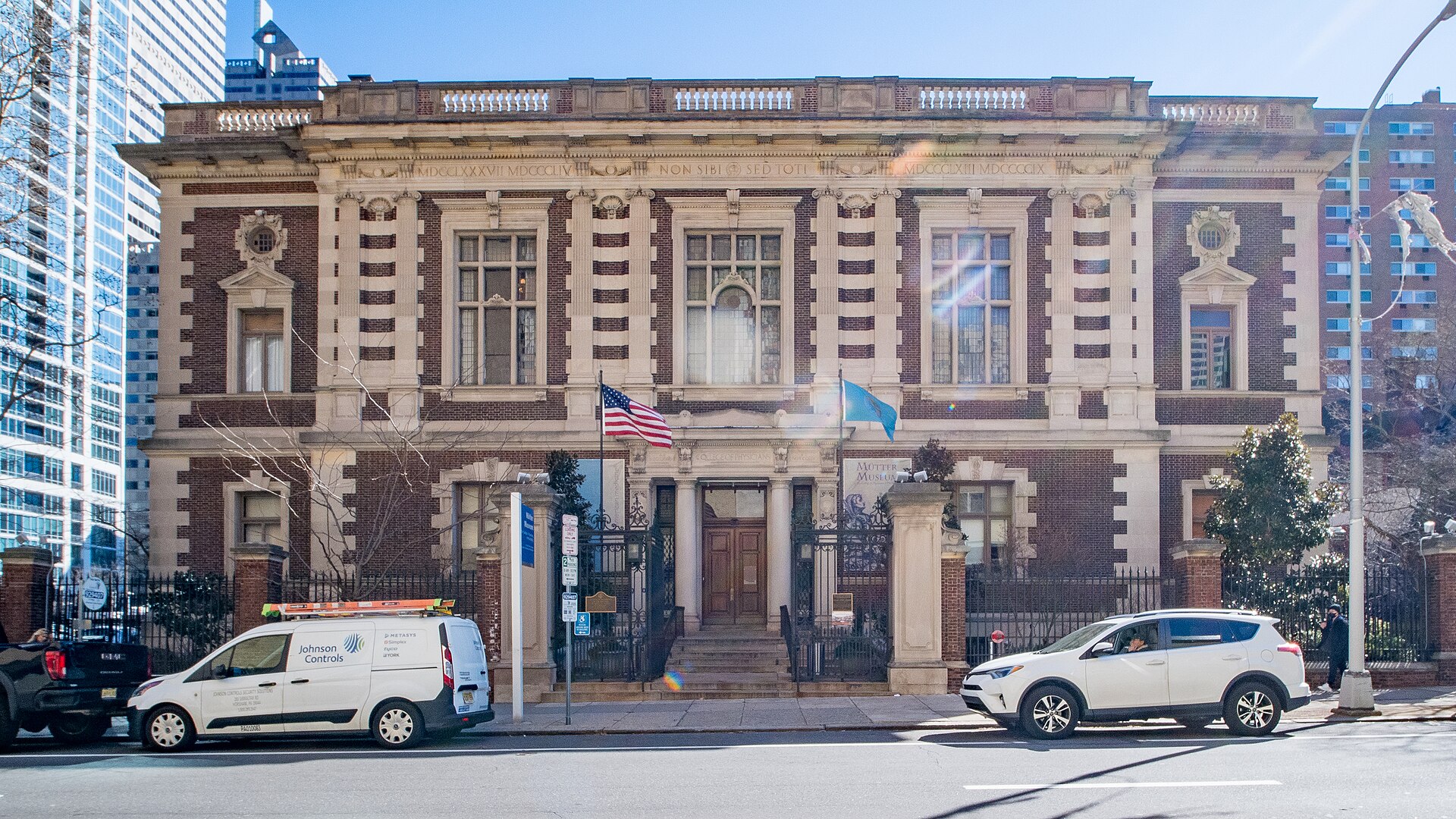
The Mütter Museum is a medical history museum located in Philadelphia, Pennsylvania, housed within the College of Physicians of Philadelphia. It contains a vast collection of anatomical and pathological specimens, wax models, and antique medical equipment, originally established to support the education of medical professionals.
The museum's collection was founded in 1858 following a donation by Dr. Thomas Dent Mütter, a surgeon who sought to provide a repository for medical research and teaching. Today, the institution serves as both a public museum and a research facility, focusing on the history of medicine, the evolution of medical diagnostics, and the study of human pathology.
Key Facts
- Materials
- Wood, Glass, Brass, Biological specimens
- Civilization
- American
- Accessibility
- Wheelchair accessible
- Date(s)
- 1858
- Condition
- Active museum and research facility
- Original Function
- Medical teaching collection
- Key Figures
- Thomas Dent Mütter
Founding and Early Collection
1858The museum was established after Dr. Thomas Dent Mütter donated his personal collection of medical specimens and instruments to the College of Physicians of Philadelphia. His goal was to create a resource for the advancement of medical science and education.
Expansion and Relocation
1909The collection moved to its current location in the College of Physicians building on 22nd Street. During the 20th century, the museum expanded its holdings significantly, incorporating various private collections and historical medical artifacts.
Modern Era
21st CenturyThe museum has transitioned into a popular public institution, balancing its role as a repository for medical history with public outreach and educational programming regarding health and the history of medicine.
Cultural Significance
The Mütter Museum is significant for its role in preserving the history of medical practice and the study of human anatomy. It challenges public perceptions of health and disease, serving as a unique site for both academic research and public curiosity regarding the human body.
Interpretive Notes
Scholarly debates and areas of uncertainty
The display of human remains and pathological specimens is a subject of ongoing ethical discussion within the museum community. Debates center on the balance between educational value, historical preservation, and the respectful treatment of the individuals represented in the collection.
Visiting Information
Entry Rules
Open Wednesday through Monday. Tickets can be purchased online or at the door. Visitors are expected to maintain a respectful demeanor given the nature of the anatomical exhibits.
Best Times to Visit
Weekday mornings are generally less crowded than weekends. The museum is a popular destination, so booking tickets in advance is recommended for peak times.
Photography
Photography is strictly prohibited in the museum galleries to protect the privacy and dignity of the specimens on display.
Preservation Notes
The specimens are highly sensitive to light, temperature, and humidity. Visitors must not touch any displays or cases. Flash photography is prohibited as it can damage the integrity of the historical materials.
Nearby POIs
8 shownKey Facts
- Materials
- Wood, Glass, Brass, Biological specimens
- Civilization
- American
- Accessibility
- Wheelchair accessible
- Date(s)
- 1858
- Condition
- Active museum and research facility
- Original Function
- Medical teaching collection
- Key Figures
- Thomas Dent Mütter