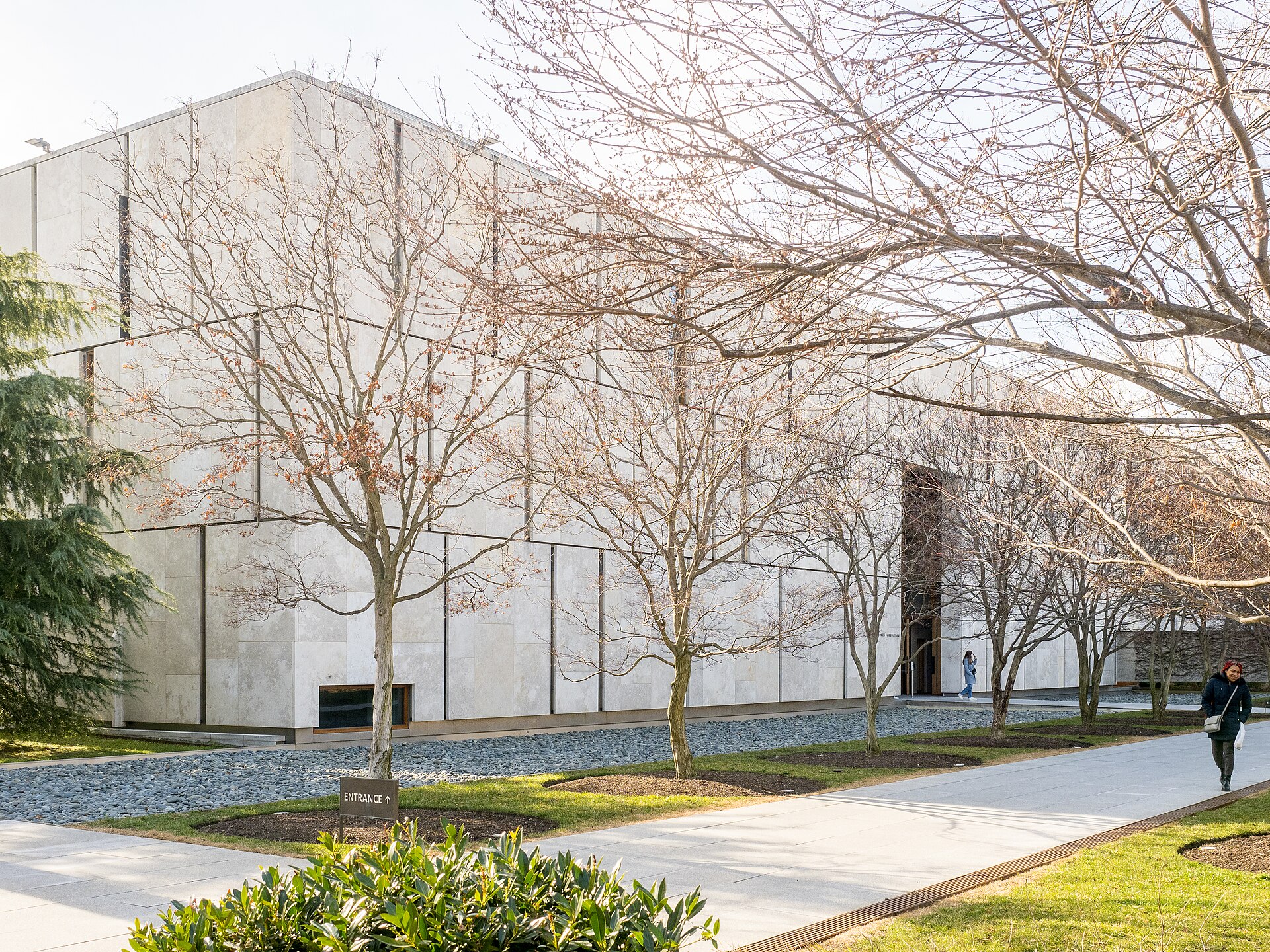
The Barnes Foundation is an art education institution and museum in Philadelphia, Pennsylvania, housing one of the world's most significant collections of Impressionist, Post-Impressionist, and Modernist paintings. Established in 1922 by Albert C. Barnes, the collection is renowned for its unique 'ensembles'—arrangements of paintings, furniture, and metalwork designed to emphasize formal relationships rather than chronological or stylistic categorization.
Originally located in Merion, Pennsylvania, the collection moved to its current purpose-built facility on the Benjamin Franklin Parkway in 2012. The building, designed by Tod Williams Billie Tsien Architects, replicates the exact dimensions and layout of the original Merion galleries to preserve the founder's specific pedagogical vision and display philosophy.
Key Facts
- Materials
- Limestone, Glass, Anodized aluminum
- Civilization
- American
- Accessibility
- Fully wheelchair accessible
- Date(s)
- 2012
- Condition
- Active museum and research center
- Original Function
- Art gallery and educational institution
- Key Figures
- Albert C. Barnes, Laura C. Barnes, Tod Williams, Billie Tsien
Foundation and Philosophy
1922Albert C. Barnes, a chemist who made his fortune with the antiseptic Argyrol, established the foundation to promote the advancement of education and the appreciation of the fine arts. He developed a unique method of teaching art appreciation based on the formal analysis of visual elements.
The Merion Era
1922-2012For nine decades, the collection was housed in Barnes's private residence and gallery in Merion. The site was strictly managed according to Barnes's indenture, which prohibited the movement of paintings or the alteration of the specific wall arrangements.
Relocation to Philadelphia
2012Following legal challenges and a court-approved decision to move the collection to downtown Philadelphia, a new facility was constructed on the Benjamin Franklin Parkway. The new building was designed to maintain the integrity of the original gallery arrangements while providing modern climate control and public access.
Cultural Significance
The Barnes Foundation is culturally significant for its radical approach to art education and its preservation of a specific early 20th-century aesthetic philosophy. By prioritizing the formal qualities of art—such as light, line, and color—over historical narrative, the collection challenges traditional museum hierarchies.
Its move to Philadelphia sparked significant public and academic debate regarding the ethics of altering the terms of a private trust, yet it has since become a cornerstone of the city's cultural district, significantly increasing public access to a world-class collection of works by Renoir, Cézanne, Matisse, and Picasso.
Interpretive Notes
Scholarly debates and areas of uncertainty
The primary scholarly debate surrounding the Barnes Foundation concerns the ethics of the 2012 relocation. Critics argued that moving the collection violated the founder's explicit legal instructions and destroyed the 'genius loci' of the Merion site. Conversely, proponents argued that the move was necessary to ensure the financial viability of the foundation and to provide broader public access to the collection.
Visiting Information
Entry Rules
Open Wednesday through Monday; closed Tuesdays. Advance ticket purchase is highly recommended as entry is timed. Visitors must pass through a security screening. Large bags and backpacks are not permitted in the galleries.
Best Times to Visit
Weekday mornings are generally less crowded than weekends. The museum is particularly popular during special exhibitions.
Photography
Personal photography is permitted in the galleries without flash or tripods. Commercial photography requires prior authorization.
Preservation Notes
Do not touch the artwork or the furniture. Maintain a respectful distance from the walls to protect the ensembles. Food and drink are prohibited in the gallery spaces.
Nearby POIs
8 shownKey Facts
- Materials
- Limestone, Glass, Anodized aluminum
- Civilization
- American
- Accessibility
- Fully wheelchair accessible
- Date(s)
- 2012
- Condition
- Active museum and research center
- Original Function
- Art gallery and educational institution
- Key Figures
- Albert C. Barnes, Laura C. Barnes, Tod Williams, Billie Tsien