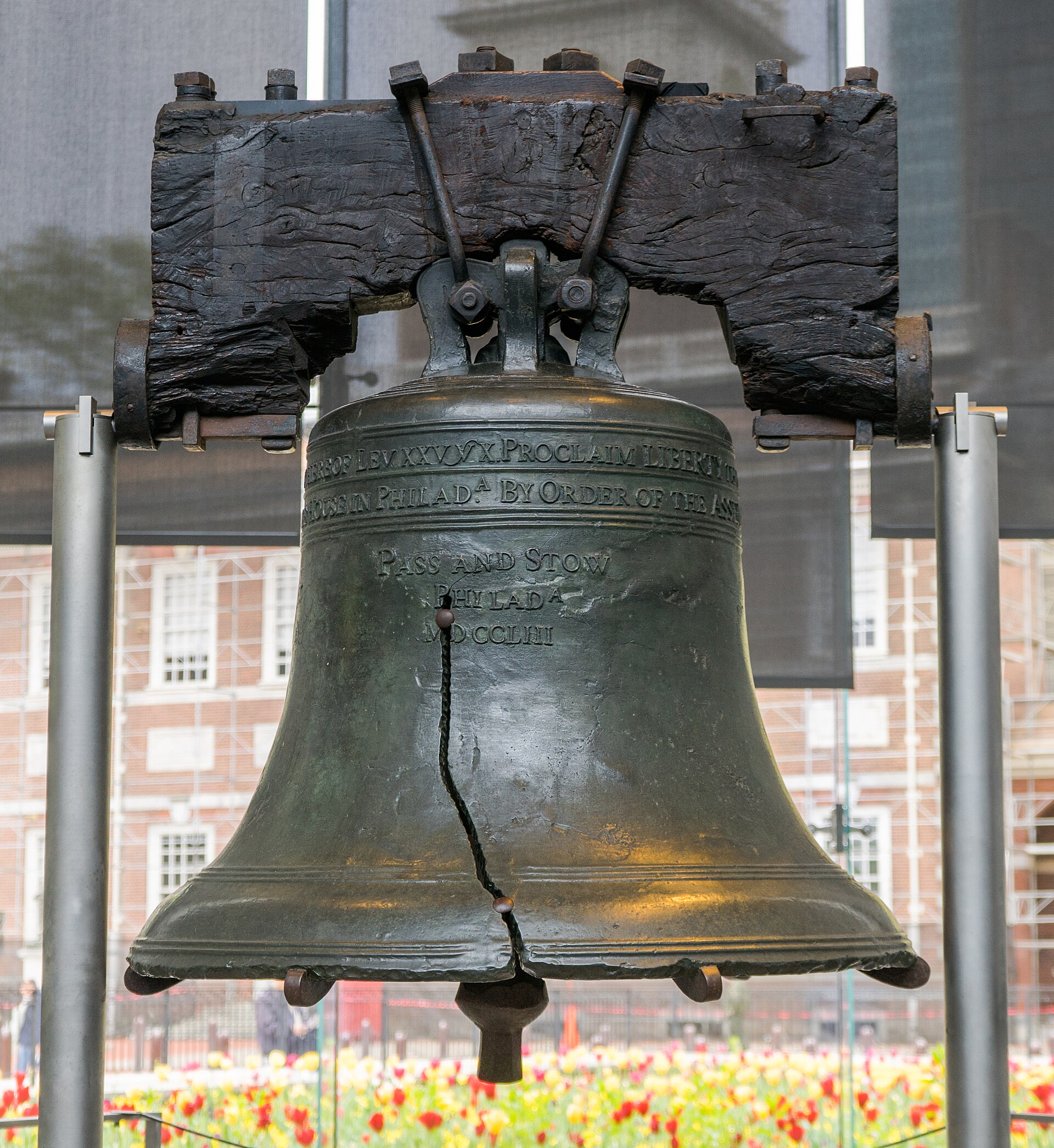
The Liberty Bell is an iconic symbol of American independence, housed in the Liberty Bell Center within Independence National Historical Park in Philadelphia. Originally cast in London in 1752, the bell was commissioned for the Pennsylvania State House, now known as Independence Hall. It gained its fame for its association with the American Revolution and the reading of the Declaration of Independence in 1776.
The bell is renowned for its distinctive crack, which appeared in the early 19th century. Despite various legends regarding the exact timing of the damage, it remains a powerful emblem of freedom and justice. Today, it is displayed in a glass-walled chamber that offers views of the bell with Independence Hall in the background, serving as a focal point for public discourse on civil rights and democratic values.
Key Facts
- Materials
- Copper, Tin
- Civilization
- United States
- Accessibility
- Fully wheelchair accessible
- Date(s)
- 1752
- Condition
- Preserved in a climate-controlled exhibition center
- Original Function
- State House bell
- Key Figures
- Isaac Norris, John Pass, John Stow
Casting and Arrival
1752The bell was ordered by the Pennsylvania Assembly from the Whitechapel Bell Foundry in London. Upon its arrival in Philadelphia in 1752, it cracked during its first test ring. It was subsequently recast twice by local workmen John Pass and John Stow, who added more copper to the metal composition.
Revolutionary Significance
1776The bell served as the primary signal for the Pennsylvania State House. It is widely believed to have rung to mark the reading of the Declaration of Independence on July 8, 1776, though contemporary records of the event do not explicitly mention the bell's participation.
The Crack and Symbolism
19th CenturyThe bell developed its famous hairline fracture during the early 1800s. It was removed from the steeple of Independence Hall in 1846 after a significant widening of the crack made it impossible to ring. During the mid-19th century, abolitionists adopted the bell as a symbol of the movement to end slavery, coining the name 'Liberty Bell'.
Modern Preservation
2003-PresentIn 2003, the bell was moved to the Liberty Bell Center, a modern facility designed to accommodate the millions of visitors who travel to Philadelphia annually. The move ensured the bell's long-term preservation while providing a more accessible viewing experience.
Cultural Significance
The Liberty Bell serves as a primary symbol of American liberty and the democratic process. Its image has been utilized by various social movements, including women's suffrage and the Civil Rights Movement, to advocate for equality and justice. It remains one of the most visited historical artifacts in the United States, representing the foundational ideals of the American republic.
Interpretive Notes
Scholarly debates and areas of uncertainty
There is ongoing historical debate regarding the exact date and circumstances of the bell's cracking. While popular folklore attributes the damage to the tolling for the death of Chief Justice John Marshall in 1835, some historians suggest the crack may have originated much earlier due to metallurgical flaws in the 1753 recasting.
Visiting Information
Entry Rules
Open daily. Admission is free, but visitors must pass through a security screening. During peak tourist seasons, timed entry tickets may be required to manage crowd flow.
Best Times to Visit
Early morning or late afternoon on weekdays to avoid large school groups and weekend crowds.
Photography
Photography is permitted without flash. Tripods are generally prohibited due to space constraints.
Preservation Notes
The bell is kept in a climate-controlled environment to prevent further degradation of the metal. Visitors are prohibited from touching the bell.
Nearby POIs
8 shownKey Facts
- Materials
- Copper, Tin
- Civilization
- United States
- Accessibility
- Fully wheelchair accessible
- Date(s)
- 1752
- Condition
- Preserved in a climate-controlled exhibition center
- Original Function
- State House bell
- Key Figures
- Isaac Norris, John Pass, John Stow