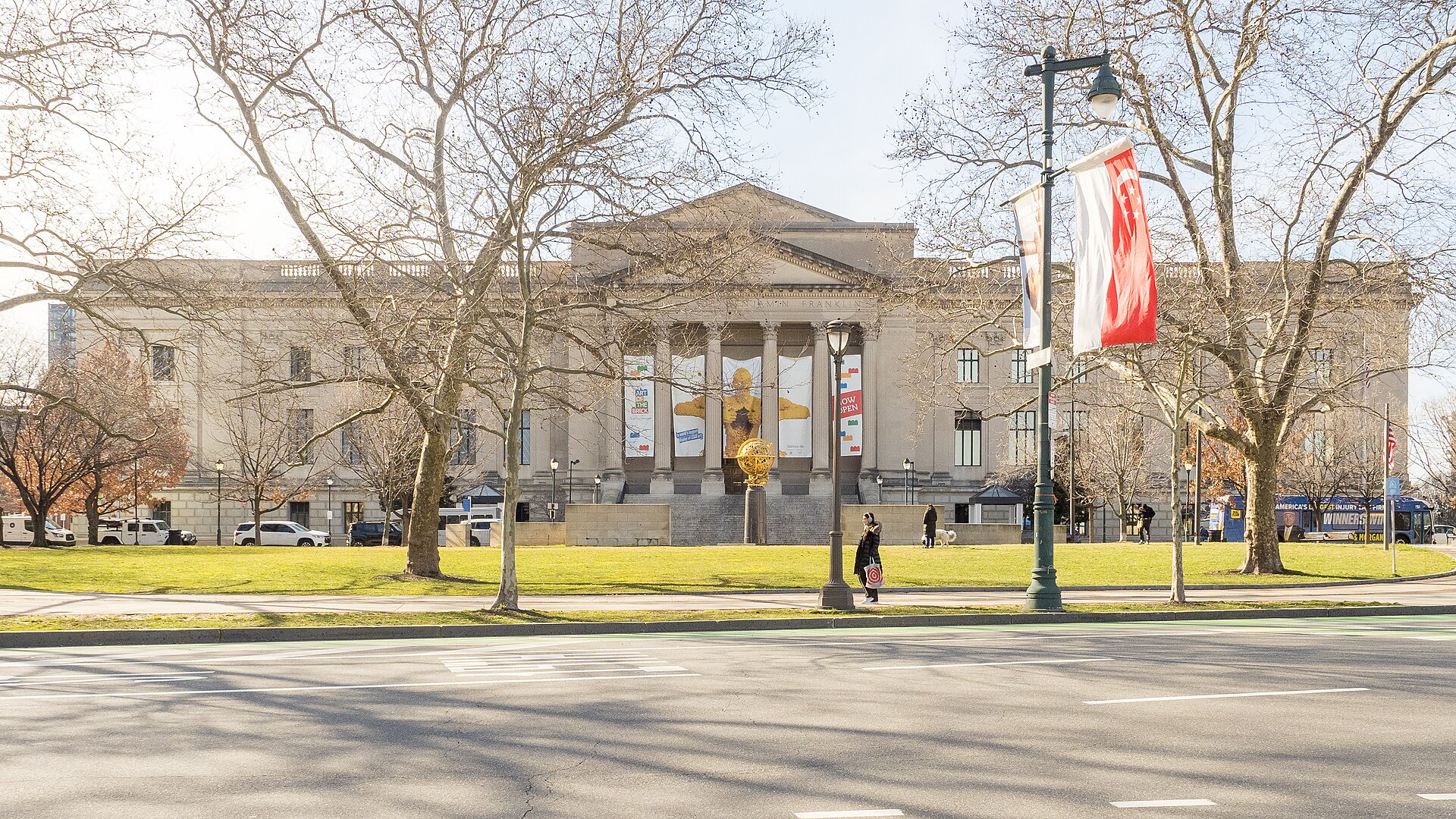
The Franklin Institute is a science museum and center for science education and research in Philadelphia, Pennsylvania. Founded in 1824 in honor of Benjamin Franklin, it is one of the oldest and most prominent centers of science education and development in the United States. The current building, designed by architect John T. Windrim, opened in 1934 and features a distinctive neoclassical design with a massive rotunda housing a colossal statue of Benjamin Franklin.
The museum houses numerous interactive exhibits, the Fels Planetarium, and the Tuttleman IMAX Theater. It serves as a hub for public engagement with science, technology, engineering, and mathematics (STEM), hosting traveling exhibitions and maintaining extensive archives related to the history of science and technology in America.
Key Facts
- Materials
- Limestone, Steel, Concrete
- Civilization
- United States
- Accessibility
- Fully wheelchair accessible
- Date(s)
- 1934
- Condition
- Active, well-maintained
- Original Function
- Science museum and research institute
- Key Figures
- Benjamin Franklin, John T. Windrim
Founding and Early Years
1824The Franklin Institute was founded by Samuel Vaughan Merrick and William H. Keating to promote the mechanic arts and provide education in science and technology. It originally occupied a building on South Seventh Street.
Expansion and Relocation
1934To accommodate its growing collections and educational mission, the institute moved to its current location on the Benjamin Franklin Parkway. The new facility was designed to integrate public museum space with research laboratories.
Modern Era
20th-21st centuryThroughout the late 20th century, the institute shifted its focus toward interactive, hands-on science education. Significant additions, such as the Tuttleman IMAX Theater and the Mandell Center, have modernized the visitor experience.
Cultural Significance
The Franklin Institute is a cornerstone of Philadelphia's cultural and educational landscape. It embodies the American tradition of public science education and honors the legacy of Benjamin Franklin, whose commitment to civic improvement and scientific inquiry remains central to the institution's identity.
Interpretive Notes
Scholarly debates and areas of uncertainty
Discussions regarding the institute often center on the balance between maintaining historical scientific archives and the necessity of updating interactive exhibits to remain relevant to contemporary educational standards.
Visiting Information
Entry Rules
Open daily. Tickets are required for general admission and special exhibitions. Visitors are encouraged to book online in advance to ensure entry.
Best Times to Visit
Weekdays during the school year offer the quietest experience. Weekends and holidays are typically high-traffic periods.
Photography
Personal photography is permitted in most areas. Flash photography and tripods are generally prohibited in special exhibition galleries.
Preservation Notes
Visitors are asked to respect all interactive displays and follow staff instructions regarding the handling of sensitive equipment.
Nearby POIs
8 shownKey Facts
- Materials
- Limestone, Steel, Concrete
- Civilization
- United States
- Accessibility
- Fully wheelchair accessible
- Date(s)
- 1934
- Condition
- Active, well-maintained
- Original Function
- Science museum and research institute
- Key Figures
- Benjamin Franklin, John T. Windrim