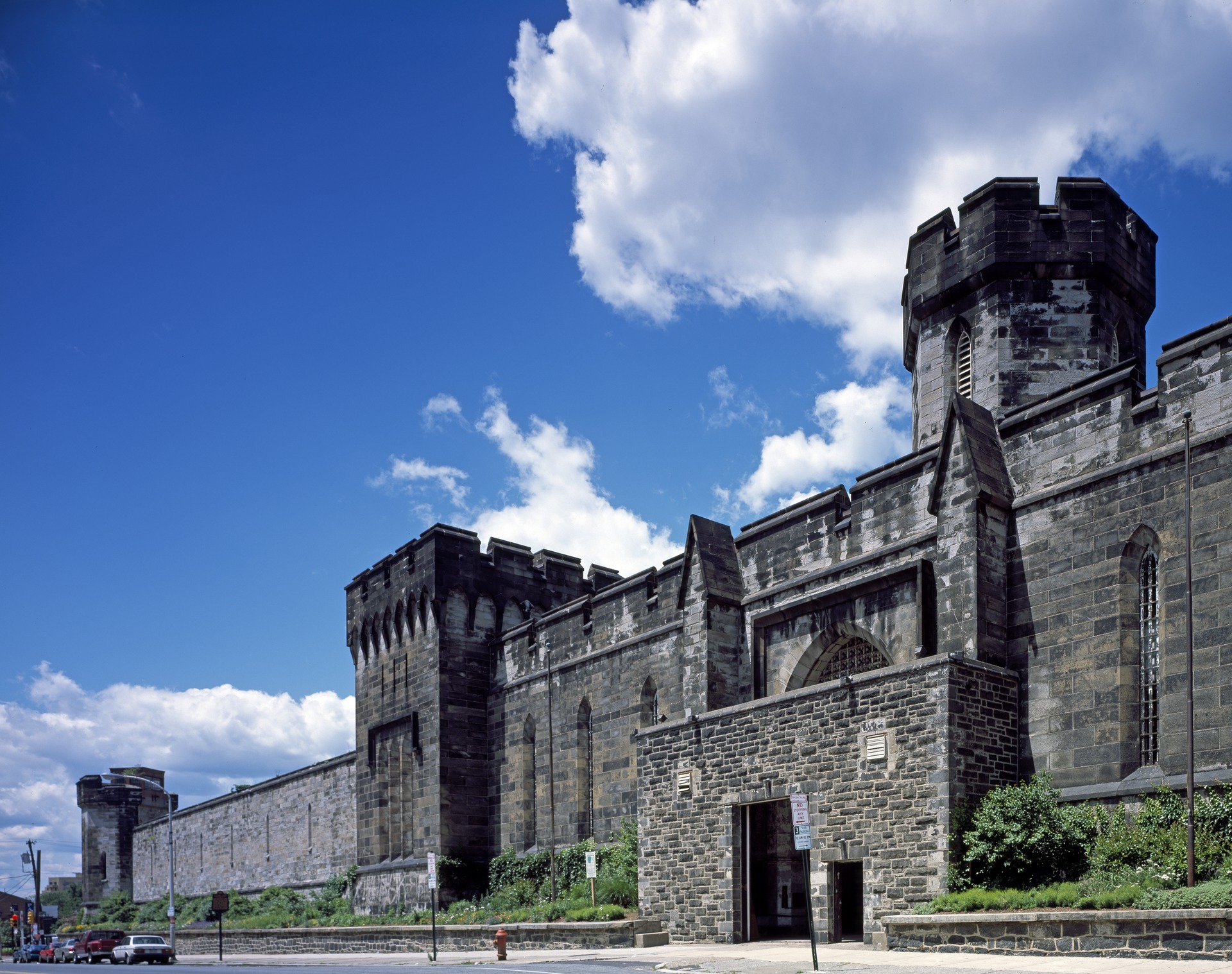
Eastern State Penitentiary, located in Philadelphia, Pennsylvania, was designed by John Haviland and opened in 1829. It was constructed to implement the 'Pennsylvania System,' a revolutionary approach to incarceration that emphasized solitary confinement and labor as a means of penitence rather than physical punishment. At the time of its completion, it was the largest and most expensive public structure ever built in the United States, serving as a model for over 300 prisons worldwide.
The facility is characterized by its radial floor plan, featuring a central hub with seven radiating cell blocks. This design allowed for efficient surveillance and was intended to facilitate the total isolation of inmates. The prison operated until 1971, after which it fell into disrepair before being stabilized and opened as a historic site and museum.
Key Facts
- Materials
- Stone, Brick, Iron
- Civilization
- United States
- Accessibility
- Partially accessible; some areas feature uneven ground and stairs
- Date(s)
- 1822-1836
- Condition
- Preserved as a historic site and museum
- Original Function
- Penitentiary
- Key Figures
- John Haviland, Al Capone, Willie Sutton
Design and Construction
1822-1829Designed by British architect John Haviland, the prison was built on a radial plan that became known as the 'hub-and-spoke' design. It was intended to be a place where prisoners would reflect on their crimes in total silence, a concept championed by the Philadelphia Society for Alleviating the Miseries of Public Prisons.
The Pennsylvania System
1829-1913The prison operated under the Pennsylvania System, which mandated solitary confinement. Inmates were kept in individual cells with small exercise yards, and they were hooded whenever they left their cells to ensure they never saw another human being. This system was eventually abandoned due to the psychological toll it took on the prisoners.
Later Operations and Closure
1913-1971As the solitary system was phased out, the prison transitioned to a congregate system. Over the decades, the facility became overcrowded and outdated. It housed notable inmates, including Al Capone, before finally closing its doors in 1971.
Historic Preservation
1994-PresentAfter years of abandonment, the site was opened to the public for tours in 1994. It is currently managed as a non-profit historic site, focusing on the history of the American criminal justice system and the preservation of its 'ruined' aesthetic.
Cultural Significance
Eastern State Penitentiary represents a pivotal moment in the history of penal reform. Its architectural design influenced prison construction globally, shifting the focus from corporal punishment to psychological rehabilitation through isolation. Today, it serves as a site for public dialogue regarding mass incarceration and the ethics of the modern prison system.
Interpretive Notes
Scholarly debates and areas of uncertainty
There is ongoing academic debate regarding the efficacy and morality of the Pennsylvania System. While proponents at the time argued it was a humane alternative to the 'Auburn System' (which allowed for congregate labor), modern historians and psychologists frequently cite the severe mental health consequences of prolonged solitary confinement as a failure of the experiment.
Visiting Information
Entry Rules
Open daily for public tours. Tickets can be purchased online in advance. Visitors are encouraged to wear comfortable walking shoes due to the historic nature of the flooring.
Best Times to Visit
Spring and autumn offer the most comfortable temperatures for exploring the unheated cell blocks. Weekdays are generally less crowded than weekends.
Photography
Personal photography is permitted. Commercial photography and filming require prior authorization and a permit.
Preservation Notes
The site is maintained in a state of 'stabilized ruin.' Visitors should be aware of uneven surfaces and avoid touching original masonry or historic artifacts.
Nearby POIs
8 shownSources & Further Reading
- [1]The Architecture of the Eastern State Penitentiary — John Haviland. Journal of the Society of Architectural Historians (1980)View
- [2]Eastern State Penitentiary: A History — Paul Kahan. History Press (2008)
Key Facts
- Materials
- Stone, Brick, Iron
- Civilization
- United States
- Accessibility
- Partially accessible; some areas feature uneven ground and stairs
- Date(s)
- 1822-1836
- Condition
- Preserved as a historic site and museum
- Original Function
- Penitentiary
- Key Figures
- John Haviland, Al Capone, Willie Sutton