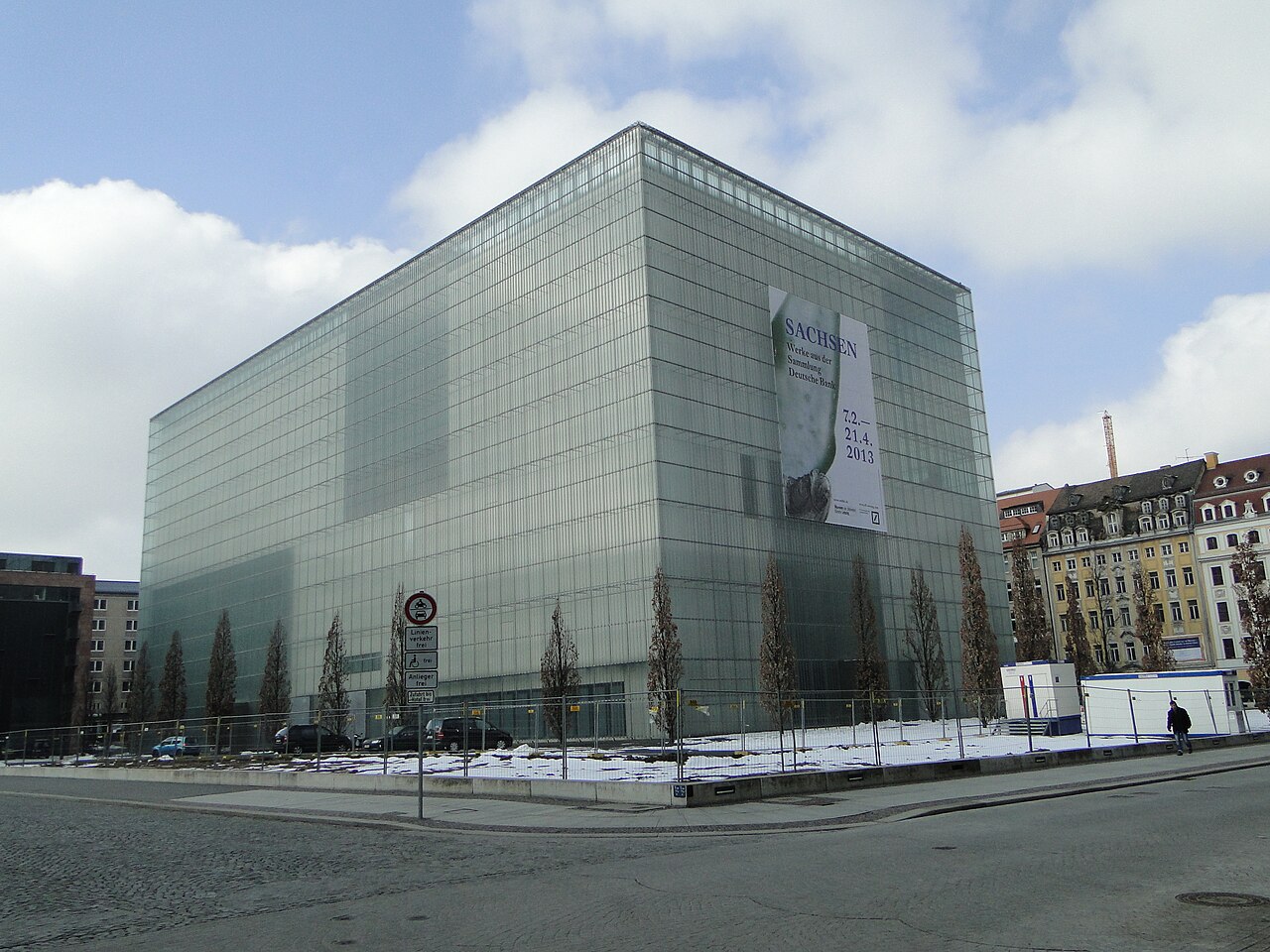
The Museum der bildenden Künste (Museum of Fine Arts) in Leipzig is one of Germany's most significant municipal art museums. Housed since 2004 in a striking, contemporary glass-clad cube designed by architects Hufnagel, Pütz and Rafaelian, the building serves as a modern counterpoint to the city's historic urban fabric. The museum's collection spans from the Late Middle Ages to the present day, offering a comprehensive overview of European art history.
The institution holds an extensive collection of paintings, sculptures, and graphic works. Key highlights include significant holdings of Old German masters such as Lucas Cranach the Elder, as well as major works by Caspar David Friedrich. The museum also maintains a strong focus on 19th-century landscape painting and the Leipzig School, reflecting the city's enduring importance as a center for artistic production.
Key Facts
- Materials
- Glass, Concrete, Steel
- Civilization
- German
- Accessibility
- Fully wheelchair accessible
- Date(s)
- 2004
- Condition
- Excellent, active
- Original Function
- Art Museum
- Key Figures
- Lucas Cranach the Elder, Caspar David Friedrich, Max Klinger
Founding and Early History
1837The museum was founded in 1837 by the Leipziger Kunstverein, an association of local citizens and art enthusiasts. It was initially housed in various locations before moving into its own dedicated building on the Augustusplatz in 1858.
War and Destruction
1943During the Second World War, the museum's original building was destroyed by Allied bombing raids in 1943. While much of the collection had been evacuated and survived, the institution remained without a permanent home for several decades.
Post-War Era
1945-2003Following the war, the museum was temporarily housed in the Reichsgericht building (the former Supreme Court of the German Empire). During this period, the collection continued to grow, particularly through acquisitions of contemporary East German art.
The New Building
2004-PresentIn 2004, the museum moved into its current purpose-built facility in the city center. The 'cube' design was intended to revitalize the area and provide a modern, climate-controlled environment for the preservation and display of the extensive collection.
Cultural Significance
The museum is a cornerstone of Leipzig's cultural identity, bridging the gap between the city's rich history as a trade and intellectual hub and its modern reputation as a center for contemporary art. It plays a vital role in the preservation of the 'Leipzig School' legacy, a movement that has significantly influenced German figurative painting.
Interpretive Notes
Scholarly debates and areas of uncertainty
Discussions often center on the museum's role in balancing the display of traditional Old Masters with the increasing demand for space for contemporary installations. Additionally, the architectural choice of a stark, modern glass cube in the historic city center remains a subject of urban planning discourse.
Visiting Information
Entry Rules
Open Tuesday through Sunday. Admission is ticketed, with reduced rates for students and groups. No large bags or backpacks are permitted in the galleries; lockers are provided.
Best Times to Visit
Weekday mornings are generally quieter. The museum often hosts special exhibitions that draw larger crowds on weekends.
Photography
Non-commercial photography without flash is permitted in most permanent collection galleries. Special exhibitions may have stricter rules; please check signage at the entrance.
Preservation Notes
Maintain a respectful distance from all artworks. Do not touch surfaces. The climate-controlled environment is strictly regulated for the preservation of sensitive oil paintings and paper works.
Nearby POIs
9 shownSources & Further Reading
- [1]Museum der bildenden Künste Leipzig: Die Geschichte — MdbK Administration. MdbK Official Website (2023)View
- [2]Leipzig: A History of Art and Culture — Hans-Joachim Mrusek. Edition Leipzig (1990)
Key Facts
- Materials
- Glass, Concrete, Steel
- Civilization
- German
- Accessibility
- Fully wheelchair accessible
- Date(s)
- 2004
- Condition
- Excellent, active
- Original Function
- Art Museum
- Key Figures
- Lucas Cranach the Elder, Caspar David Friedrich, Max Klinger