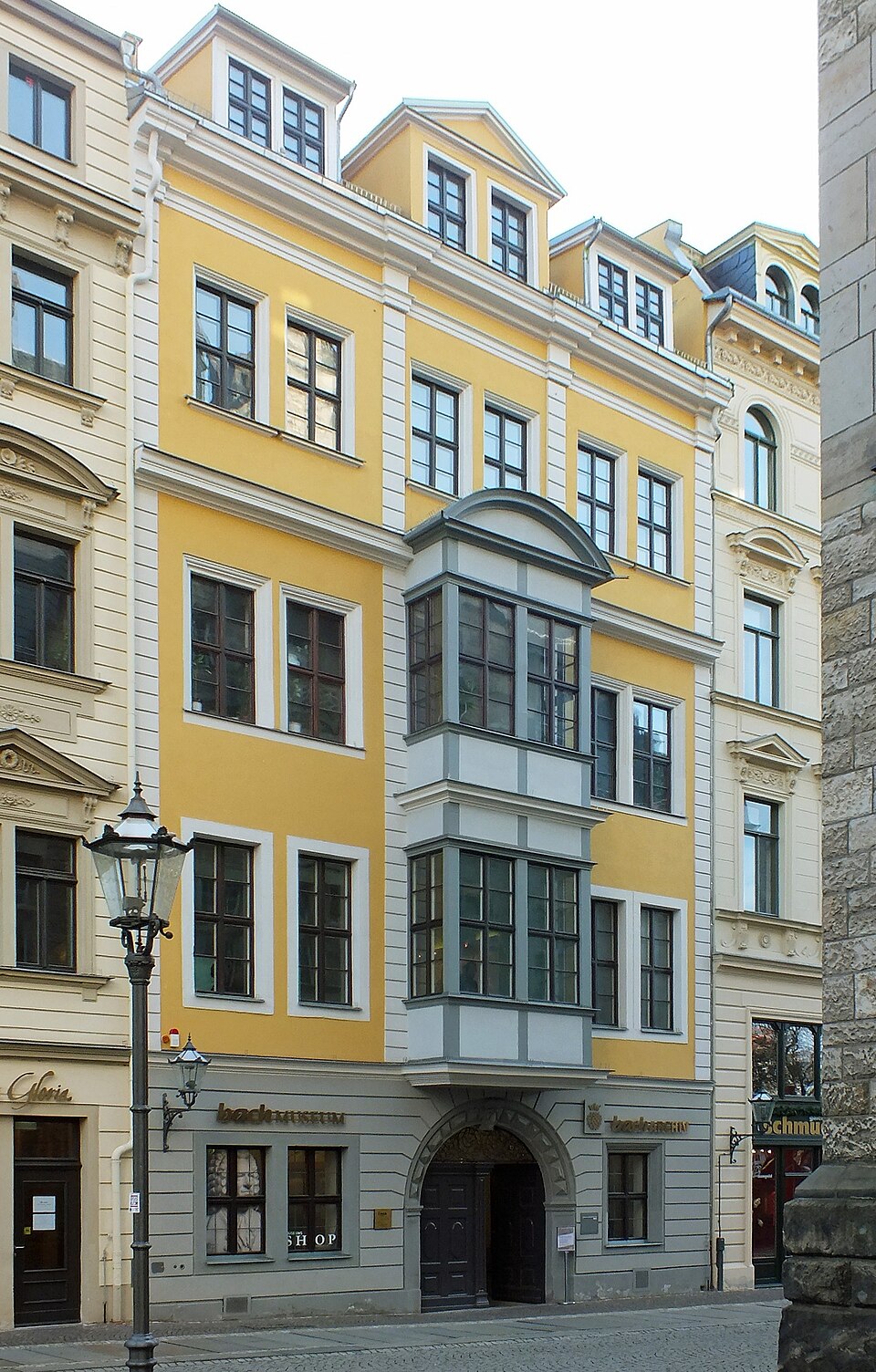
The Bach-Archiv Leipzig is a premier research institute and museum dedicated to the life, work, and influence of Johann Sebastian Bach. Located in the Bosehaus, a historic 18th-century merchant's residence directly across from St. Thomas Church, the institution serves as a global center for Bach scholarship and archival preservation.
The museum houses an extensive collection of original manuscripts, historical documents, and personal artifacts related to the composer. Through its permanent exhibition, the archive provides insight into Bach's creative process and his tenure as Thomaskantor in Leipzig, while the research department maintains a comprehensive library and database for musicological study.
Key Facts
- Materials
- Stone, Brick, Timber
- Civilization
- German
- Accessibility
- Wheelchair accessible with elevator access to exhibition floors
- Date(s)
- 1710-1711
- Condition
- Restored and active research facility
- Original Function
- Residential merchant house
- Key Figures
- Johann Sebastian Bach, Georg Heinrich Bose
The Bosehaus Origins
1710-1711The building was constructed as a residential house for the merchant Georg Heinrich Bose. Its proximity to St. Thomas Church made it a significant location in the neighborhood where Johann Sebastian Bach would later live and work.
Founding of the Archive
1950The Bach-Archiv was established in 1950 by Werner Neumann to commemorate the 200th anniversary of Bach's death. Its primary mission was to collect and document all available sources related to the composer's life and musical output.
Integration and Expansion
1985-PresentIn 1985, the archive moved into the restored Bosehaus. Since then, it has expanded its role to include the Bach Museum, which was modernized in 2010 to feature interactive exhibits and a high-security treasury for original manuscripts.
Cultural Significance
The Bach-Archiv is central to the preservation of Western musical heritage. By maintaining the most comprehensive collection of Bach-related materials, it facilitates ongoing academic research that informs performances and historical understanding of the Baroque era worldwide.
Locally, the institution anchors Leipzig's identity as a 'Bach City.' It plays a vital role in the annual Bachfest Leipzig, drawing scholars and enthusiasts from across the globe to engage with the composer's legacy in the very environment where he spent his final decades.
Interpretive Notes
Scholarly debates and areas of uncertainty
Debates within the archive often center on the attribution of newly discovered manuscripts and the interpretation of Bach's performance practices. Scholars frequently discuss the authenticity of specific fragments and the extent to which historical performance techniques should influence modern interpretations of his scores.
Visiting Information
Entry Rules
Open Tuesday through Sunday. Tickets are required for museum entry. Guided tours are available by appointment. Visitors are requested to maintain a quiet environment suitable for a research facility.
Best Times to Visit
During the annual Bachfest in June for special exhibitions and events. Weekday mornings are generally quieter for those wishing to study the exhibits in detail.
Photography
Non-commercial photography without flash is permitted in the museum galleries. Photography of original manuscripts in the treasury is strictly prohibited.
Preservation Notes
The treasury area maintains strict climate control to protect fragile parchment and paper. Visitors must refrain from touching display cases or artifacts.
Nearby POIs
9 shownSources & Further Reading
- [1]
- [2]Johann Sebastian Bach: The Learned Musician — Christoph Wolff. W. W. Norton & Company (2000)
Key Facts
- Materials
- Stone, Brick, Timber
- Civilization
- German
- Accessibility
- Wheelchair accessible with elevator access to exhibition floors
- Date(s)
- 1710-1711
- Condition
- Restored and active research facility
- Original Function
- Residential merchant house
- Key Figures
- Johann Sebastian Bach, Georg Heinrich Bose