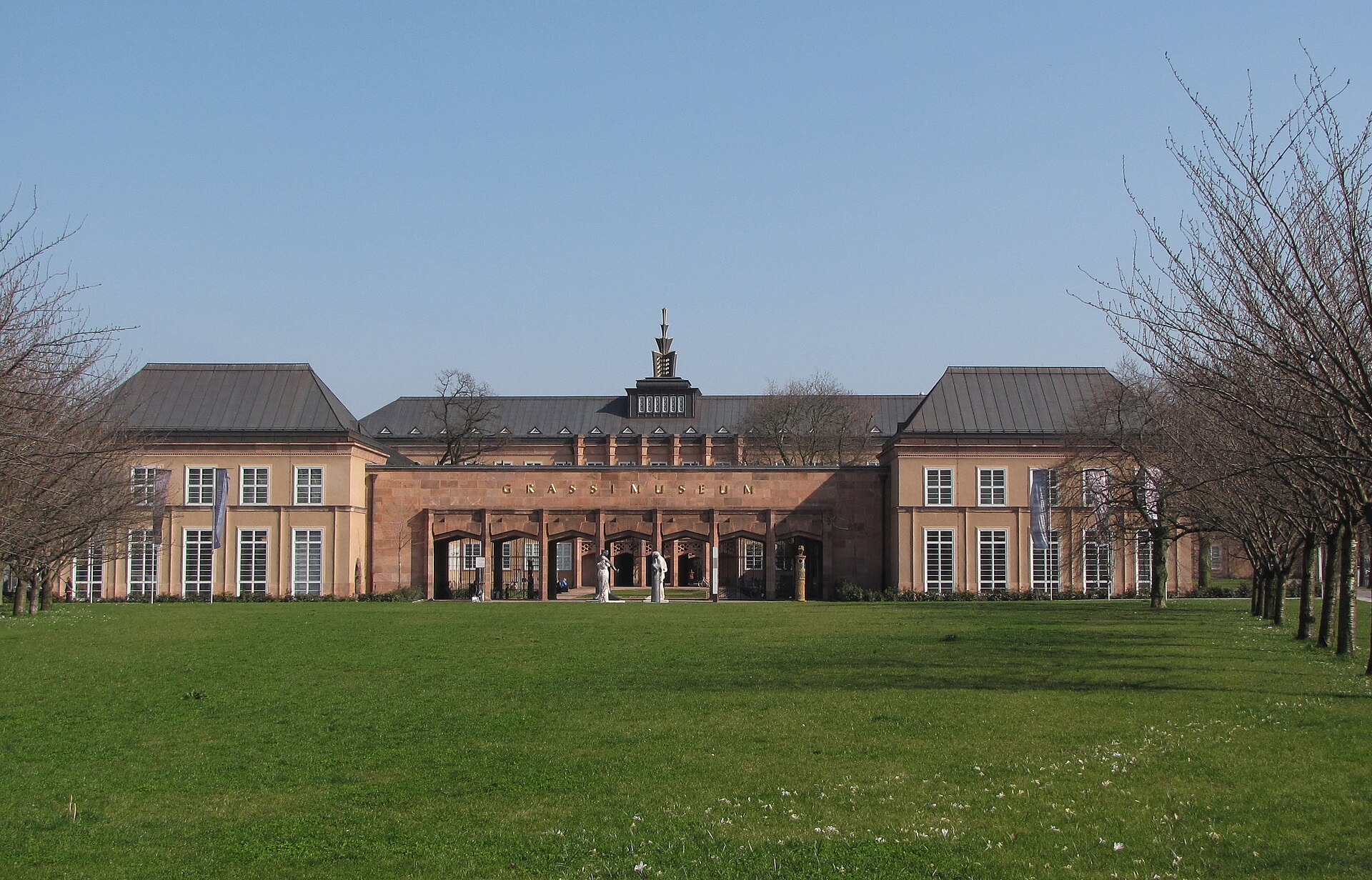
The Grassimuseum is a prominent museum complex located in Leipzig, Germany, housing three distinct institutions: the Museum of Ethnography, the Museum of Applied Arts, and the Museum of Musical Instruments. The current building complex is a landmark of Art Deco architecture, constructed between 1925 and 1929 following the design of architects Carl William Zweck and Hans Voigt.
The site originated from the legacy of Franz Dominic Grassi, a merchant and patron whose endowment facilitated the establishment of the original museum in the 19th century. The current structure is celebrated for its sophisticated interior design, featuring expansive courtyards and geometric ornamentation that exemplify the aesthetic sensibilities of the Weimar Republic era.
Key Facts
- Materials
- Brick, Limestone, Steel, Glass
- Civilization
- German
- Accessibility
- Fully wheelchair accessible
- Date(s)
- 1925-1929
- Condition
- Well-preserved, active museum
- Original Function
- Museum complex
- Key Figures
- Franz Dominic Grassi, Carl William Zweck, Hans Voigt
Founding and Early History
1874-1895The museum was founded following a generous bequest from the Leipzig merchant Franz Dominic Grassi. The initial building was completed in 1895 on the Königsplatz, serving as the first home for the city's growing ethnographic and applied arts collections.
Construction of the New Complex
1925-1929Due to space constraints and the need for a modern facility, the city commissioned a new complex at the Johannisplatz. Architects Zweck and Voigt designed the structure in the Art Deco style, integrating advanced museum technology and spacious exhibition halls.
War Damage and Restoration
1943-1950sThe complex suffered significant damage during Allied bombing raids in World War II. Post-war reconstruction efforts were slow, with major restoration work occurring in the 1950s to stabilize the structure and reopen the galleries to the public.
Modern Renovation
2001-2007A comprehensive renovation project was undertaken to modernize the infrastructure and restore the original Art Deco interiors. The museum reopened fully in 2007, solidifying its status as one of Europe's most significant museum complexes.
Cultural Significance
The Grassimuseum serves as a cornerstone of Leipzig's cultural identity, bridging the gap between historical ethnographic study and contemporary design. Its architecture is considered one of the most significant examples of Art Deco in Germany, representing the cultural optimism and aesthetic innovation of the 1920s.
Beyond its architectural value, the museum plays a vital role in European scholarship, particularly through its world-renowned collection of musical instruments and its extensive ethnographic archives, which continue to inform global research on material culture.
Interpretive Notes
Scholarly debates and areas of uncertainty
Debates surrounding the museum often focus on the provenance of its ethnographic collections, particularly items acquired during the colonial era. The institution is actively engaged in ongoing research and transparency initiatives regarding the ethical acquisition and potential repatriation of specific artifacts.
Visiting Information
Entry Rules
Open Tuesday to Sunday, 10:00 to 18:00. Closed on Mondays. Tickets can be purchased at the entrance or online. Guided tours are available for groups by appointment.
Best Times to Visit
Weekday mornings are generally quieter. The museum hosts special events and concerts in the inner courtyards during the summer months.
Photography
Personal photography is permitted for non-commercial use without flash or tripods. Professional photography requires prior authorization from the museum administration.
Preservation Notes
Visitors are requested to refrain from touching exhibits. Large bags and backpacks must be stored in the provided lockers. The building is a protected historical monument; please follow all posted signage regarding circulation.
Nearby POIs
9 shownSources & Further Reading
- [1]GRASSI Museum für Angewandte Kunst: Architektur und Geschichte — Olaf Thormann. Grassimuseum Press (2007)
- [2]Leipzig: A History of the City — Sebastian Schaar. Leipzig University Press (2015)
Key Facts
- Materials
- Brick, Limestone, Steel, Glass
- Civilization
- German
- Accessibility
- Fully wheelchair accessible
- Date(s)
- 1925-1929
- Condition
- Well-preserved, active museum
- Original Function
- Museum complex
- Key Figures
- Franz Dominic Grassi, Carl William Zweck, Hans Voigt