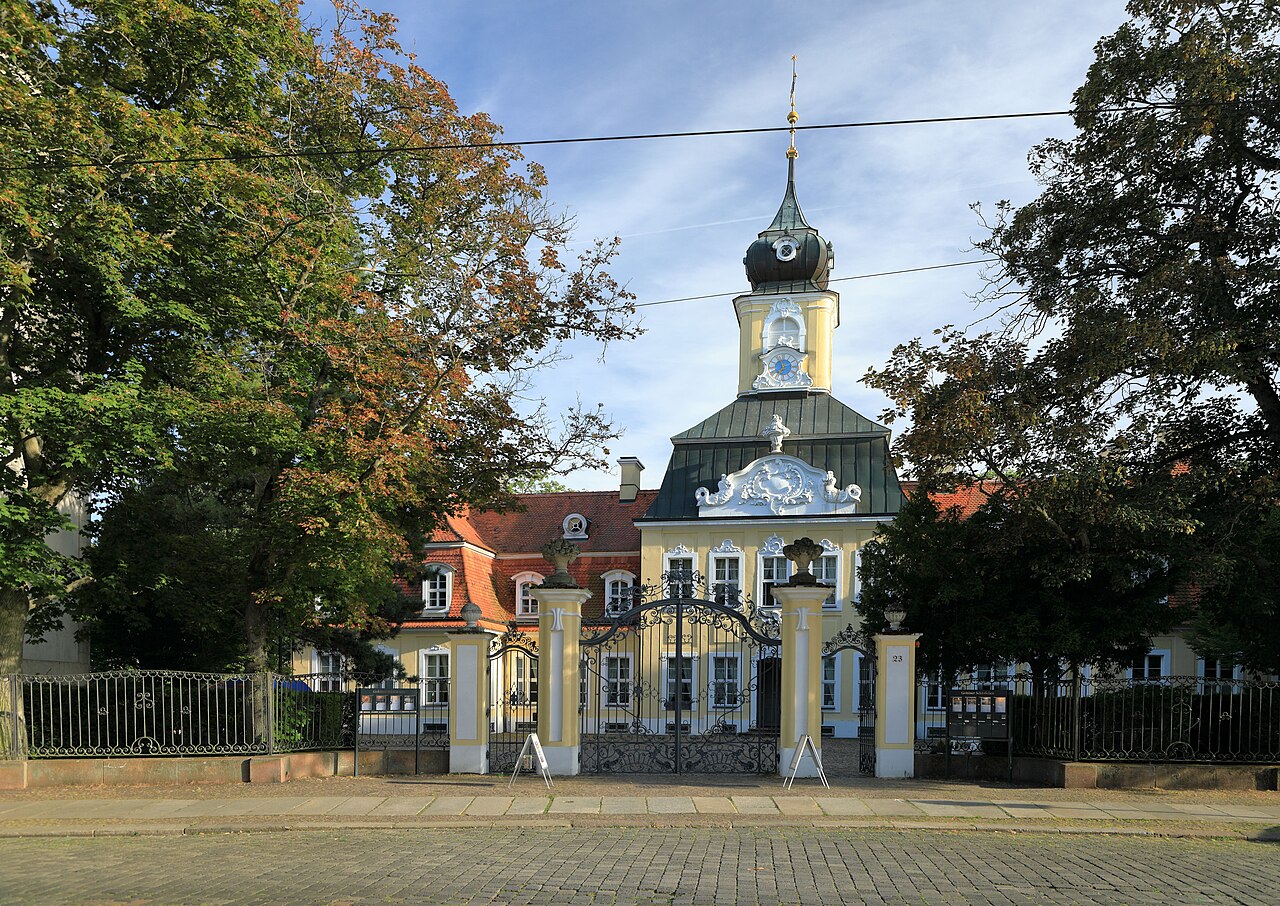
The Gohliser Schlösschen is a notable summer residence located in the Gohlis district of Leipzig, Germany. Commissioned in 1755 by the merchant Caspar Richter, the building serves as a prime example of late Baroque and Rococo architecture in the region. It was designed to function as a suburban retreat for the city's wealthy elite, reflecting the aesthetic preferences and social aspirations of the mid-18th-century bourgeoisie.
The structure is particularly celebrated for its well-preserved festive hall, which features intricate ceiling frescoes executed by the artist Adam Friedrich Oeser, a mentor to Johann Wolfgang von Goethe. Following extensive restoration efforts in the late 20th century, the palace now serves as a cultural center, hosting concerts, readings, and exhibitions that maintain its historical role as a venue for intellectual and artistic exchange.
Key Facts
- Materials
- Sandstone, Brick, Stucco
- Civilization
- German
- Accessibility
- Ground floor accessible; upper floors limited
- Date(s)
- 1755-1756
- Condition
- Restored and active cultural venue
- Original Function
- Summer residence
- Key Figures
- Caspar Richter, Adam Friedrich Oeser
Commission and Construction
1755-1756The palace was built on the site of a former farmstead for the Leipzig merchant Caspar Richter. It was intended as a 'maison de plaisance' or summer house, situated in the then-rural village of Gohlis, providing a retreat from the urban environment of Leipzig.
Artistic Flourish
18th CenturyThe interior was decorated with high-quality craftsmanship, most notably the ceiling paintings in the main hall by Adam Friedrich Oeser. These works established the palace as a significant site for the local arts scene during the Enlightenment era.
Public Ownership and Restoration
20th CenturyAfter passing through various private hands, the city of Leipzig acquired the property. Following decades of neglect, a comprehensive restoration project was undertaken between 1991 and 1998 to return the building to its historical appearance and adapt it for public cultural use.
Cultural Significance
The Gohliser Schlösschen represents the transition of Leipzig from a purely commercial hub to a center of refined culture during the 18th century. It stands as a testament to the influence of the merchant class in shaping the architectural landscape of Saxony.
Today, the site is deeply integrated into the cultural life of Leipzig. Its association with Adam Friedrich Oeser links it directly to the literary and artistic history of the city, particularly the period of the Weimar Classicism, as Oeser's influence on Goethe remains a point of historical pride for the local community.
Interpretive Notes
Scholarly debates and areas of uncertainty
There is minor academic discussion regarding the extent of the original 18th-century interior layout versus the modifications made during the 1990s restoration, specifically concerning the authenticity of certain decorative elements in the side chambers.
Visiting Information
Entry Rules
Open to the public for events and guided tours. Check the official website for specific opening hours as they vary based on the event schedule. Admission fees apply for concerts and special exhibitions.
Best Times to Visit
Spring and summer months, when the surrounding gardens are in bloom and the palace hosts outdoor cultural events.
Photography
Personal photography is permitted in public areas without flash. Professional or commercial photography requires prior authorization from the administration.
Preservation Notes
Visitors are requested to refrain from touching the frescoes and historical wall coverings. Please remain on designated paths within the building.
Nearby POIs
9 shownSources & Further Reading
- [1]Leipzig: Architektur von der Romanik bis zur Gegenwart — Wolfgang Hocquél. Passage-Verlag (2010)
- [2]Adam Friedrich Oeser: Ein Beitrag zur Kunstgeschichte des 18. Jahrhunderts — Alfred Wilhelm Heilmann. Klinkhardt & Biermann (1913)
Key Facts
- Materials
- Sandstone, Brick, Stucco
- Civilization
- German
- Accessibility
- Ground floor accessible; upper floors limited
- Date(s)
- 1755-1756
- Condition
- Restored and active cultural venue
- Original Function
- Summer residence
- Key Figures
- Caspar Richter, Adam Friedrich Oeser