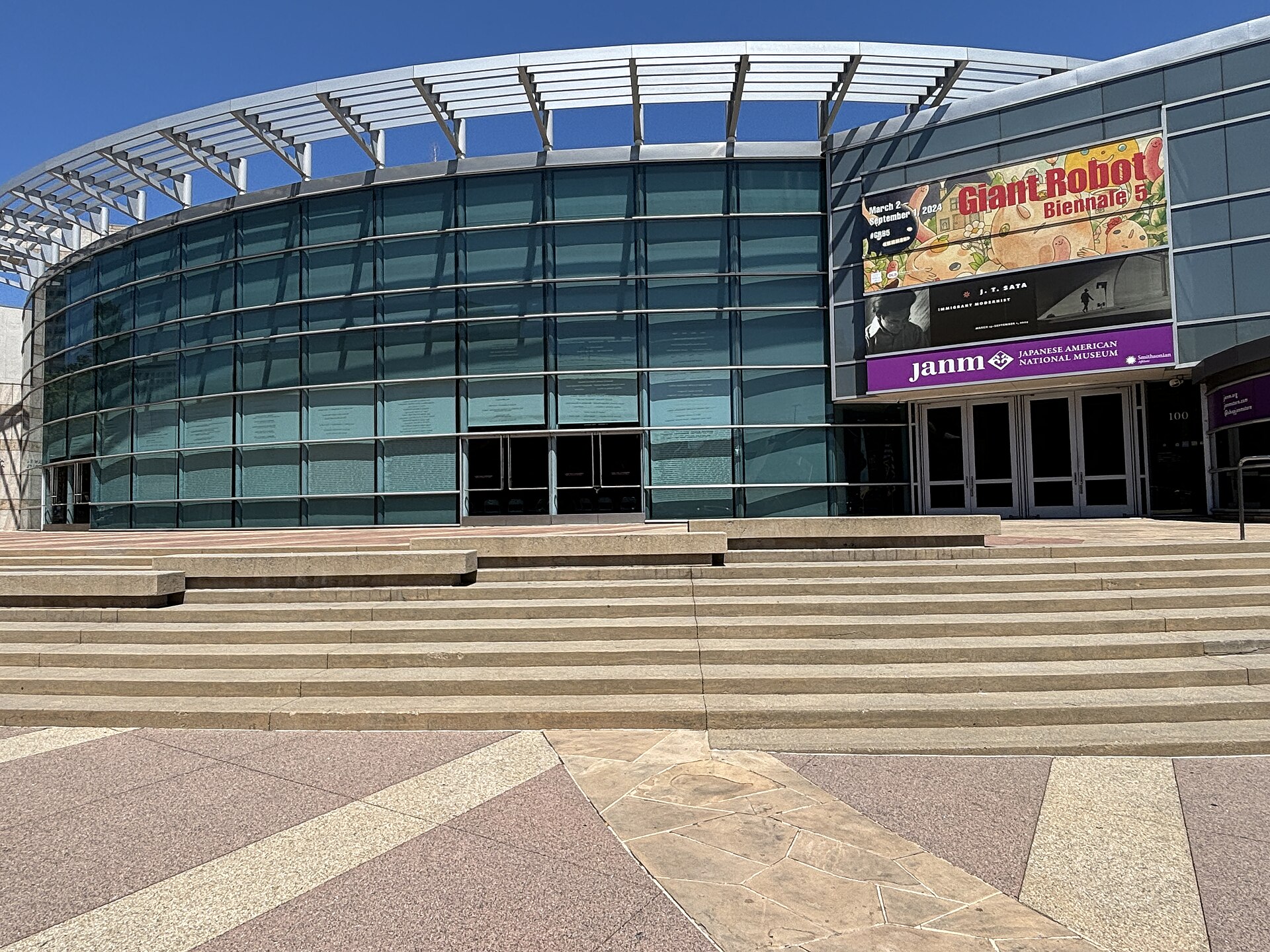
The Japanese American National Museum (JANM) is located in the Little Tokyo district of Los Angeles. It is dedicated to documenting and preserving the history, culture, and experiences of Japanese Americans, spanning over 130 years of history from the first Issei immigrants to the present day.
The museum's permanent exhibition, 'Common Ground: The Heart of Community,' chronicles the Japanese American experience, including the forced removal and incarceration of Japanese Americans during World War II. Through its extensive collection of artifacts, photographs, and oral histories, the institution serves as a center for education and dialogue regarding civil rights and the immigrant experience in the United States.
Key Facts
- Materials
- Steel, Glass, Concrete
- Civilization
- Japanese American
- Accessibility
- Fully wheelchair accessible
- Date(s)
- 1992
- Condition
- Active
- Original Function
- Museum
- Key Figures
- George Takei, Irene Hirano Inouye
Founding and Mission
1980s-1992The museum was conceived in the 1980s by a group of Japanese American community leaders who recognized the need to preserve the history of their community. It officially opened its doors in 1992 in the historic Nishi Hongwanji Buddhist Temple building.
Expansion
1999In 1999, the museum expanded significantly with the opening of a new pavilion designed by architect Gyo Obata. This expansion allowed for larger exhibition spaces and the housing of the museum's growing collection of historical artifacts.
Contemporary Role
2000-PresentToday, the museum functions as a major cultural institution in Los Angeles, hosting rotating exhibitions, public programs, and research initiatives that explore the intersection of Japanese American history with broader American civil rights issues.
Cultural Significance
The museum plays a vital role in the Little Tokyo community and serves as a national repository for Japanese American history. It is a critical site for understanding the impact of Executive Order 9066 and the subsequent incarceration of Japanese Americans, framing these events within the context of American democracy and constitutional rights.
Interpretive Notes
Scholarly debates and areas of uncertainty
Discussions within the museum community often focus on the balance between preserving specific ethnic histories and integrating those narratives into the broader American historical canon. There is ongoing scholarly interest in how digital archives can best preserve oral histories from the Nisei generation.
Visiting Information
Entry Rules
Open Tuesday through Sunday. Tickets can be purchased online or at the box office. Admission is free every third Thursday of the month.
Best Times to Visit
Weekday mornings are generally quieter. The museum is a central hub during the annual Nisei Week festival in August.
Photography
Personal photography is permitted in most galleries without flash. Tripods and professional equipment require prior authorization.
Preservation Notes
Visitors are asked not to touch artifacts or display cases. Food and drink are prohibited within the exhibition galleries.
Nearby POIs
11 shown- The Broad1.2 km
- Grammy Museum2.5 km
- California Science Center5.8 km
- Natural History Museum of Los Angeles County5.9 km
- Griffith Observatory9.5 km
- Hollywood Museum10.8 km
- Hollywood Wax Museum10.9 km
- George C. Page Museum10.9 km
- La Brea Tar Pits11 km
- Hollywood Walk of Fame11 km
- Los Angeles County Museum of Art11.3 km
Key Facts
- Materials
- Steel, Glass, Concrete
- Civilization
- Japanese American
- Accessibility
- Fully wheelchair accessible
- Date(s)
- 1992
- Condition
- Active
- Original Function
- Museum
- Key Figures
- George Takei, Irene Hirano Inouye
Nearby POIs
11 shown- The Broad1.2 km
- Grammy Museum2.5 km
- California Science Center5.8 km
- Natural History Museum of Los Angeles County5.9 km
- Griffith Observatory9.5 km
- Hollywood Museum10.8 km
- Hollywood Wax Museum10.9 km
- George C. Page Museum10.9 km
- La Brea Tar Pits11 km
- Hollywood Walk of Fame11 km
- Los Angeles County Museum of Art11.3 km