Warsaw: Phoenix City of Resilience, Royalty, and Modern Polish Identity
Explore a capital forged in perseverance, where meticulously restored old town streets stand alongside royal palaces, heroic monuments, and a dynamic modern skyline.
 Daniel Romanov
Warsaw: Phoenix City of Resilience, Royalty, and Modern Polish Identity
Warsaw, the dynamic capital of Poland, is widely known as the Phoenix City. Having suffered near-total destruction during World War II, Warsaw rebuilt its historic heart with meticulous historical accuracy, earning its Old Town a place on the UNESCO World Heritage list. Today, modern skyscrapers rise alongside restored royal palaces, heroic monuments, and expansive green parks, creating a compelling portrait of determination and rebirth.
Situated along the Vistula River, Warsaw has served as Poland's political capital since King Sigismund III Vasa transferred the royal court from Krakow in 1596. Its history is defined by incredible cultural achievements, brave struggles for freedom, and unyielding optimism.
The Restored Royal Castle and Old Town
At the entrance to the Old Town stands Castle Square, dominated by Sigismund's Column. Erected in 1644, this tall monument honors the king who made Warsaw the nation's capital.
Overlooking the square is the Royal Castle in Warsaw. Originally the residence of Polish monarchs and the site where Europe's first constitutional law (the Constitution of May 3, 1791) was adopted, the castle was completely destroyed in 1944. Rebuilt between 1971 and 1984 through public donations, its majestic halls and tapestries again showcase the splendour of the Polish-Lithuanian Commonwealth.
Nearby stands St. John's Archcathedral, a Gothic brick sanctuary that witnessed royal weddings, coronations, and the burials of distinguished Polish statesmen and Nobel laureates.
Royal Residences along the Royal Route
Stretching south from the Old Town is the Royal Route (Trakt Królewski), a grand avenue lined with churches, palaces, and university buildings.
Set within the vast Lazienki Park lies Palace on the Isle (Pałac Na Wyspie). Built in the eighteenth century for King Stanisław August Poniatowski, this elegant Neoclassical palace appears to float on the surrounding lake. The surrounding park features roaming peacocks, historic orangeries, and the famous Frédéric Chopin monument.
Further south along the route stands Wilanów Palace (King John III Palace Museum). Often referred to as the Polish Versailles, this Baroque royal residence survived wartime destruction intact, preserving original art collections, royal gardens, and golden architectural details from the reign of King John III Sobieski.
Tributes to Heroism and Freedom
Warsaw's history in the twentieth century was marked by extraordinary heroism and sacrifice during foreign occupations.
The Warsaw Rising Museum provides an immersive tribute to the 1944 Warsaw Uprising, where underground resistance fighters fought bravely for 63 days against Nazi forces. Interactive exhibits, personal artifacts, and a replica B-24 Liberator aircraft convey the spirit and courage of the insurgents.
The city also honors the memory of its Jewish community. The POLIN Museum of the History of Polish Jews, located on the site of the former Warsaw Ghetto, presents a thousand-year history of Jewish life in Poland through interactive galleries. Nearby, the monumental Monument to the Ghetto Heroes stands as a solemn testament to the 1943 Ghetto Uprising.
In Saxon Garden, the Tomb of the Unknown Soldier, situated beneath the remaining arcades of the destroyed Saxon Palace, maintains an eternal flame guarded by military sentries in memory of fallen Polish soldiers.
Modern Skyline and Cultural Landmarks
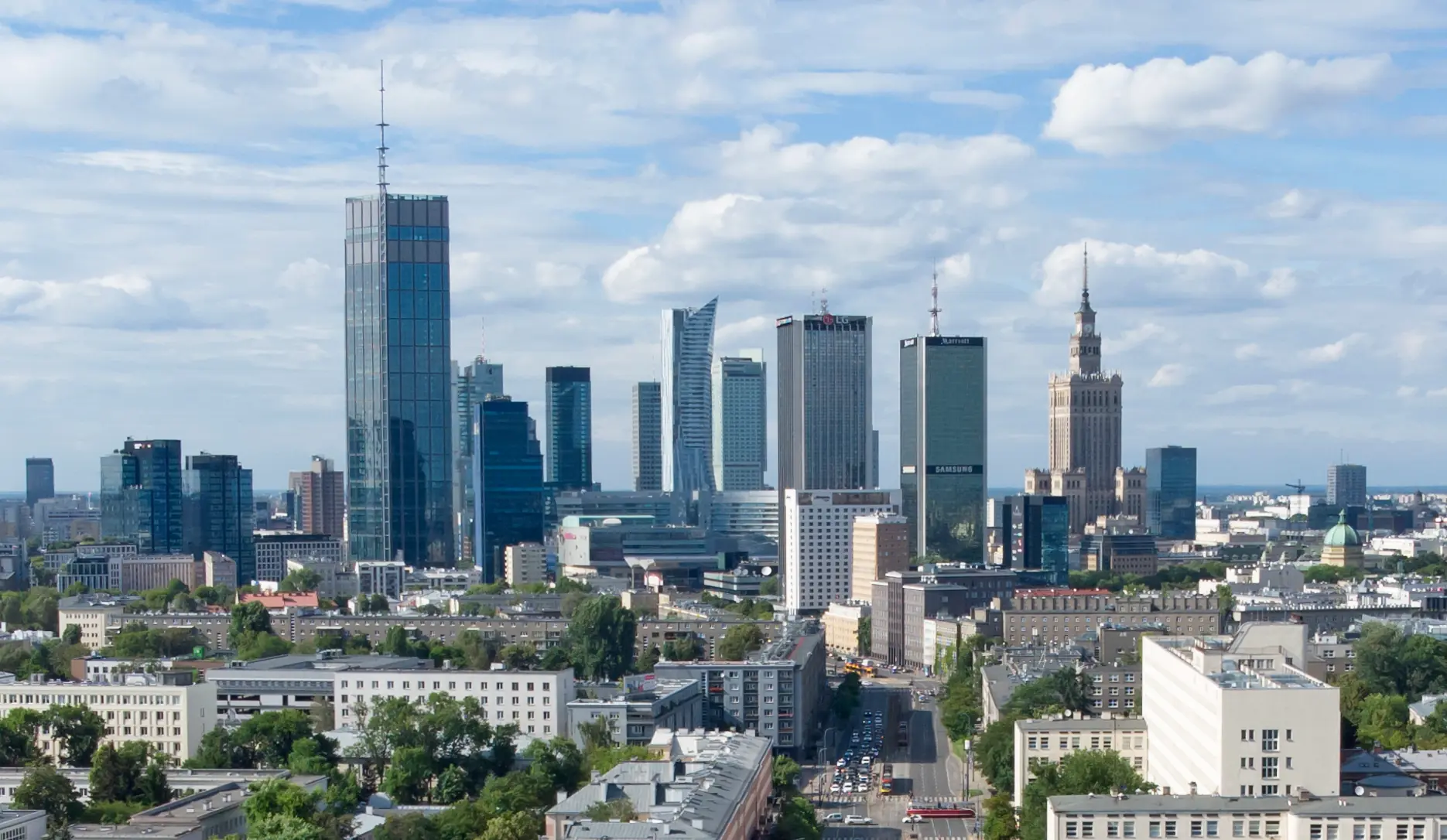
Contrasting with its historic avenues, Warsaw boasts one of Europe's most vibrant modern skylines.
Dominating the central district is the Palace of Culture and Science, a towering socialist realist skyscraper constructed in the 1950s. While historically controversial, its observation deck on the 30th floor offers magnificent panoramic views across the modern high-rises and historic neighborhoods of the city.
In recent decades, modern financial towers, contemporary art centers, and revived industrial districts along the Vistula River have positioned Warsaw as one of Europe's fastest-growing economic hubs.
Tastes of Warsaw
Warsaw's culinary scene blends classic Mazovian traditions with modern European innovation.
Favorite local dishes include żurek (a sour rye soup served with boiled egg and white sausage, often presented in a hollowed bread bowl), pyzy (soft potato dumplings stuffed with seasoned meat), and zander fillet cooked in rich butter sauce.
Visitors can enjoy traditional pastries like pączki (deep-fried glazed donuts filled with wild rose jam) and zefir in historic patisseries that have welcomed artists and writers for over a century.
The Unstoppable Energy of Warsaw
Warsaw's story is one of unprecedented rebirth and enduring vitality. By honoring its historical roots while fearlessly constructing a futuristic capital, Warsaw offers travelers a profound look into the heart of modern Europe. It is a city where every corner testifies to human resilience, creativity, and progress.