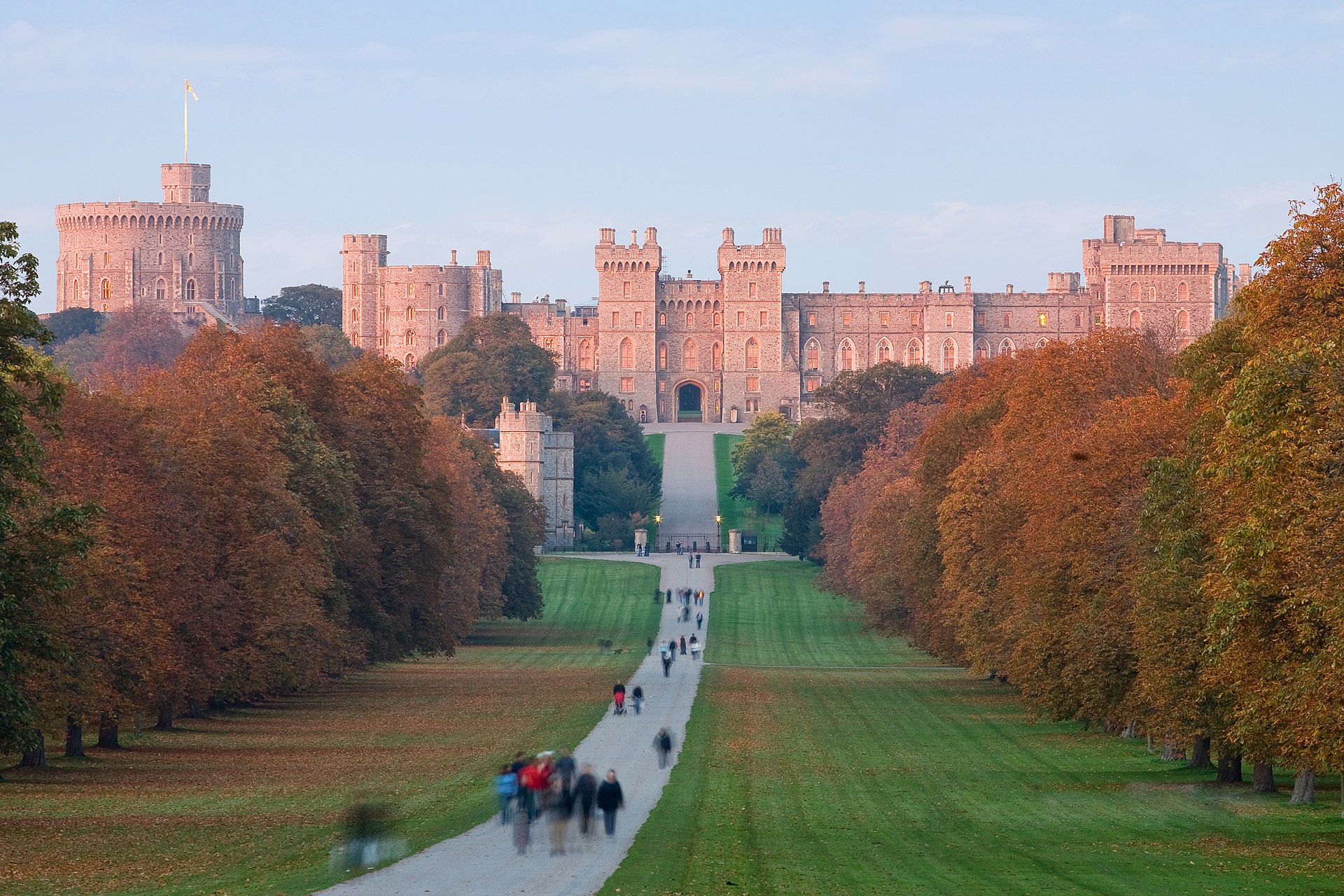
Windsor Castle is a royal residence in Windsor, Berkshire, notable for its long association with the English and later British royal family and its architecture. It is the longest-occupied palace in Europe, having served as a primary residence for monarchs since the reign of Henry I in the early 12th century.
The castle complex covers approximately 13 acres and combines elements of a fortification, a palace, and a small town. Its architectural evolution reflects centuries of royal history, ranging from the original motte-and-bailey design established by William the Conqueror to the extensive Gothic and Neoclassical renovations commissioned by George IV and Queen Victoria.
Key Facts
- Materials
- Stone, Brick, Timber
- Civilization
- English/British
- Accessibility
- Partially accessible; historic nature limits some areas
- Date(s)
- 1070 CE - present
- Condition
- Active royal residence and tourist attraction
- Original Function
- Fortification and royal residence
- Key Figures
- William the Conqueror, Henry VIII, Queen Victoria, Elizabeth II
Foundations and Medieval Development
11th - 14th centuryFounded by William the Conqueror following the Norman Conquest, the castle was initially a wooden motte-and-bailey structure. Henry II replaced the wooden palisades with stone walls and built the Round Tower. Edward III later transformed the castle into a grand Gothic palace, establishing the Order of the Garter.
Tudor and Stuart Transformations
16th - 17th centuryHenry VIII and Elizabeth I made significant additions, including the construction of the main gatehouse. During the English Civil War, the castle was used as a military headquarters and prison for Charles I, who was eventually buried in St George's Chapel.
Georgian and Victorian Expansion
18th - 19th centuryGeorge IV commissioned architect Jeffry Wyatville to undertake a massive renovation, which gave the castle its current skyline, including the heightening of the Round Tower. Queen Victoria made the castle her primary residence, cementing its status as a symbol of the British Empire.
Modern Era
20th century - presentThe castle survived the Blitz during World War II and underwent major restoration following a devastating fire in 1992. It remains a working royal palace, hosting state visits and serving as a primary residence for the monarch.
Cultural Significance
Windsor Castle serves as a primary symbol of the British monarchy's continuity and power. It is the site of St George's Chapel, the spiritual home of the Order of the Garter, and the final resting place of numerous monarchs, including Henry VIII and Elizabeth II. The castle is deeply embedded in the national identity, representing the intersection of medieval military history and modern constitutional monarchy.
Interpretive Notes
Scholarly debates and areas of uncertainty
Debates often center on the extent of the 19th-century 'Gothic' renovations, with some historians arguing that Wyatville's work obscured the authentic medieval fabric of the castle in favor of a romanticized, idealized vision of the past.
Visiting Information
Entry Rules
Open to the public throughout the year, though closures occur for state events. Tickets must be purchased in advance. Security screening is mandatory for all visitors.
Best Times to Visit
Weekdays during the shoulder seasons (spring and autumn) offer the best balance of manageable crowds and pleasant weather for exploring the grounds.
Photography
Photography is permitted in the grounds and most public areas, but strictly prohibited inside the State Apartments and St George's Chapel.
Preservation Notes
Visitors are required to follow marked paths. The site is a working palace; certain areas may be closed without notice for official royal business.
Nearby POIs
11 shownSources & Further Reading
- [1]Windsor Castle: A History — John Martin Robinson. Royal Collection Trust (2011)
- [2]The History of the King's Works — H.M. Colvin. Her Majesty's Stationery Office (1963)
Key Facts
- Materials
- Stone, Brick, Timber
- Civilization
- English/British
- Accessibility
- Partially accessible; historic nature limits some areas
- Date(s)
- 1070 CE - present
- Condition
- Active royal residence and tourist attraction
- Original Function
- Fortification and royal residence
- Key Figures
- William the Conqueror, Henry VIII, Queen Victoria, Elizabeth II