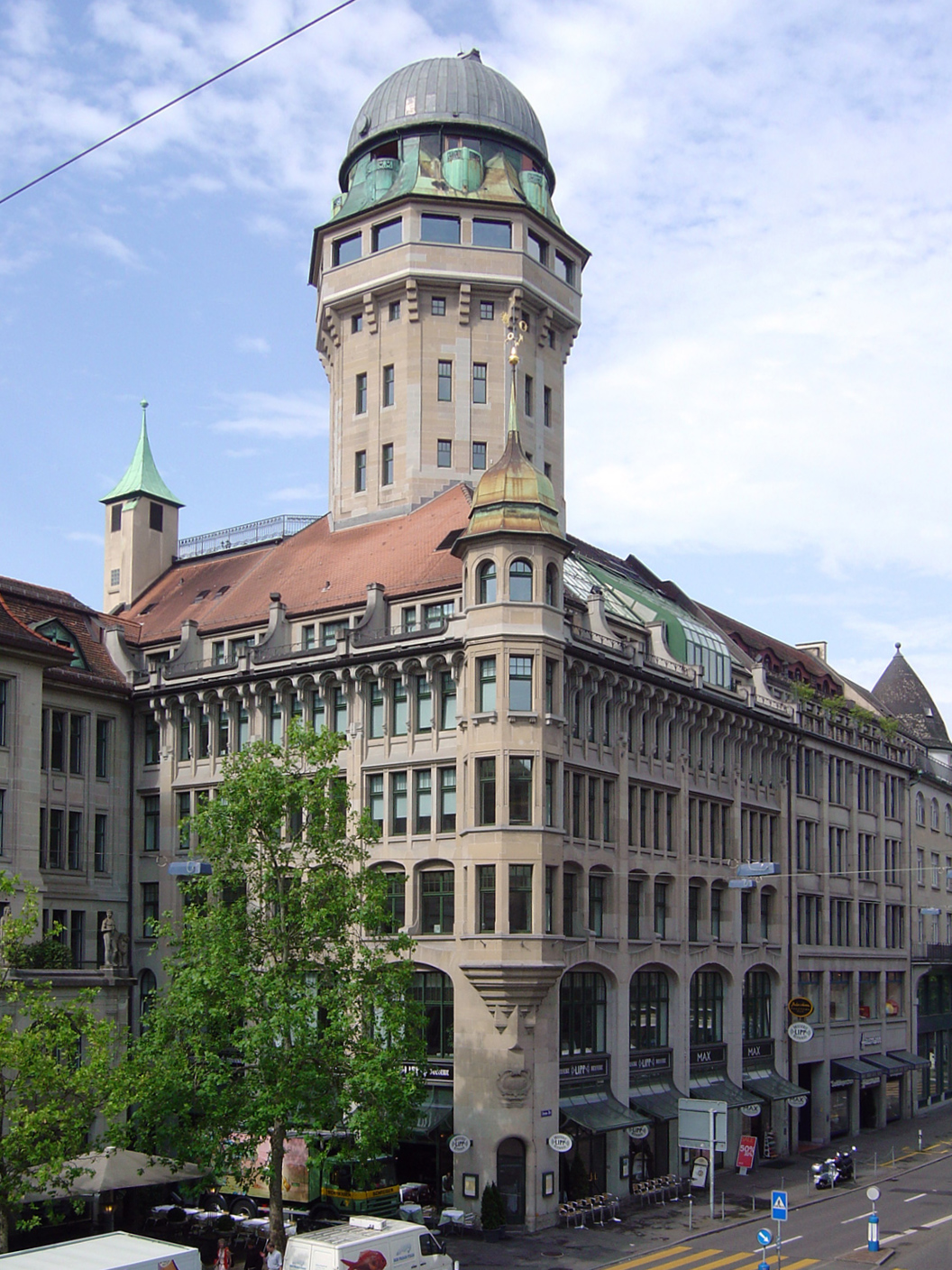
The Urania Sternwarte is a public observatory located in the heart of Zurich, Switzerland. Completed in 1907, the facility is housed within a fifty-meter tower that serves as a prominent landmark in the city's skyline. It was designed to provide the public with access to astronomical observation, featuring a sophisticated Zeiss telescope that remains a centerpiece of the institution.
The observatory functions as both a scientific site and an educational center. It offers guided tours and public viewing sessions, allowing visitors to observe celestial bodies from an urban environment. The structure is integrated into the larger Urania building complex, which also houses a restaurant and commercial spaces, reflecting the early 20th-century urban planning approach of combining civic utility with scientific outreach.
Key Facts
- Materials
- Stone, Steel, Glass
- Civilization
- Swiss
- Accessibility
- Limited; access to the telescope requires climbing stairs
- Date(s)
- 1907
- Condition
- Active, fully operational
- Original Function
- Public astronomical observatory
- Key Figures
- Carl Zeiss
Planning and Construction
1905-1907The observatory was commissioned as part of the Urania building project, intended to bring scientific education to the city center. Construction was completed in 1907, incorporating state-of-the-art optical technology for the time.
Technological Integration
Early 20th CenturyThe installation of the Zeiss telescope provided Zurich with one of the most advanced public viewing instruments in Europe. Its location in the city center was a deliberate choice to ensure accessibility for the general public.
Modernization
Late 20th Century - PresentThe facility has undergone several technical upgrades to its telescope and dome mechanisms. It continues to operate as a popular destination for educational tours and public stargazing events.
Cultural Significance
The Urania Sternwarte represents the intersection of 20th-century civic architecture and the democratization of science. By placing an observatory in the dense urban core rather than a remote mountain location, the founders emphasized the importance of public scientific literacy. It remains a symbol of Zurich's commitment to education and technical innovation.
Interpretive Notes
Scholarly debates and areas of uncertainty
There is limited scholarly debate regarding the site, though architectural historians occasionally discuss the impact of the Urania building's design on the surrounding cityscape and the challenges of maintaining astronomical clarity within a light-polluted urban environment.
Visiting Information
Entry Rules
Access is restricted to guided tours and scheduled public viewing sessions. Tickets must be purchased in advance via the official website. No specific dress code is required, but visitors should be prepared for cooler temperatures in the dome area.
Best Times to Visit
Clear, cloudless evenings are essential for telescope viewing. Winter months often provide better atmospheric conditions for observation due to lower humidity.
Photography
Personal photography is permitted, but the use of flash is prohibited during observation sessions to maintain night vision and protect the equipment.
Preservation Notes
The telescope and dome mechanism are sensitive historical instruments. Visitors are requested to follow all instructions from guides and avoid touching the optical surfaces.
Nearby POIs
10 shownSources & Further Reading
- [1]
- [2]Astronomical Observatories of Switzerland — Swiss Astronomical Society. Scientific Heritage Press (2015)
Key Facts
- Materials
- Stone, Steel, Glass
- Civilization
- Swiss
- Accessibility
- Limited; access to the telescope requires climbing stairs
- Date(s)
- 1907
- Condition
- Active, fully operational
- Original Function
- Public astronomical observatory
- Key Figures
- Carl Zeiss