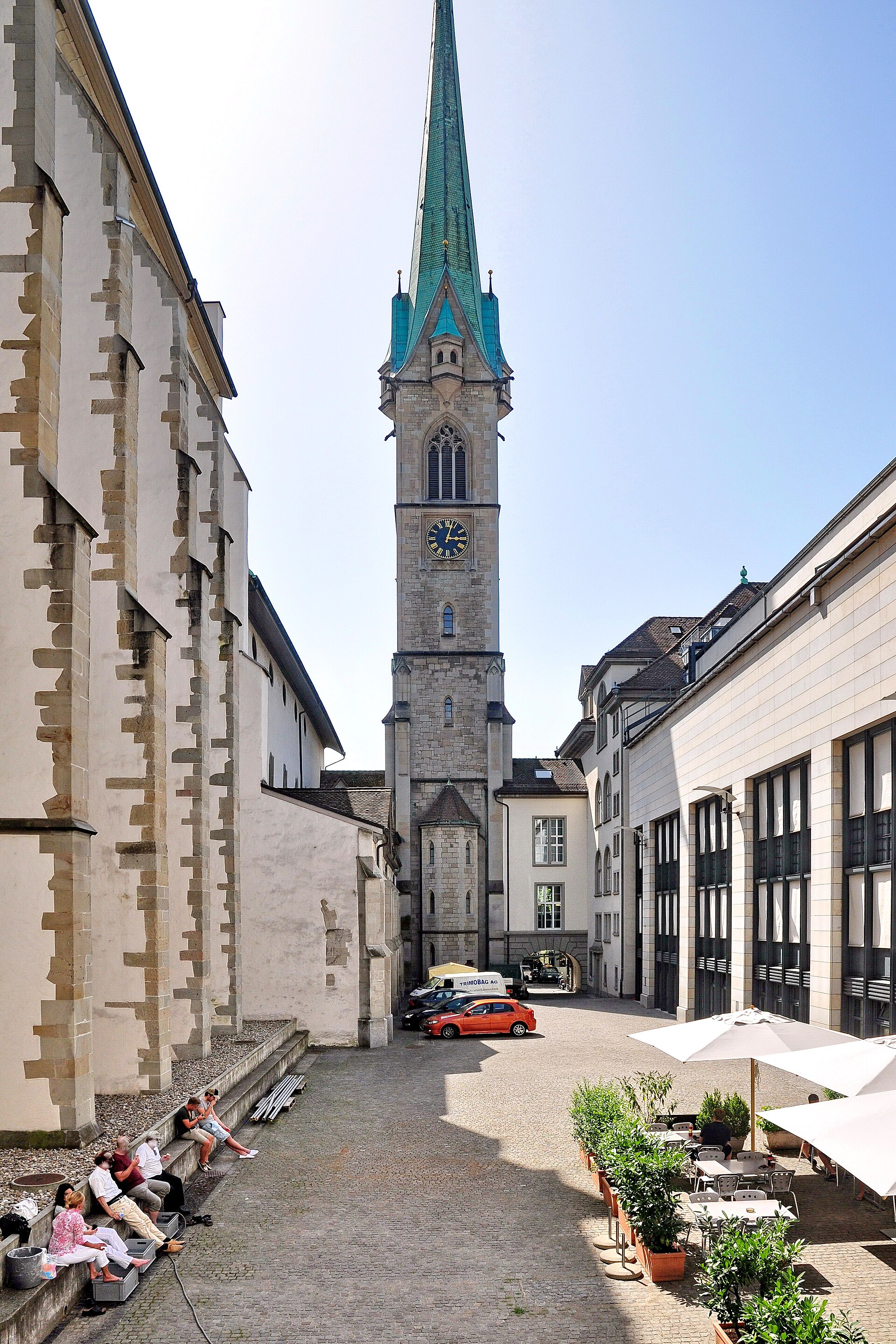
The Predigerkirche is a prominent ecclesiastical structure in Zurich, originally established in the 13th century as part of a Dominican monastery. It is best known for housing the tallest Gothic spire in the city, which serves as a significant landmark in the Zurich skyline. The church has undergone several architectural transformations, reflecting the shifting religious and cultural landscape of the region over the centuries.
Following the Reformation, the site transitioned from a monastic church to a parish church for the local community. The interior features a blend of medieval foundations and later Baroque modifications, providing a tangible record of the city's ecclesiastical history and its evolution from a center of monastic life to a focal point of urban Protestant worship.
Key Facts
- Materials
- Sandstone, Limestone
- Civilization
- Swiss
- Accessibility
- Ground level access available
- Date(s)
- 1231 CE
- Condition
- Well-preserved, active parish church
- Original Function
- Dominican monastery church
- Key Figures
- Dominican Order
Monastic Origins
13th CenturyThe church was founded in 1231 as the church of the Dominican monastery in Zurich. It served as a center for preaching and theological study, reflecting the order's commitment to urban ministry.
Reformation and Transition
16th CenturyDuring the Swiss Reformation, the monastery was dissolved. The church was repurposed as a parish church, serving the growing population of the city and adapting to the new liturgical requirements of the Reformed tradition.
Architectural Evolution
18th-19th CenturyThe structure underwent significant renovations, including the addition of Baroque elements to the interior. The iconic spire was maintained and reinforced, solidifying its status as the tallest Gothic spire in Zurich.
Cultural Significance
The Predigerkirche is central to the historical identity of Zurich's Old Town. Beyond its architectural prominence, it represents the transition of the city from a medieval monastic hub to a center of the Reformation. It remains a site of active worship and a venue for cultural events, maintaining its role as a community anchor.
Interpretive Notes
Scholarly debates and areas of uncertainty
Debates exist regarding the extent of the original medieval frescoes that may remain hidden beneath later layers of plaster, as well as the precise structural impact of the 19th-century spire reinforcements on the original Gothic masonry.
Visiting Information
Entry Rules
Open to the public daily. Entry is free. Visitors are requested to maintain silence and respect ongoing religious services.
Best Times to Visit
Weekday mornings for quiet reflection; Sunday mornings for services.
Photography
Personal photography allowed without flash. Tripods and commercial photography require prior permission from the parish office.
Preservation Notes
The building is a protected historical monument. Visitors should refrain from touching the stone carvings and remain within designated visitor areas.
Nearby POIs
10 shownSources & Further Reading
- [1]
- [2]Kirchen in Zürich — Hanspeter Marti. Zürcher Denkmalpflege (2012)
Key Facts
- Materials
- Sandstone, Limestone
- Civilization
- Swiss
- Accessibility
- Ground level access available
- Date(s)
- 1231 CE
- Condition
- Well-preserved, active parish church
- Original Function
- Dominican monastery church
- Key Figures
- Dominican Order