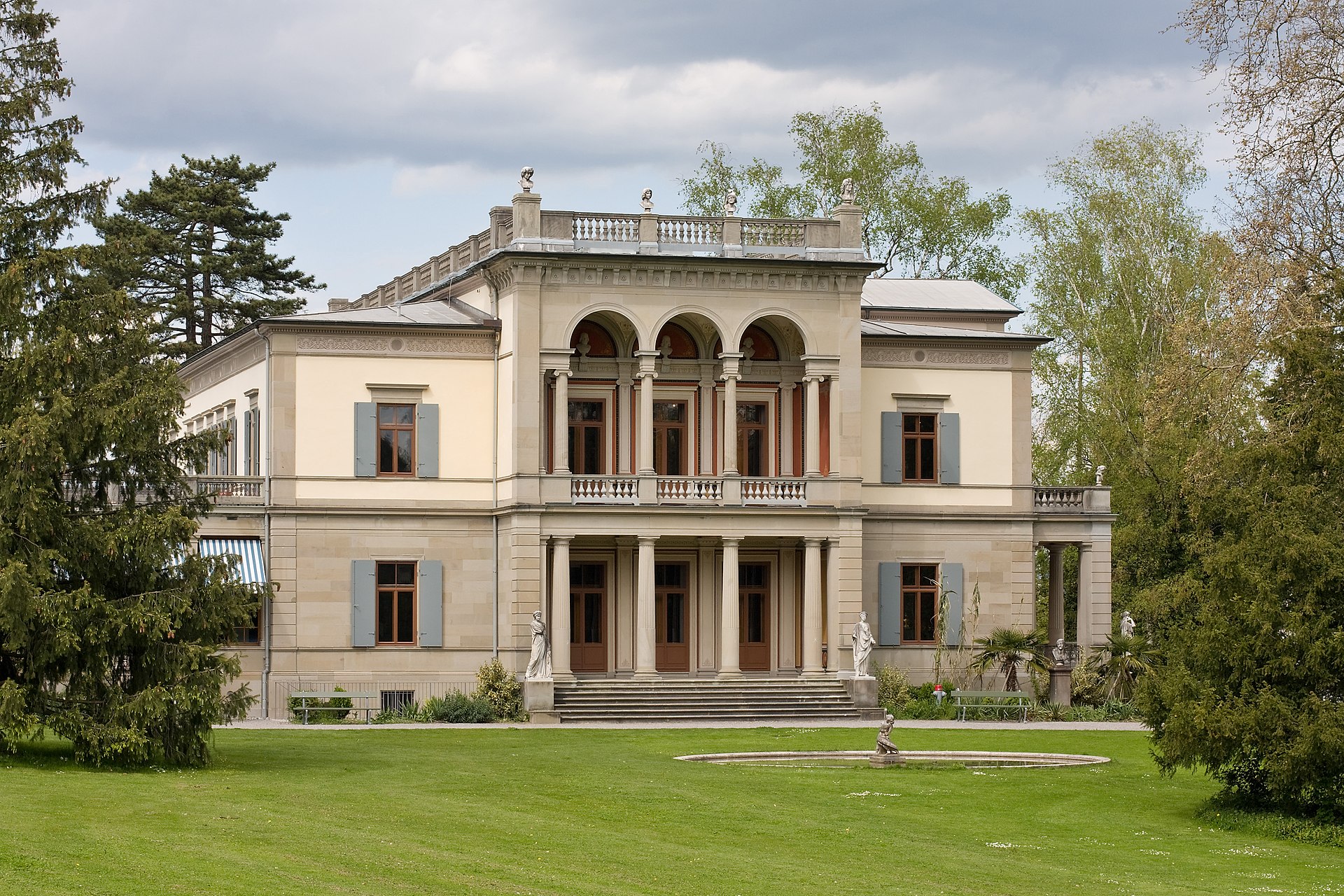
The Rietberg Museum is a renowned institution in Zurich dedicated to the art and culture of non-European civilizations. It is unique for its dual-site architecture, which pairs the historic Wesendonck Villa—a neoclassical mansion built in 1857—with the modern 'Emerald,' a subterranean glass pavilion designed by Alfred Grazioli and Adolf Krischanitz that opened in 2007.
The museum's collection spans diverse artistic traditions from Asia, Africa, America, and Oceania. It serves as a significant center for global art history, emphasizing the aesthetic and cultural contexts of objects ranging from ancient sculptures to contemporary works, all set within the expansive Rieterpark.
Key Facts
- Materials
- Stucco, Sandstone, Glass, Steel
- Civilization
- Global (Non-European focus)
- Accessibility
- Fully wheelchair accessible
- Date(s)
- 1857 (Villa), 2007 (Emerald Pavilion)
- Condition
- Well-preserved and active
- Original Function
- Private residence (Wesendonck Villa)
- Key Figures
- Mathilde Wesendonck, Richard Wagner, Baron Eduard von der Heydt
The Wesendonck Era
1857The central villa was commissioned by Otto and Mathilde Wesendonck, designed by architect Leonhard Zeugheer. It became a cultural hub, famously hosting Richard Wagner, who composed his 'Wesendonck Lieder' while living in the adjacent guest house.
Foundation of the Museum
1952The museum was established following the donation of the collection of Baron Eduard von der Heydt to the City of Zurich. The villa was converted into a public museum to house these extensive non-European art holdings.
Expansion and Modernization
2007To accommodate the growing collection and provide modern exhibition space, the 'Emerald' pavilion was constructed. This subterranean expansion allowed for larger temporary exhibitions while preserving the historic park landscape.
Cultural Significance
The Rietberg Museum plays a vital role in the Swiss cultural landscape by fostering cross-cultural dialogue. By focusing on non-European art, it challenges Eurocentric narratives and provides a platform for the appreciation of global heritage, influencing how non-Western art is curated and interpreted in Europe.
Interpretive Notes
Scholarly debates and areas of uncertainty
The museum is actively involved in the ongoing discourse regarding the provenance of colonial-era artifacts. Scholars and the museum administration engage in research concerning the acquisition history of specific pieces, particularly those from African and Asian contexts, to ensure ethical transparency.
Visiting Information
Entry Rules
Open Tuesday to Sunday. Tickets are required for entry. The museum is closed on Mondays. Visitors are encouraged to check the official website for current exhibition-specific pricing.
Best Times to Visit
Weekday mornings offer the quietest experience. The surrounding Rieterpark is best enjoyed during spring and summer months.
Photography
Non-commercial photography is permitted in most permanent collection galleries without flash or tripods. Specific temporary exhibitions may prohibit photography.
Preservation Notes
Maintain a respectful distance from all artifacts. Large bags and umbrellas must be stored in the provided lockers. Food and drink are strictly prohibited within the galleries.
Nearby POIs
10 shownSources & Further Reading
- [1]
- [2]The Wesendonck Villa: A History — Hans-Peter Wittwer. Zurich Architectural Press (2015)
Key Facts
- Materials
- Stucco, Sandstone, Glass, Steel
- Civilization
- Global (Non-European focus)
- Accessibility
- Fully wheelchair accessible
- Date(s)
- 1857 (Villa), 2007 (Emerald Pavilion)
- Condition
- Well-preserved and active
- Original Function
- Private residence (Wesendonck Villa)
- Key Figures
- Mathilde Wesendonck, Richard Wagner, Baron Eduard von der Heydt