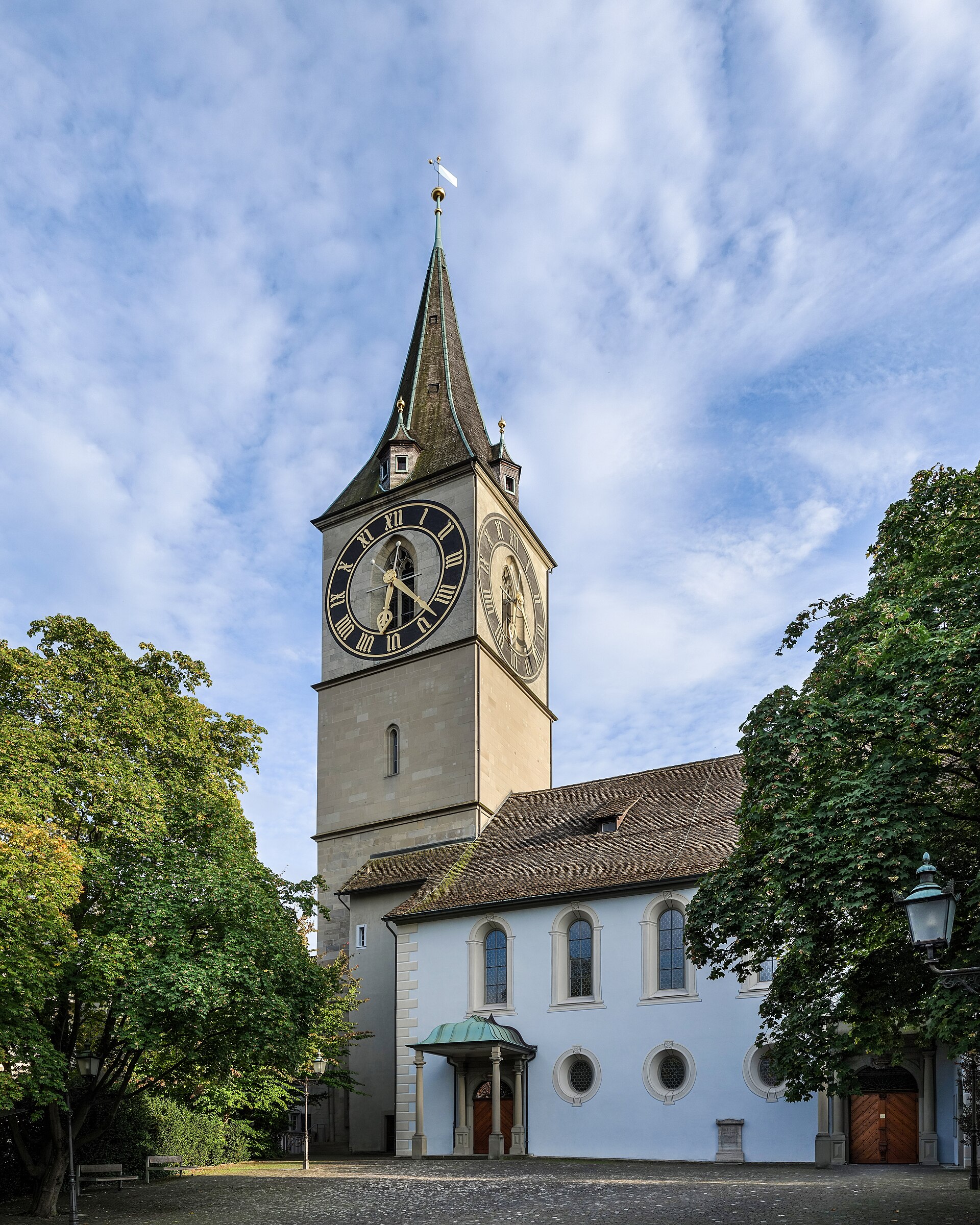
St. Peter Church is the oldest parish church in Zürich, located in the historic Altstadt near the Lindenhof hill. While the site has served as a place of worship since the 9th century, the current structure primarily dates to the early 18th century, representing a significant example of Baroque architecture in the city.
The church is internationally recognized for its massive clock face, which measures 8.7 meters in diameter, making it the largest church clock face in Europe. This monumental timekeeper serves as a prominent landmark, symbolizing the intersection of Zürich's religious history and its long-standing association with precision horology.
Key Facts
- Materials
- Sandstone, Timber
- Civilization
- Swiss
- Accessibility
- Ground level accessible
- Date(s)
- 1706
- Condition
- Well-preserved and active
- Original Function
- Parish church
- Key Figures
- Rudolf Brun
Early Foundations
9th centuryThe earliest documented church on this site dates back to the 9th century. Archaeological excavations have revealed the foundations of a small, single-nave Romanesque church that served the local parish during the early medieval period.
Gothic Expansion
13th-15th centuryDuring the late Middle Ages, the church was expanded in the Gothic style. The choir, which remains the oldest surviving part of the structure, dates to the 13th century and features distinct architectural characteristics of the period.
Baroque Reconstruction
1705-1706The current nave was constructed between 1705 and 1706, replacing the older Gothic nave. It was the first Protestant church built in Zürich after the Reformation, designed with a focus on acoustics and visibility for preaching.
Modern Era
19th-21st centuryThe tower and its famous clock face underwent various restorations to maintain the mechanism and the structural integrity of the spire. Today, the church continues to function as an active parish and a cultural landmark.
Cultural Significance
St. Peter Church is central to the identity of Zürich's Altstadt. Beyond its religious function, the church tower historically served as a fire watch station, with a watchman stationed there until the early 20th century. The clock face remains a defining feature of the city's skyline, reflecting the historical importance of timekeeping in Swiss culture.
The church is also the final resting place of Rudolf Brun, the first independent mayor of Zürich, whose grave is located within the church grounds, linking the site to the city's political history.
Interpretive Notes
Scholarly debates and areas of uncertainty
There is ongoing discussion regarding the extent of the original Romanesque foundations and how much of the 13th-century Gothic choir was modified during the 18th-century Baroque reconstruction. Precise dating of the earliest subterranean layers remains a subject of archaeological interest.
Visiting Information
Entry Rules
Open to the public daily. Entry is free. Visitors are requested to maintain silence as it is an active place of worship.
Best Times to Visit
Morning hours are best for viewing the clock face in natural light. The area is less crowded on weekdays.
Photography
Photography is permitted for personal use. Tripods and flash are prohibited inside the sanctuary.
Preservation Notes
The clock mechanism is a historical artifact; visitors should refrain from touching any exposed equipment or historical markers.
Nearby POIs
10 shownSources & Further Reading
- [1]Die Kunstdenkmäler des Kantons Zürich: Die Stadt Zürich — Walter Drack. Birkhäuser Verlag (1986)
- [2]St. Peter Zürich: Geschichte und Architektur — Parish Council of St. Peter. Zürich Tourismus (2015)View
Key Facts
- Materials
- Sandstone, Timber
- Civilization
- Swiss
- Accessibility
- Ground level accessible
- Date(s)
- 1706
- Condition
- Well-preserved and active
- Original Function
- Parish church
- Key Figures
- Rudolf Brun