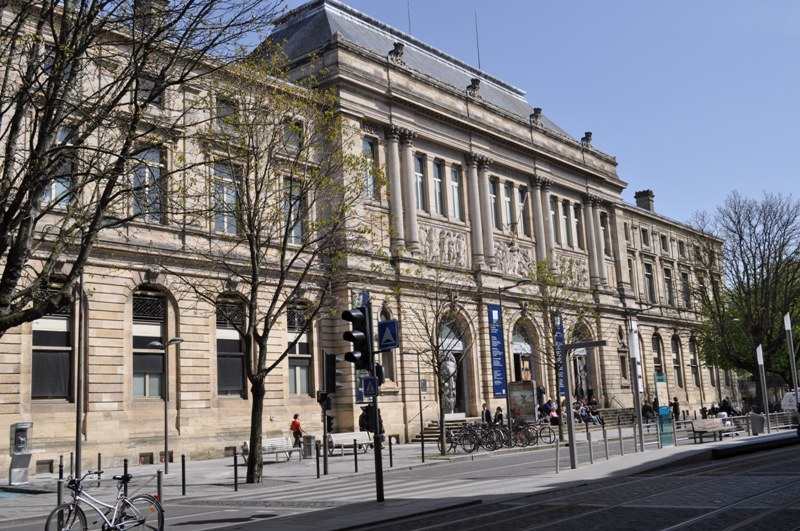
The Musée d'Aquitaine is a major regional museum located in Bordeaux, France, dedicated to the history, archaeology, and ethnography of the Aquitaine region. Housed in the former Faculty of Letters and Sciences building, the museum holds a vast collection spanning from prehistoric times to the 21st century.
The institution is particularly noted for its significant Gallo-Roman collection, including the Hercules of Bordeaux, and its extensive exhibits detailing the history of the port of Bordeaux, the Atlantic slave trade, and the colonial history of the region. It serves as a primary center for research and public education regarding the cultural heritage of southwestern France.
Key Facts
- Materials
- Stone, Glass, Steel
- Civilization
- French
- Accessibility
- Fully wheelchair accessible
- Date(s)
- 1886 (current building)
- Condition
- Active museum
- Original Function
- Faculty of Letters and Sciences
- Key Figures
- Camille Jullian
Founding and Early Collections
18th - 19th CenturyThe museum's origins trace back to the 18th century with the creation of the Academy of Sciences, Belles-Lettres and Arts of Bordeaux. The collections were formally organized into a municipal museum in the 19th century under the influence of local historians.
Relocation to the Faculty Building
1960sIn the 1960s, the museum moved into the former Faculty of Letters and Sciences building, a structure designed by architect Charles Durand. This move allowed for the consolidation of various regional collections into a single, cohesive space.
Modern Expansion
20th - 21st CenturyThe museum has undergone several phases of modernization, including the integration of new galleries dedicated to the history of the slave trade and the colonial era, reflecting a commitment to addressing complex historical narratives.
Cultural Significance
The museum acts as the primary repository for the collective memory of the Aquitaine region. It plays a crucial role in local identity by documenting the evolution of Bordeaux from a Roman settlement to a major international port city.
It is also recognized for its critical engagement with the history of the slave trade, providing a space for public discourse on the city's role in the 18th-century triangular trade and its lasting impact on contemporary society.
Interpretive Notes
Scholarly debates and areas of uncertainty
There is ongoing academic discussion regarding the museum's curation of colonial history and the representation of the Atlantic slave trade. Scholars debate the balance between maintaining a traditional archaeological focus and addressing the ethical complexities of Bordeaux's mercantile past.
Visiting Information
Entry Rules
Open Tuesday to Sunday, 11:00 to 18:00. Closed on Mondays and public holidays. Tickets can be purchased at the entrance or online.
Best Times to Visit
Weekday mornings are generally quieter. The museum is a suitable indoor activity during inclement weather.
Photography
Non-commercial photography is permitted without flash. Tripods and selfie sticks are prohibited.
Preservation Notes
Flash photography is strictly prohibited to protect light-sensitive artifacts. Visitors are requested to refrain from touching display cases.
Nearby POIs
6 shownSources & Further Reading
- [1]
- [2]Bordeaux et la traite des noirs — Eric Saugera. Karthala (2002)
Key Facts
- Materials
- Stone, Glass, Steel
- Civilization
- French
- Accessibility
- Fully wheelchair accessible
- Date(s)
- 1886 (current building)
- Condition
- Active museum
- Original Function
- Faculty of Letters and Sciences
- Key Figures
- Camille Jullian