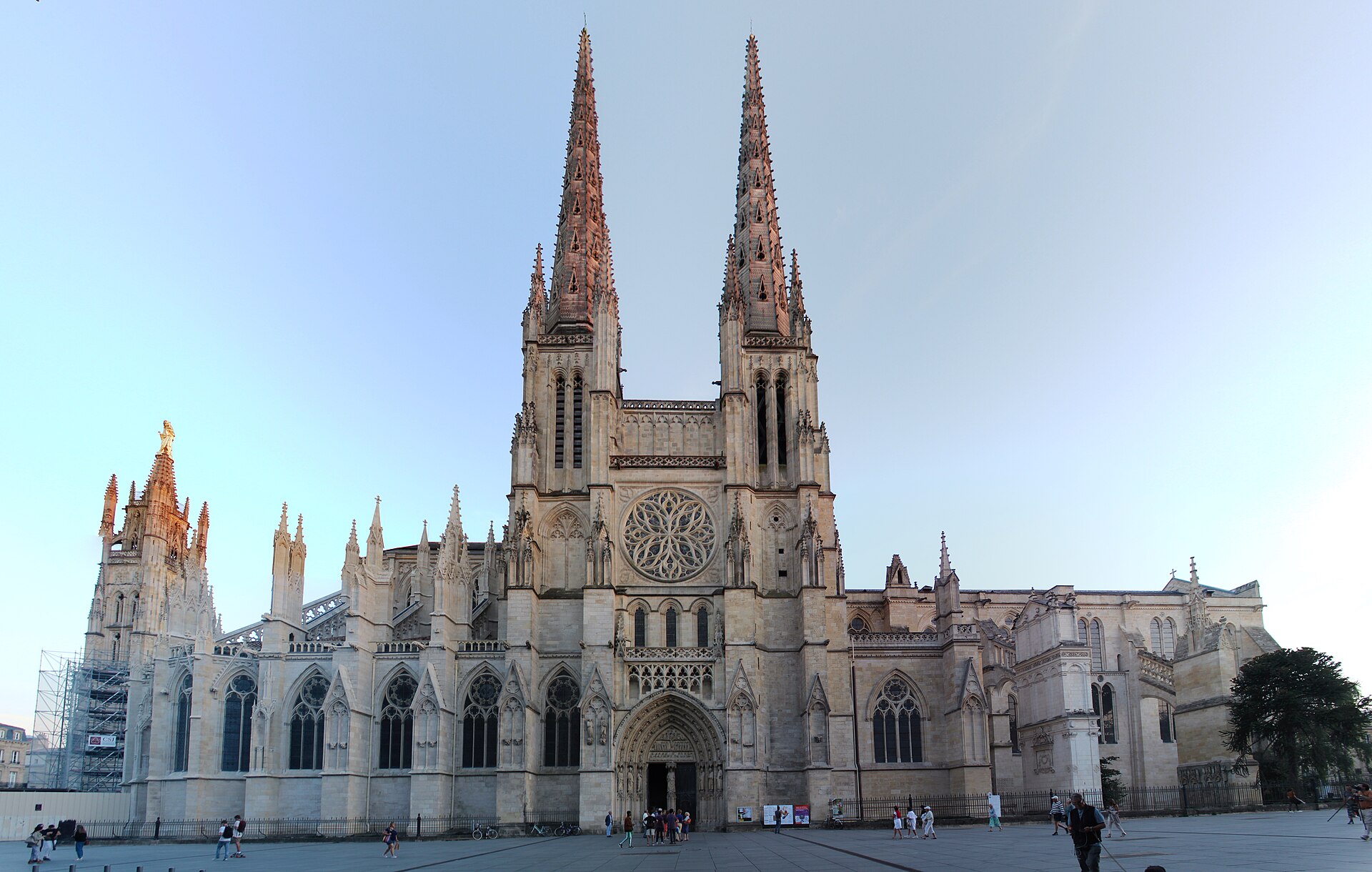
The Cathedral of Saint-André in Bordeaux is a major religious landmark and a key stop on the pilgrimage route to Santiago de Compostela. The structure is characterized by its distinct architectural evolution, featuring a Romanesque nave from the 11th and 12th centuries and a grand Gothic choir and transept added between the 13th and 15th centuries. Its detached bell tower, the Tour Pey-Berland, stands separately from the main building to prevent structural damage from the cathedral's weight on the marshy soil.
The cathedral is historically significant for hosting the 1137 marriage of Eleanor of Aquitaine to the future King Louis VII of France. This union, which briefly united the crowns of France and Aquitaine, remains a pivotal moment in medieval European history, setting the stage for the long-standing political and territorial tensions between the French and English monarchies.
Key Facts
- Materials
- Limestone, Stone
- Civilization
- French
- Accessibility
- Ground floor accessible to visitors
- Date(s)
- 11th - 15th century
- Condition
- Active religious site, well-preserved
- Original Function
- Cathedral
- Key Figures
- Eleanor of Aquitaine, Louis VII, Pope Urban II
Romanesque Origins
11th centuryThe original Romanesque structure was consecrated by Pope Urban II in 1096. While much of this early building was later replaced, parts of the nave walls remain from this initial construction phase.
Royal Wedding
1137The cathedral gained international prominence when it served as the venue for the marriage of Eleanor of Aquitaine, Duchess of Aquitaine, to Louis VII, who would soon become King of France.
Gothic Expansion
13th - 15th centuryDuring the height of the Gothic period, the cathedral underwent significant expansion. The choir, transept, and radiating chapels were constructed, creating the soaring verticality and light-filled spaces characteristic of the era.
The Tour Pey-Berland
15th centuryThe iconic bell tower was commissioned by Archbishop Pey Berland. It was built detached from the main cathedral to ensure the stability of the primary structure, which was built on unstable, water-logged ground.
Cultural Significance
The cathedral serves as a symbol of Bordeaux's historical importance as a center of trade and religious pilgrimage. Its association with Eleanor of Aquitaine links the city to the complex dynastic history of the Middle Ages, bridging the cultural identities of Aquitaine and the French crown.
Interpretive Notes
Scholarly debates and areas of uncertainty
Architectural historians continue to debate the extent of the original Romanesque footprint and the specific influence of the Angevin Gothic style on the cathedral's unique choir design compared to contemporary northern French cathedrals.
Visiting Information
Entry Rules
Open daily to the public. Entry is free, though donations are encouraged. Visitors are expected to maintain a quiet demeanor as it is an active place of worship. Modest dress is requested.
Best Times to Visit
Early morning or late afternoon to avoid peak tourist traffic. The cathedral is particularly atmospheric during organ recitals or evening vespers.
Photography
Photography is permitted for personal use without flash. Tripods and professional equipment require prior authorization from the diocesan office.
Preservation Notes
The site is subject to ongoing maintenance due to the humidity of the local soil. Visitors should respect all cordoned-off areas during restoration work.
Nearby POIs
6 shownSources & Further Reading
- [1]Bordeaux: A History — Bernard Guillemain. Privat (1980)
- [2]The Gothic Cathedral: Architecture of the Great Church — Christopher Wilson. Thames & Hudson (2004)
Key Facts
- Materials
- Limestone, Stone
- Civilization
- French
- Accessibility
- Ground floor accessible to visitors
- Date(s)
- 11th - 15th century
- Condition
- Active religious site, well-preserved
- Original Function
- Cathedral
- Key Figures
- Eleanor of Aquitaine, Louis VII, Pope Urban II