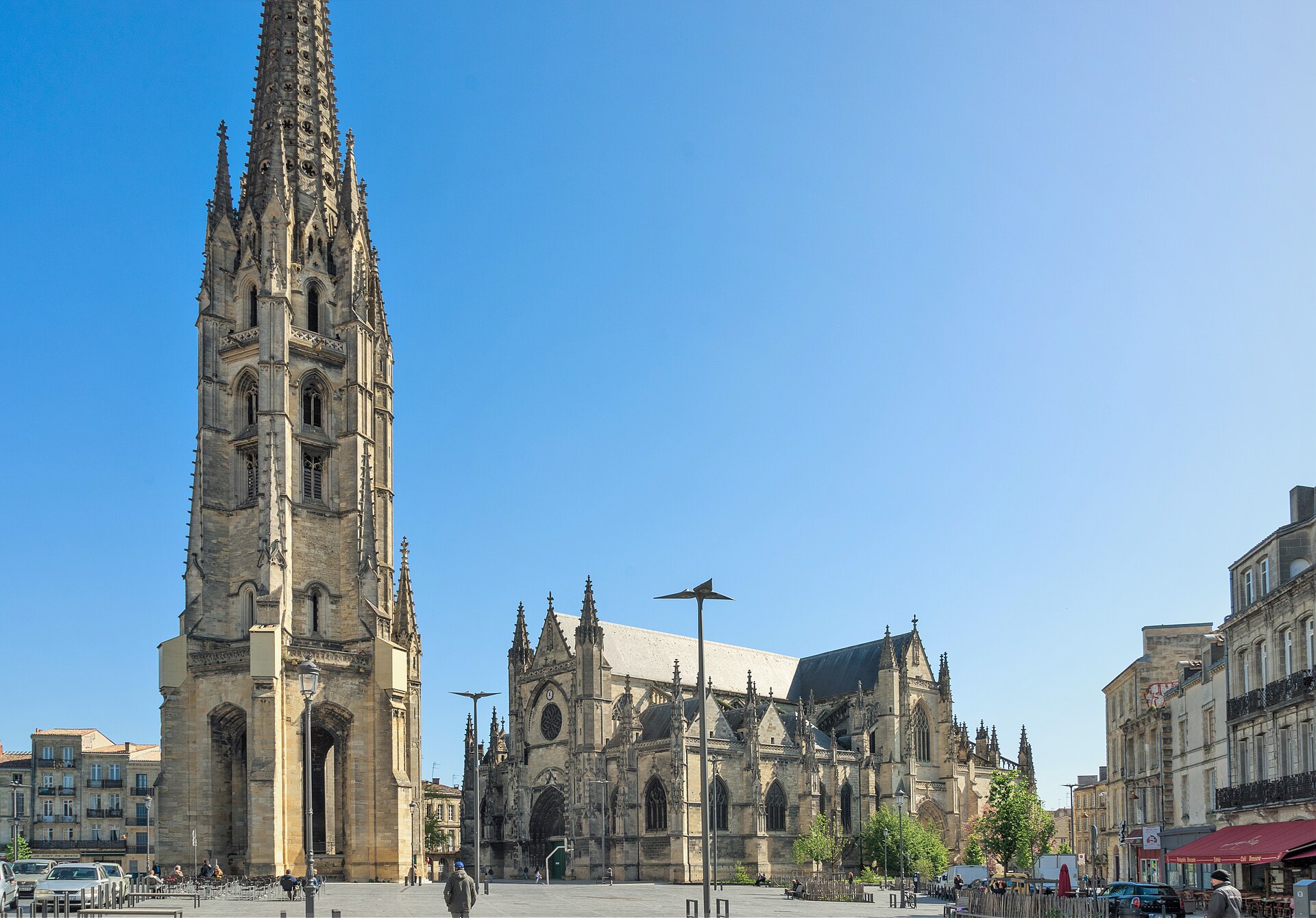
The Basilique Saint-Michel is a prominent Flamboyant Gothic church located in the heart of Bordeaux. Constructed primarily between the 14th and 16th centuries, it serves as a significant example of religious architecture in the region and is recognized as a UNESCO World Heritage site as part of the Routes of Santiago de Compostela in France.
The basilica is particularly noted for its detached bell tower, known as the Flèche Saint-Michel. Standing at 114 meters, the tower was built separately from the main church body to avoid structural instability on the sandy soil of the riverbank. It remains one of the tallest religious structures in France and offers a distinct silhouette against the Bordeaux skyline.
Key Facts
- Materials
- Limestone, Stone
- Civilization
- French
- Accessibility
- Ground level accessible, tower access via stairs
- Date(s)
- 14th - 16th century
- Condition
- Well-preserved, active place of worship
- Original Function
- Parish church and pilgrimage stop
- Key Figures
- Louis XI
Foundations and Early Construction
14th centuryConstruction began in the 14th century to accommodate the growing population of the Saint-Michel district. The church was built to serve as a parish for the local merchant and artisan communities.
Flamboyant Gothic Expansion
15th - 16th centuryThe majority of the current structure was completed during this period, showcasing the intricate stone carvings and verticality characteristic of the Flamboyant Gothic style.
The Bell Tower Construction
1472 - 1492The iconic detached bell tower was commissioned to serve as a landmark for pilgrims. Its height and separation from the nave were engineering responses to the local geological conditions.
Modern Restoration
19th century - presentThe tower underwent significant restoration in the 19th century, including the addition of a new spire. Today, the site continues to function as a parish church and a major cultural landmark.
Cultural Significance
The basilica has long served as a spiritual anchor for the Saint-Michel neighborhood, historically home to sailors and traders. Its position on the pilgrimage route to Santiago de Compostela solidified its role as a site of international exchange and religious devotion.
In contemporary Bordeaux, the church is a symbol of the city's medieval heritage. The surrounding square is famous for its vibrant market and multicultural atmosphere, maintaining the site's historical role as a center of civic and social life.
Interpretive Notes
Scholarly debates and areas of uncertainty
There is ongoing academic discussion regarding the structural integrity of the bell tower and the specific architectural influences that led to its detached design, with some scholars comparing it to other isolated campaniles in Southern Europe.
Visiting Information
Entry Rules
Open daily to the public. Entry to the church is free. A small fee is required to climb the bell tower. Modest dress is requested as it is an active place of worship.
Best Times to Visit
Morning hours are best for visiting the interior. The bell tower is best visited in the late afternoon for views over the Garonne River.
Photography
Photography is permitted without flash. Tripods are not allowed inside the church.
Preservation Notes
The site is subject to ongoing conservation efforts due to the porous nature of the limestone. Visitors are asked to respect all cordoned-off areas.
Nearby POIs
6 shownSources & Further Reading
- [1]Bordeaux: A History — Bernard Guillemain. Privat (1991)
- [2]
Key Facts
- Materials
- Limestone, Stone
- Civilization
- French
- Accessibility
- Ground level accessible, tower access via stairs
- Date(s)
- 14th - 16th century
- Condition
- Well-preserved, active place of worship
- Original Function
- Parish church and pilgrimage stop
- Key Figures
- Louis XI