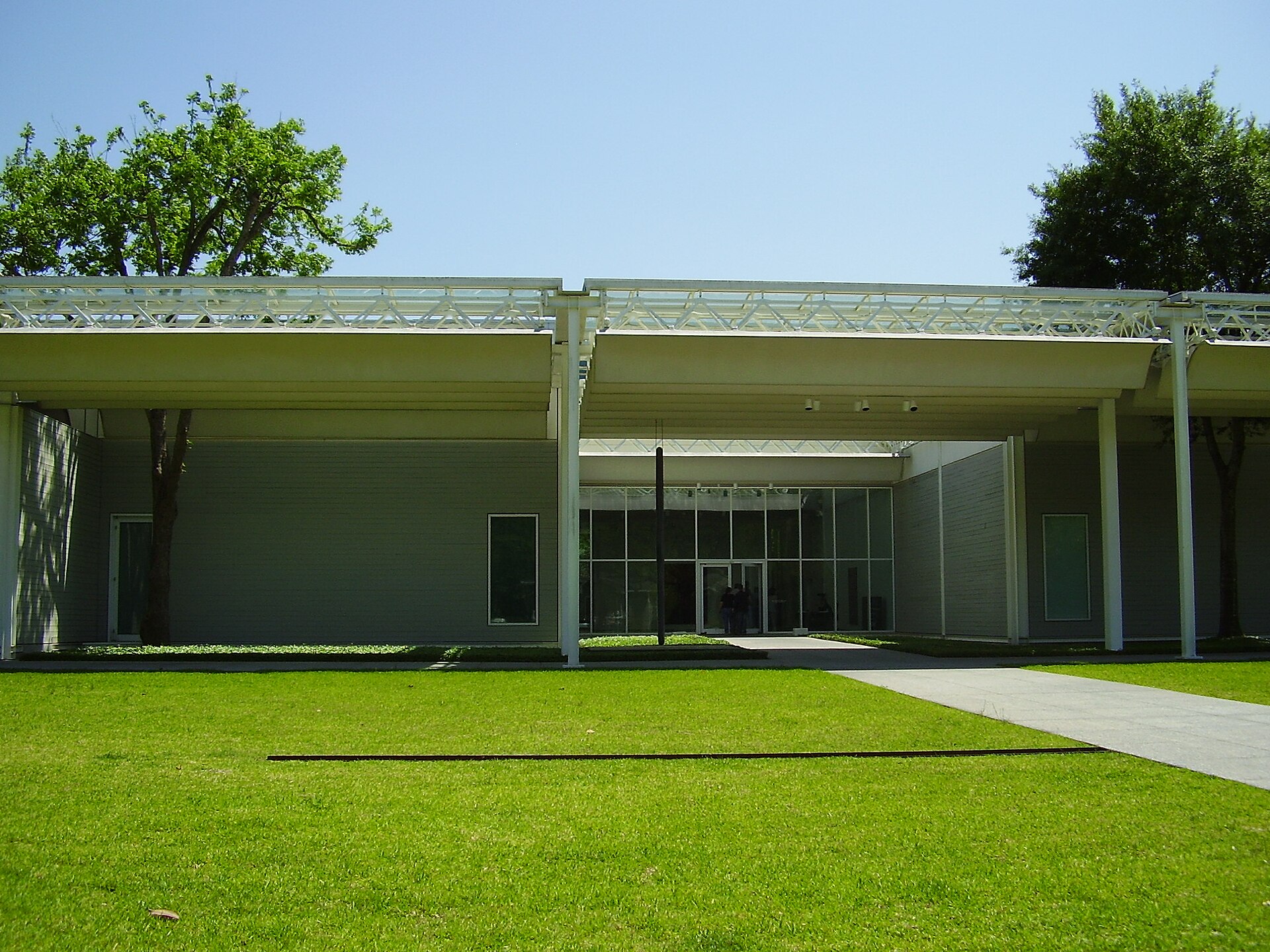
The Menil Collection is a museum and neighborhood of art in Houston, Texas, founded by John and Dominique de Menil. Opened to the public in 1987, the museum houses a vast private collection of 20th-century art, including significant holdings of Surrealism, Abstract Expressionism, and Pop Art, alongside antiquities and Byzantine art.
The museum building, designed by Renzo Piano, is celebrated for its innovative use of natural light. The structure features a series of 'leaf' baffles that diffuse sunlight, creating a controlled environment that allows for the display of art without the need for artificial lighting during daylight hours. The surrounding campus includes the Rothko Chapel and the Cy Twombly Gallery, forming a cohesive cultural enclave.
Key Facts
- Materials
- Steel, Concrete, Glass, Ferrocement
- Civilization
- Modern American
- Accessibility
- Fully wheelchair accessible
- Date(s)
- 1987
- Condition
- Active
- Original Function
- Art Museum
- Key Figures
- John de Menil, Dominique de Menil, Renzo Piano
Formation of the Collection
1940s-1970sJohn and Dominique de Menil began acquiring art in the 1940s after fleeing Nazi-occupied France. Their collection grew to include over 17,000 works, reflecting their deep interest in the intersection of spiritual, ancient, and modern art.
Architectural Commission
1980-1987The couple commissioned Italian architect Renzo Piano to design a building that would house their extensive collection. The design brief emphasized a 'small' museum feel that would integrate seamlessly into the residential neighborhood of the Montrose district.
Public Opening
1987The Menil Collection opened to the public in June 1987. Since its inception, the museum has maintained a policy of free admission, adhering to the founders' belief that art should be accessible to all.
Cultural Significance
The Menil Collection serves as a cornerstone of the Houston arts scene and is internationally recognized for its scholarly approach to 20th-century art. Its commitment to free admission and its integration into a residential neighborhood have made it a model for community-focused museum management.
The institution is also noted for its preservation of the Rothko Chapel, which has become a global symbol for interfaith dialogue and human rights, further cementing the museum's role as a site of both aesthetic and social contemplation.
Interpretive Notes
Scholarly debates and areas of uncertainty
Debates surrounding the museum often focus on the tension between the founders' original, highly personal curatorial vision and the professionalization required by a modern public institution. Additionally, the museum's role in the gentrification of the surrounding Montrose neighborhood has been a subject of local urban planning discourse.
Visiting Information
Entry Rules
Open Wednesday through Sunday. Admission is free to the public. No tickets or reservations are required for general entry.
Best Times to Visit
Weekday mornings are generally quieter. The museum campus is particularly pleasant during the spring and autumn months when the surrounding park space is active.
Photography
Non-flash photography is permitted for personal, non-commercial use in the permanent collection galleries. Video recording and tripods are prohibited.
Preservation Notes
Visitors are asked not to touch the artwork or frames. Food and drink are prohibited in the galleries. Large bags and backpacks must be checked at the entrance.
Nearby POIs
8 shown- Contemporary Arts Museum Houston1.4 km
- Museum of Fine Arts, Houston1.6 km
- Houston Museum of Natural Science1.9 km
- Buffalo Soldiers National Museum2 km
- John P. McGovern Museum of Health and Medical Science2.1 km
- Lone Star Flight Museum26.2 km
- National Museum of Funeral History28.1 km
- Space Center Houston35.6 km
Key Facts
- Materials
- Steel, Concrete, Glass, Ferrocement
- Civilization
- Modern American
- Accessibility
- Fully wheelchair accessible
- Date(s)
- 1987
- Condition
- Active
- Original Function
- Art Museum
- Key Figures
- John de Menil, Dominique de Menil, Renzo Piano
Nearby POIs
8 shown- Contemporary Arts Museum Houston1.4 km
- Museum of Fine Arts, Houston1.6 km
- Houston Museum of Natural Science1.9 km
- Buffalo Soldiers National Museum2 km
- John P. McGovern Museum of Health and Medical Science2.1 km
- Lone Star Flight Museum26.2 km
- National Museum of Funeral History28.1 km
- Space Center Houston35.6 km