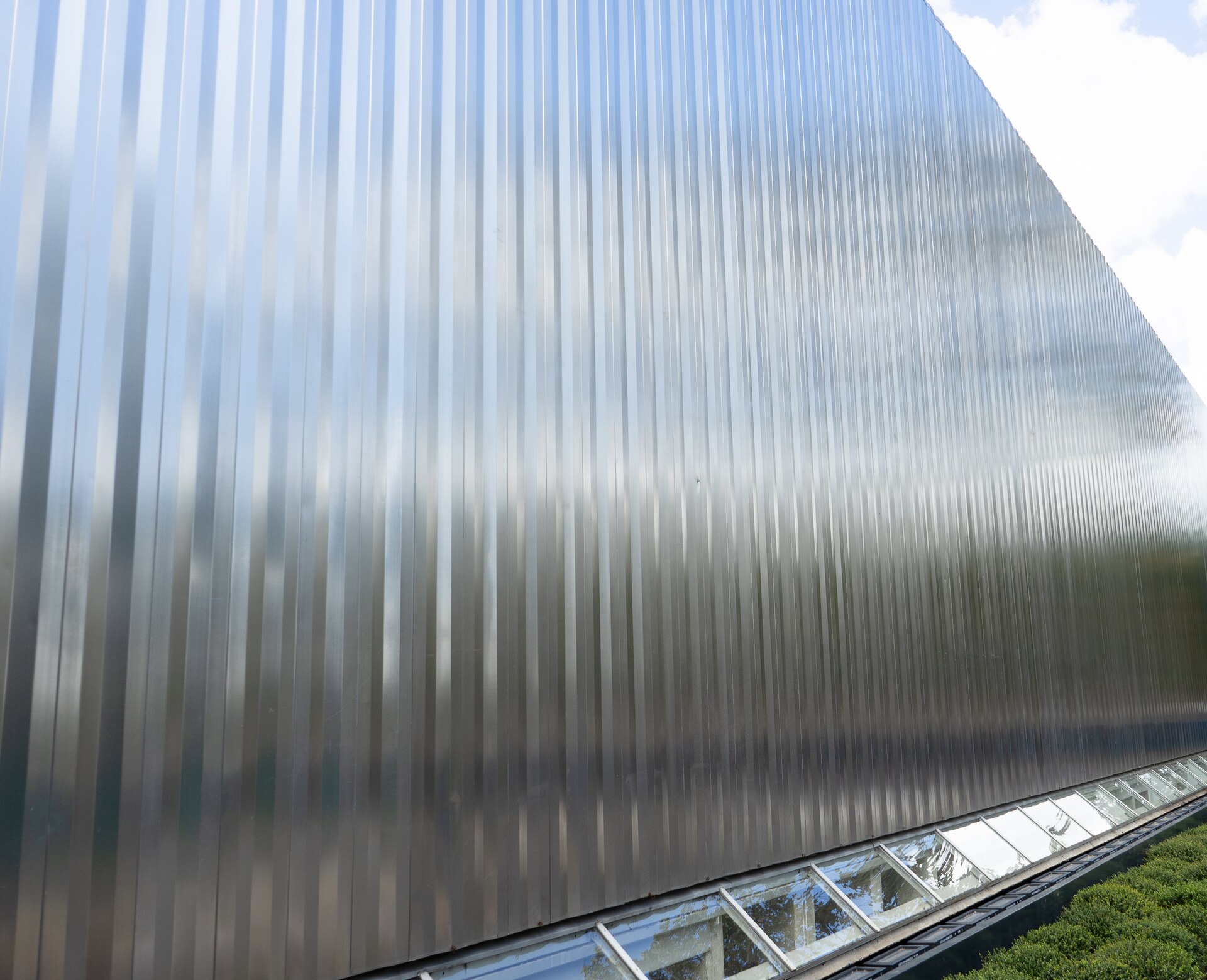
The Contemporary Arts Museum Houston (CAMH) is a non-collecting institution dedicated to presenting the art of the recent past and present. Founded in 1948, the museum focuses on regional, national, and international contemporary art through a rotating schedule of exhibitions, educational programs, and publications. It does not maintain a permanent collection, allowing the institution to remain flexible and responsive to current artistic developments.
The museum is housed in a distinctive stainless steel building designed by architect Gunnar Birkerts, which opened in 1972. The structure is characterized by its trapezoidal shape and windowless exterior, designed to provide a neutral, focused environment for the display of contemporary works. Located in Houston's Museum District, it serves as a significant hub for modern artistic discourse and community engagement.
Key Facts
- Materials
- Stainless steel, Concrete, Steel
- Civilization
- United States
- Accessibility
- Fully wheelchair accessible
- Date(s)
- 1972
- Condition
- Active
- Original Function
- Art museum
- Key Figures
- Gunnar Birkerts
Founding and Early Years
1948-1950sThe museum was established in 1948 by a group of citizens who sought to bring contemporary art to Houston. In its early years, the institution operated without a permanent home, organizing exhibitions in various locations throughout the city.
The Birkerts Building
1972The museum moved into its current permanent facility in 1972. Designed by architect Gunnar Birkerts, the iconic stainless steel trapezoidal building was constructed to provide a specialized space for contemporary art exhibitions.
Institutional Evolution
1980s-PresentOver the following decades, the museum solidified its reputation as a non-collecting institution. It has continued to host major traveling exhibitions and curated shows that highlight both emerging and established contemporary artists.
Cultural Significance
The Contemporary Arts Museum Houston plays a vital role in the cultural landscape of the American South. By eschewing a permanent collection, it maintains a unique position that prioritizes the immediate and the experimental, fostering a dynamic environment for artists to engage with contemporary social and aesthetic issues. It serves as a critical bridge between the local Houston art scene and the broader global art community.
Interpretive Notes
Scholarly debates and areas of uncertainty
Discussions surrounding the museum often center on the challenges and benefits of the non-collecting model. Scholars debate whether the lack of a permanent collection limits the institution's ability to build long-term historical narratives or if it provides a necessary freedom to remain relevant in a rapidly changing contemporary art market.
Visiting Information
Entry Rules
Admission is free to the public. The museum is open Wednesday through Sunday; closed on Mondays and Tuesdays.
Best Times to Visit
Weekday afternoons generally offer the quietest experience for viewing exhibitions. Check the museum website for special event schedules.
Photography
Personal photography is permitted for non-commercial use. Flash and tripods are prohibited.
Preservation Notes
Visitors are asked not to touch the artwork. Food and drink are not permitted in the galleries.
Nearby POIs
8 shownSources & Further Reading
- [1]
- [2]Gunnar Birkerts: The Architecture of the Contemporary Arts Museum — Kayla M. Smith. Journal of Modern Architecture (2015)
Key Facts
- Materials
- Stainless steel, Concrete, Steel
- Civilization
- United States
- Accessibility
- Fully wheelchair accessible
- Date(s)
- 1972
- Condition
- Active
- Original Function
- Art museum
- Key Figures
- Gunnar Birkerts