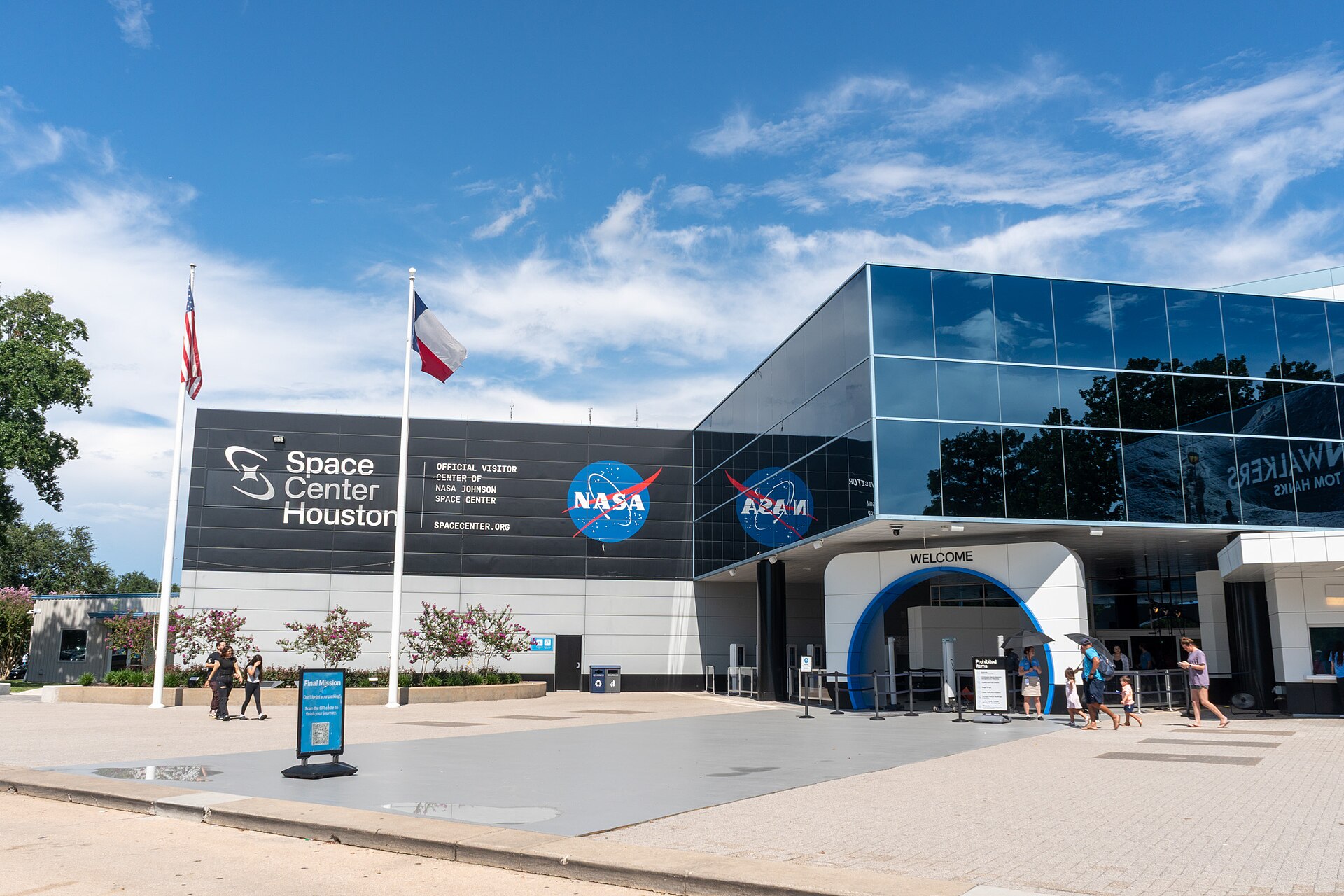
Space Center Houston is the official visitor center of the NASA Johnson Space Center, serving as a major educational and cultural institution dedicated to the history and future of human space exploration. Located in Houston, Texas, the facility provides the public with access to the operational hub of American human spaceflight, including mission control facilities and astronaut training grounds.
The museum houses an extensive collection of over 400 space artifacts, including flown spacecraft such as the Mercury 9, Gemini 5, and Apollo 17 command modules. It functions as a Smithsonian Affiliate, offering interactive exhibits, immersive tours of NASA facilities, and educational programs designed to promote science, technology, engineering, and mathematics (STEM) literacy.
Key Facts
- Materials
- Steel, Glass, Concrete
- Civilization
- United States
- Accessibility
- Fully wheelchair accessible
- Date(s)
- 1992
- Condition
- Active, well-maintained
- Original Function
- Visitor center and educational museum
- Key Figures
- Gene Kranz, Chris Kraft
Establishment
1992Space Center Houston opened its doors in 1992 as a non-profit visitor center to replace the older, smaller visitor facilities located directly within the Johnson Space Center campus. The project was designed to provide a more comprehensive public experience while maintaining security for active NASA operations.
Expansion and Affiliation
2000sIn 2014, the center became a Smithsonian Affiliate, strengthening its role as a repository for significant aerospace artifacts. The facility has undergone several expansions, most notably the construction of the Independence Plaza, which features a high-fidelity replica of the Space Shuttle mounted atop a NASA 905 shuttle carrier aircraft.
Modern Operations
PresentToday, the center continues to serve as the primary gateway for the public to engage with the Johnson Space Center. It facilitates tours of the Historic Mission Control Center and the Neutral Buoyancy Laboratory, while hosting ongoing exhibits related to the Artemis program and future Mars exploration.
Cultural Significance
Space Center Houston is a central pillar of the 'Space City' identity of Houston. It represents the intersection of Cold War-era technological competition and modern international cooperation in space. The site serves as a primary venue for public engagement with the legacy of the Apollo program and the ongoing evolution of the International Space Station.
Interpretive Notes
Scholarly debates and areas of uncertainty
Discussions often center on the balance between historical preservation of artifacts versus the need for interactive, modern educational displays. Additionally, there is ongoing academic interest in how the center frames the narrative of the Space Race and the geopolitical implications of NASA's public-facing history.
Visiting Information
Entry Rules
Open daily with varying seasonal hours. Tickets are required for entry. Visitors must pass through security screening. Certain tours of the Johnson Space Center campus are subject to availability and security clearance requirements.
Best Times to Visit
Weekdays during the school year are generally less crowded. Early morning arrival is recommended to secure spots on the tram tours of the NASA campus.
Photography
Personal photography is permitted throughout the museum. Flash photography is generally allowed, though specific temporary exhibits may have restrictions. Commercial filming requires prior authorization.
Preservation Notes
Artifacts are climate-controlled and protected; visitors are prohibited from touching the spacecraft or sensitive displays. Stay within designated visitor areas during campus tours.
Nearby POIs
7 shownKey Facts
- Materials
- Steel, Glass, Concrete
- Civilization
- United States
- Accessibility
- Fully wheelchair accessible
- Date(s)
- 1992
- Condition
- Active, well-maintained
- Original Function
- Visitor center and educational museum
- Key Figures
- Gene Kranz, Chris Kraft