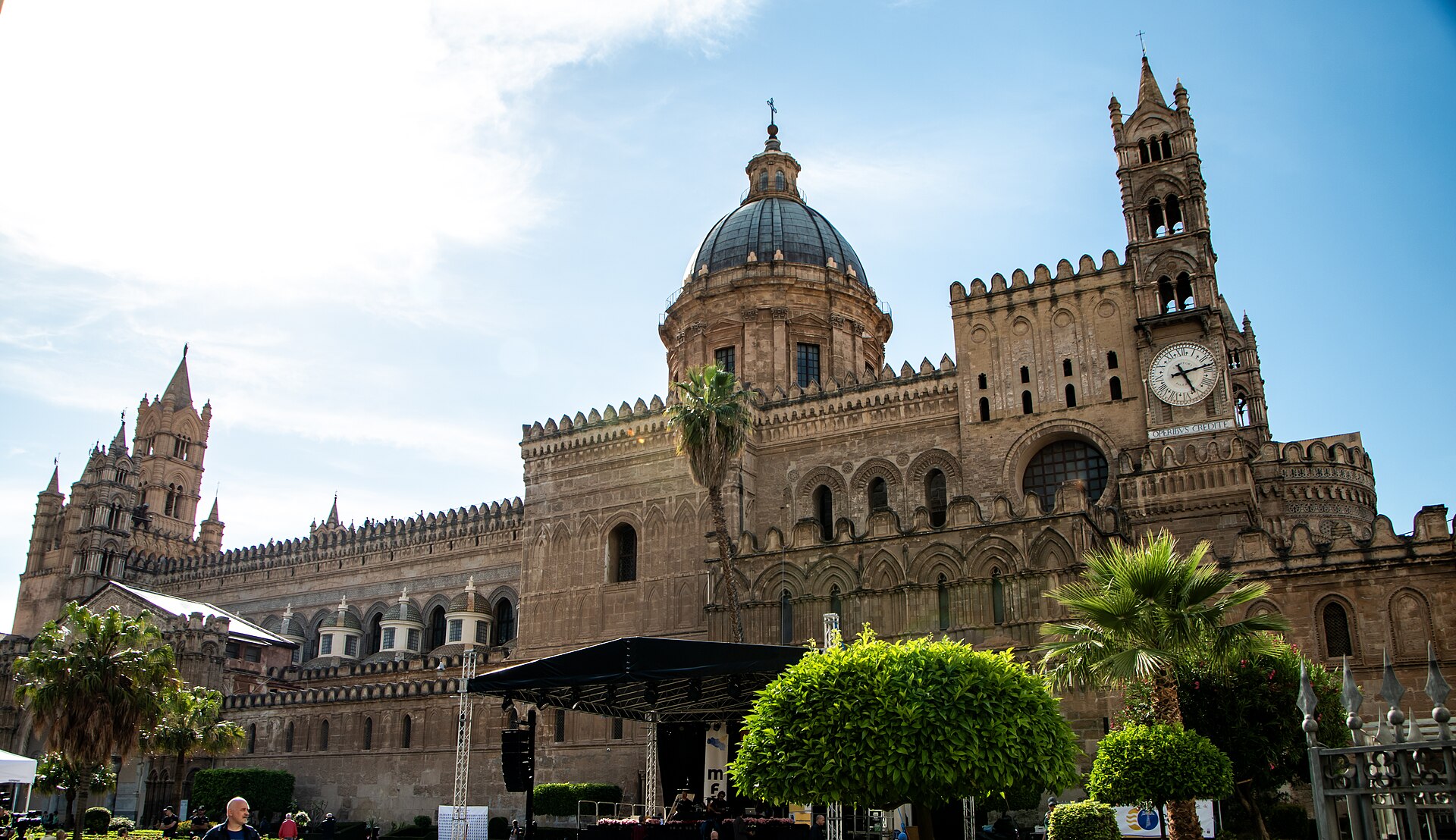
The Cathedral of Palermo, dedicated to the Assumption of the Virgin Mary, is a complex architectural palimpsest that reflects the diverse cultural history of Sicily. Originally founded in 1185 by Archbishop Walter Ophamil on the site of an earlier Byzantine basilica, the structure has undergone continuous modifications over eight centuries, resulting in a unique blend of Norman, Moorish, Gothic, and Neoclassical elements.
The exterior is characterized by its distinctive 14th-century Gothic facade and a 15th-century southern portico, while the interior was significantly redesigned in the late 18th century by Ferdinando Fuga. The cathedral serves as the seat of the Archbishop of Palermo and houses the royal tombs of the Norman kings, including Roger II and Emperor Frederick II, marking its historical significance as a center of power for the Kingdom of Sicily.
Key Facts
- Materials
- Tuff, Limestone, Marble
- Civilization
- Norman-Sicilian
- Accessibility
- Ground floor accessible; crypt and roof access involve stairs
- Date(s)
- 1185 CE - 18th century
- Condition
- Well-preserved, active religious site
- Original Function
- Cathedral
- Key Figures
- Walter Ophamil, Roger II, Frederick II, Ferdinando Fuga
Foundation and Norman Origins
1185 CEArchbishop Walter Ophamil commissioned the cathedral on the site of a mosque that had previously been a Byzantine church. The original structure was built in the Norman-Arab style, though little of this initial phase remains visible today.
Gothic Expansion
14th - 15th centuryDuring the Aragonese period, the cathedral underwent significant expansion. The iconic southern portico, featuring three arches and a Catalan-Gothic design, was added, along with the flanking towers that define the current silhouette.
Neoclassical Transformation
1781 - 1801Architect Ferdinando Fuga oversaw a major interior renovation that replaced the medieval structure with a Neoclassical layout. This project included the addition of the large dome, which remains a prominent feature of the Palermo skyline.
Cultural Significance
The Palermo Cathedral is a primary example of the Arab-Norman architectural style, which is recognized as a UNESCO World Heritage site. It serves as a physical record of Sicily's history as a crossroads of Mediterranean civilizations, where Islamic, Byzantine, and Latin influences converged.
Beyond its architectural value, the cathedral is a site of immense dynastic importance. The presence of the imperial tombs of the Hohenstaufen and Hauteville dynasties underscores the cathedral's role as the spiritual and political heart of the medieval Kingdom of Sicily.
Interpretive Notes
Scholarly debates and areas of uncertainty
There is ongoing academic discussion regarding the extent of the original 12th-century Norman fabric that remains hidden beneath the 18th-century Neoclassical cladding. Some architectural historians advocate for further non-invasive structural analysis to better understand the original spatial configuration of the Norman basilica.
Visiting Information
Entry Rules
Open daily. Entry to the main nave is free, while access to the royal tombs, crypt, treasury, and roof terrace requires a paid ticket. Modest dress is required for entry.
Best Times to Visit
Early morning or late afternoon to avoid peak cruise ship crowds. The roof terrace offers the best views during the golden hour.
Photography
Photography is permitted in the main nave without flash. Tripods and professional equipment require prior authorization.
Preservation Notes
The cathedral is subject to ongoing maintenance due to the porous nature of the local limestone. Visitors are requested to remain within designated visitor areas and avoid touching the marble sarcophagi.
Nearby POIs
6 shownSources & Further Reading
- [1]Arab-Norman Palermo and the Cathedral Churches of Cefalù and Monreale — UNESCO World Heritage Centre. UNESCO (2015)View
- [2]The Architecture of Norman Sicily — Stephen O. Murray. University of Pennsylvania Press (2018)
Key Facts
- Materials
- Tuff, Limestone, Marble
- Civilization
- Norman-Sicilian
- Accessibility
- Ground floor accessible; crypt and roof access involve stairs
- Date(s)
- 1185 CE - 18th century
- Condition
- Well-preserved, active religious site
- Original Function
- Cathedral
- Key Figures
- Walter Ophamil, Roger II, Frederick II, Ferdinando Fuga