Saint Augustine: America’s Oldest City and the Ancient Spanish Coast
Uncover North America’s oldest continuously inhabited European settlement, defined by coquina fortresses, cobblestone lanes, and centuries of maritime lore.
 Daniel Romanov
Saint Augustine: America's Oldest City and the Ancient Spanish Coast
Saint Augustine, located along the northeast coast of Florida in the United States of America, holds the distinction of being the oldest continuously inhabited European-established settlement in North America. Founded in 1565 by Spanish admiral Pedro Menéndez de Avilés, Saint Augustine predates Jamestown by 42 years and Plymouth Rock by 55 years.
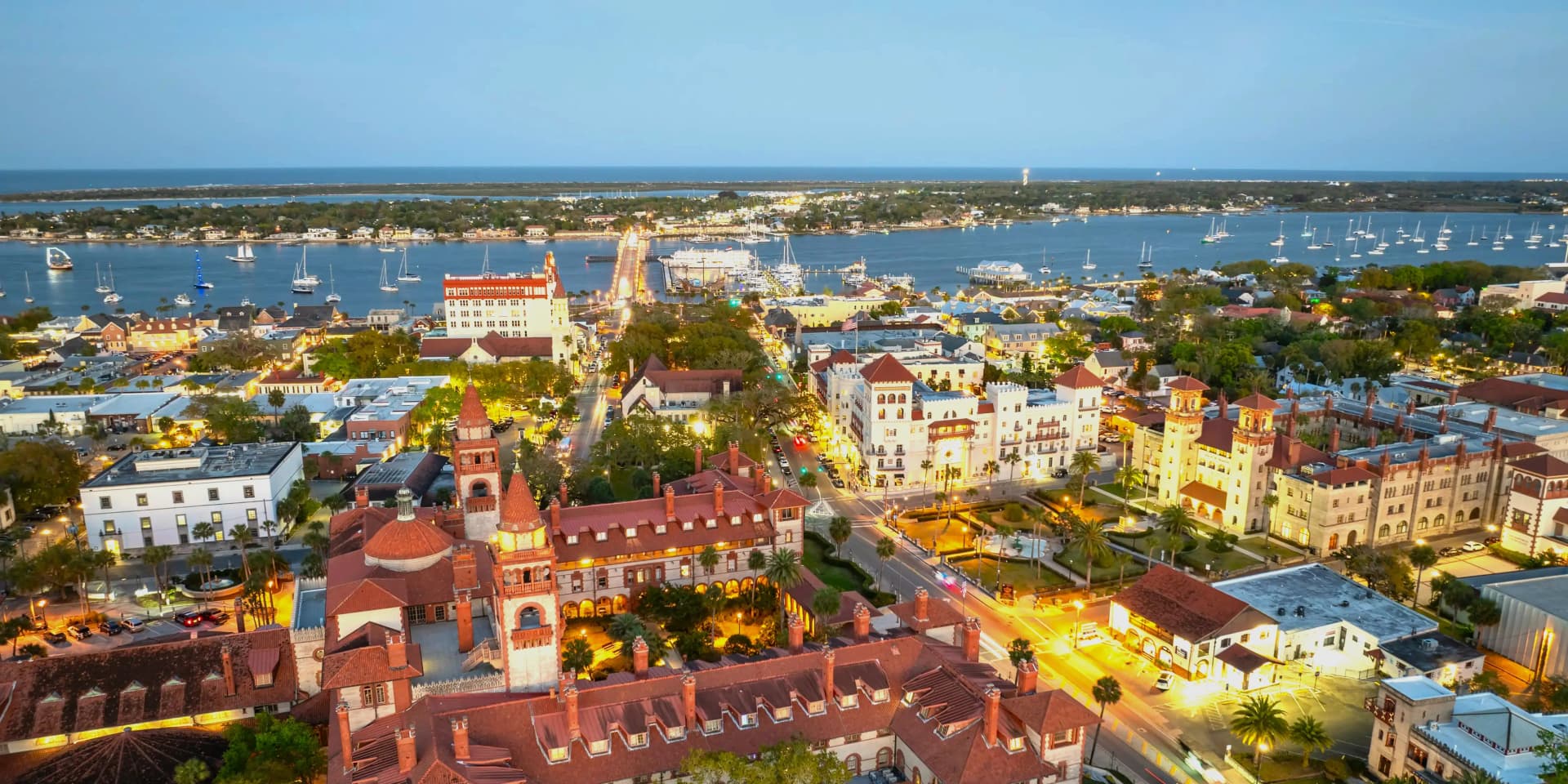
Shaped by over four centuries of Spanish, British, and American rule, Saint Augustine preserves a unique coastal atmosphere where Spanish colonial architecture, coquina fortifications, centuries-old live oaks, and Gilded Age resorts line the Matanzas River.
Spanish Exploration and Colonial Roots
In 1513, Spanish explorer Juan Ponce de León landed on the Florida coast, claiming the territory for the Spanish Crown and naming it La Florida.
According to local lore, the Fountain of Youth Archaeological Park marks the traditional site where Ponce de León first came ashore. The park preserves archaeological remains of early Spanish settlements and native Timucua village sites, offering visitors insight into the earliest encounters between Native Americans and European explorers.
The Coquina Guardian: Castillo de San Marcos
The defining symbol of Saint Augustine's military history is the Castillo de San Marcos. Built by the Spanish between 1672 and 1695 to protect the city against British privateers and military forces, it is the oldest masonry fort in the continental United States.
Constructed from coquina—a rare stone composed of compressed seashell fragments quarried locally—the fortress proved indestructible. Enemy cannonballs embedded themselves harmlessly into the porous coquina walls rather than shattering them.
Further south along the Matanzas Inlet stands Fort Matanzas. Built in 1742, this coquina watchtower guarded Saint Augustine's southern water approach, playing a vital role in Spanish coastal defense.
Historic Streets and Sacred Places
The heart of Saint Augustine's Historic District features narrow streets, Spanish colonial balconies, and courtyard gardens.
Overlooking the central Plaza de la Constitución is the Cathedral Basilica of St. Augustine. Completed in 1797, its Spanish Imperial architecture, bell tower, and stained glass windows honor the oldest Catholic parish in the United States.
The Gilded Age Transformation
In the late nineteenth century, industrialist Henry Flagler transformed Saint Augustine into an exclusive winter resort destination for wealthy Americans.
Flagler commissioned the spectacular Ponce de Leon Hotel, completed in 1888 in the Spanish Renaissance Revival style. Designed by architects Carrère and Hastings, the building featured stained glass by Louis Comfort Tiffany and was among the first in the nation powered by electricity. Today, the magnificent structure forms the anchor of Flagler College campus.
Across the street, the Alcazar Hotel, also built by Flagler, now houses the Lightner Museum. The museum displays a fascinating collection of Victorian art, cut glass, mechanical musical instruments, and Gilded Age antiquities within its grand courtyard arcades.
Maritime Heritage and Coastal Views
Guarding the entrance to the Matanzas Bay stands the St. Augustine Lighthouse. Built in 1874, this black-and-white spiraled lighthouse continues to serve as an active aid to navigation. Visitors who climb its 219 steps are rewarded with sweeping views of the historic harbor, barrier islands, and Atlantic Ocean.
Tastes of Old Florida
Saint Augustine's cuisine reflects a flavorful mix of Spanish, Minorcan, Caribbean, and Southern culinary traditions.
A key local ingredient is the spicy Datil pepper, introduced to the area by Minorcan settlers in the eighteenth century. Regional specialties include Minorcan clam chowder (a spicy tomato-based chowder infused with Datil peppers), fresh Atlantic seafood platters, fried shrimp, and Spanish-style tapas served with sangria.
A Timeless Coastal Sanctuary
Saint Augustine is a place where history comes alive along sunny cobblestone streets. From the indestructible coquina walls of Castillo de San Marcos to Gilded Age palaces and coastal lighthouses, North America's oldest city offers travelers an unforgettable journey into four centuries of American heritage.