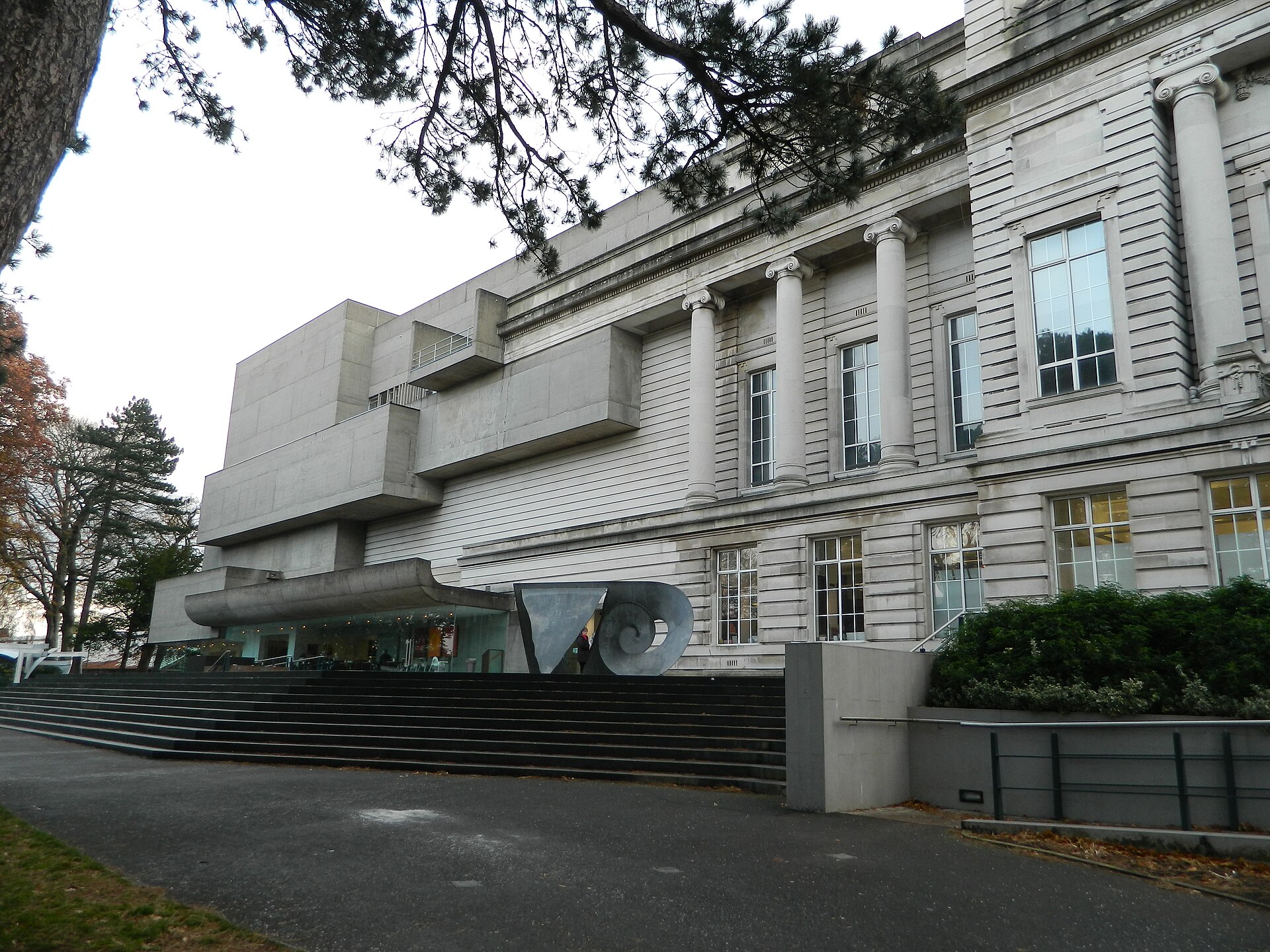
The Ulster Museum is the largest museum in Northern Ireland, located within the Botanic Gardens in Belfast. It houses a diverse collection spanning fine and applied art, archaeology, ethnography, and natural sciences, serving as a primary repository for the region's cultural and historical heritage.
The current building is a notable example of Brutalist architecture, designed by Francis Pym and opened in stages between 1964 and 1972. It integrates an original Victorian wing with a significant modern extension, creating a complex space that reflects both the historical evolution of Belfast and the mid-20th-century architectural movement.
Key Facts
- Materials
- Portland stone, Concrete, Glass
- Civilization
- British/Irish
- Accessibility
- Fully wheelchair accessible with elevators to all floors
- Date(s)
- 1929 (original wing), 1964-1972 (extension)
- Condition
- Well-maintained, active public institution
- Original Function
- Museum and Art Gallery
- Key Figures
- Francis Pym, Sir Charles Lanyon
Foundations
1821The museum originated from the Belfast Natural History Society, which established a collection of local flora, fauna, and geological specimens.
Expansion and Integration
1929The museum moved to its current location in the Botanic Gardens, with the first wing designed by James Cumming Wynne opening to the public.
Brutalist Expansion
1964-1972A major architectural competition led to the construction of a large, modern extension designed by Francis Pym, which significantly increased the exhibition space and defined the museum's current aesthetic.
Modern Renovation
2006-2009The museum underwent a major multi-million pound refurbishment, modernizing galleries and improving visitor facilities while preserving the integrity of the Brutalist structure.
Cultural Significance
The Ulster Museum acts as a central pillar for Northern Irish identity, bridging the gap between natural history and the complex political and social history of the region. It is a key site for understanding the island's geological past, its industrial heritage, and its artistic contributions to the United Kingdom and Ireland.
Beyond its collections, the museum serves as a neutral space for public discourse and education, playing a vital role in the post-conflict landscape of Belfast by providing a venue for shared heritage and community engagement.
Interpretive Notes
Scholarly debates and areas of uncertainty
There is ongoing academic discussion regarding the preservation of Brutalist architecture in Northern Ireland. While the Pym extension is recognized as a significant architectural achievement, its maintenance and energy efficiency present ongoing challenges for the institution.
Visiting Information
Entry Rules
Open Tuesday to Sunday. Entry is free, though some temporary exhibitions may require a ticket. Visitors are encouraged to check the official website for seasonal opening hours and holiday closures.
Best Times to Visit
Weekday mornings are generally quieter. The museum is located within the Botanic Gardens, making it ideal to visit in conjunction with the Palm House during spring or summer months.
Photography
Personal photography is permitted in most galleries. Flash photography and the use of tripods are prohibited. Commercial photography requires prior written permission.
Preservation Notes
Visitors are requested not to touch artifacts or display cases. Large bags should be stored in provided lockers. The museum is a non-smoking facility.
Nearby POIs
4 shownSources & Further Reading
- [1]
- [2]Brutalist Architecture in Northern Ireland — Simon Bradley. Journal of Architectural History (2015)
Key Facts
- Materials
- Portland stone, Concrete, Glass
- Civilization
- British/Irish
- Accessibility
- Fully wheelchair accessible with elevators to all floors
- Date(s)
- 1929 (original wing), 1964-1972 (extension)
- Condition
- Well-maintained, active public institution
- Original Function
- Museum and Art Gallery
- Key Figures
- Francis Pym, Sir Charles Lanyon