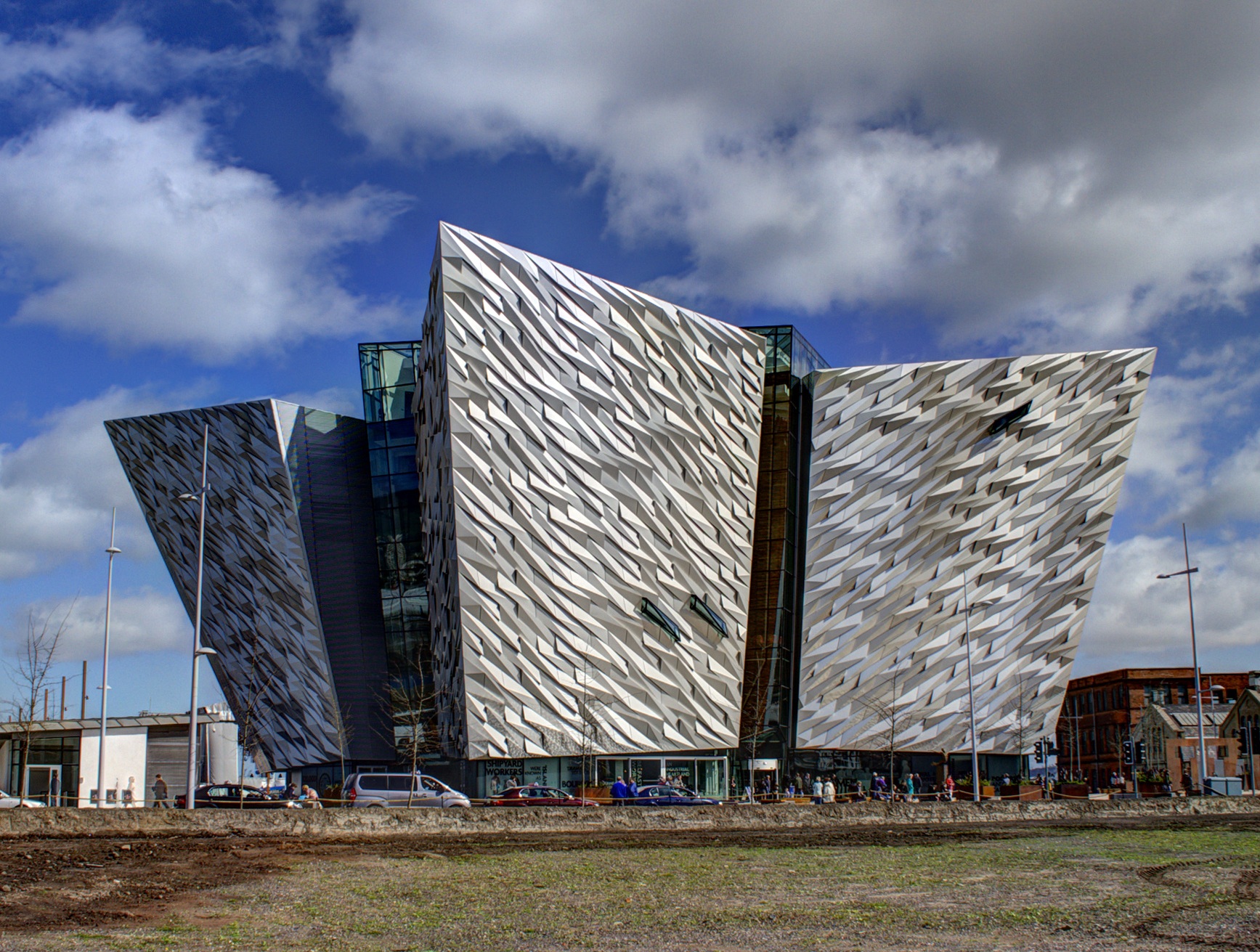
Titanic Belfast is a world-leading tourist attraction located on the site of the former Harland and Wolff shipyard in Belfast, Northern Ireland. The building stands on the exact slipways where the RMS Titanic and her sister ship, the Olympic, were constructed, launched, and fitted out between 1909 and 1912. The structure's iconic aluminum-clad facade is designed to evoke the hulls of ships, icebergs, and the White Star Line logo.
The museum houses nine interactive galleries that explore the industrial history of Belfast, the design and construction of the Olympic-class liners, the tragic maiden voyage of the Titanic, and the subsequent discovery of the wreck. It serves as both a memorial to the lives lost in the 1912 disaster and a celebration of the city's maritime engineering heritage.
Key Facts
- Materials
- Aluminum, Glass, Steel, Concrete
- Civilization
- British/Northern Irish
- Accessibility
- Fully wheelchair accessible with elevators and sensory-friendly resources
- Date(s)
- 2009-2012
- Condition
- Active, well-maintained
- Original Function
- Maritime Museum
- Key Figures
- Eric Kuhne, Thomas Andrews, Lord Pirrie
Shipyard Origins
1861-1912The site was the heart of the Harland and Wolff shipyard, once the largest in the world. It was here that the Olympic-class liners were commissioned, designed, and built, employing thousands of local workers.
The Titanic Era
1909-1912The slipways at this location were the birthplace of the RMS Titanic. The site witnessed the massive logistical effort required to construct the vessel before its launch into the River Lagan in May 1911.
Redevelopment
2000-2012Following the decline of the shipbuilding industry in Belfast, the Titanic Quarter was designated for urban regeneration. The museum was commissioned as the centerpiece of this project, opening in 2012 to mark the centenary of the ship's sinking.
Cultural Significance
Titanic Belfast has become a symbol of the city's post-industrial transformation. It reclaimed a site of historical trauma and economic decline, turning it into a global focal point for maritime history and tourism. The museum plays a crucial role in how Belfast reconciles its complex industrial past with its modern identity.
Interpretive Notes
Scholarly debates and areas of uncertainty
There is ongoing academic discussion regarding the 'commodification of tragedy' in museum design. Scholars debate whether the immersive, high-tech presentation of the Titanic story appropriately balances the entertainment value required for tourism with the solemnity due to the loss of life.
Visiting Information
Entry Rules
Open daily. Tickets should be booked in advance online to guarantee entry. Security checks are in place at the entrance.
Best Times to Visit
Weekday mornings are generally quieter. The museum is busiest during the summer months and around the anniversary of the sinking in mid-April.
Photography
Personal photography is permitted throughout the galleries. Flash photography is prohibited in areas with sensitive artifacts. Commercial filming requires prior authorization.
Preservation Notes
The museum is a modern structure; visitors are asked to respect the exhibits and follow staff instructions regarding interactive displays. The outdoor slipways are a public space and should be treated with respect as a memorial site.
Nearby POIs
4 shownSources & Further Reading
- [1]
- [2]Belfast's Industrial Heritage — W.A. Maguire. Ulster Historical Foundation (2009)
Key Facts
- Materials
- Aluminum, Glass, Steel, Concrete
- Civilization
- British/Northern Irish
- Accessibility
- Fully wheelchair accessible with elevators and sensory-friendly resources
- Date(s)
- 2009-2012
- Condition
- Active, well-maintained
- Original Function
- Maritime Museum
- Key Figures
- Eric Kuhne, Thomas Andrews, Lord Pirrie