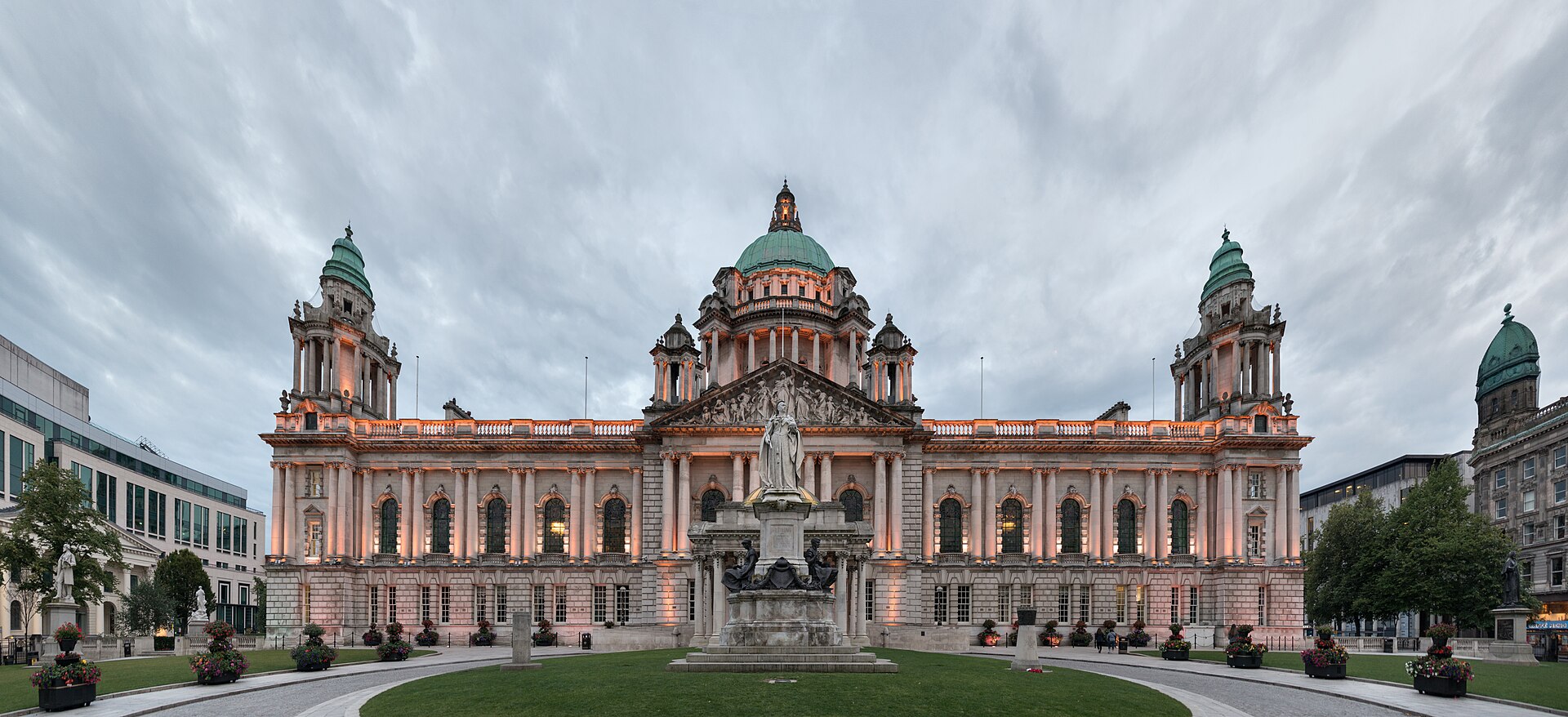
Belfast City Hall is the civic building of the Belfast City Council, located in Donegall Square. Designed by architect Alfred Brumwell Thomas, the building was constructed between 1898 and 1906 following Belfast's elevation to city status by Queen Victoria in 1888. It serves as a prominent example of Baroque Revival architecture, characterized by its Portland stone facade and central copper-clad dome.
The structure was built to reflect the city's immense wealth and industrial influence during the late Victorian and Edwardian eras, particularly its dominance in shipbuilding and linen manufacturing. Today, it remains the administrative heart of the city and a focal point for public gatherings, featuring extensive grounds that house various memorials, including the Titanic Memorial.
Key Facts
- Materials
- Portland stone, Copper, Italian marble, Stained glass
- Civilization
- British
- Accessibility
- Fully accessible with ramps and elevators
- Date(s)
- 1898-1906
- Condition
- Well-preserved and in active use
- Original Function
- Administrative headquarters for Belfast City Council
- Key Figures
- Alfred Brumwell Thomas, Queen Victoria
Origins and Design
1888-1898Following Belfast's designation as a city in 1888, the local corporation sought a new headquarters that would symbolize its growing economic power. An architectural competition was held, and the commission was awarded to Alfred Brumwell Thomas.
Construction
1898-1906Construction began in 1898 on the site of the former White Linen Hall. The building was completed in 1906, showcasing a grand Baroque Revival style intended to rival the civic architecture of major European capitals.
Modern Era
20th century - presentThroughout the 20th century, the City Hall has been the site of significant political and social events in Northern Ireland. It has undergone several refurbishments to modernize its facilities while preserving its historic interior, including the Great Hall and the Council Chamber.
Cultural Significance
Belfast City Hall stands as a testament to the city's industrial zenith, representing the prosperity generated by the Harland and Wolff shipyard and the linen industry. It is a central element of Belfast's urban identity and a primary venue for civic ceremonies and public discourse.
The grounds are culturally significant for their collection of statues and memorials, which reflect the complex history of the city, including tributes to those lost on the RMS Titanic and figures associated with the city's industrial and political development.
Interpretive Notes
Scholarly debates and areas of uncertainty
Debates often center on the interpretation of the various statues and memorials within the grounds, reflecting the contested nature of historical memory in Northern Ireland. Scholars examine how the building's architecture was used to project a specific image of imperial loyalty and civic stability during a period of intense social change.
Visiting Information
Entry Rules
Open to the public daily. Guided tours are available and recommended for access to the interior chambers. Visitors must pass through security screening upon entry.
Best Times to Visit
Weekdays during business hours for full access to the interior. The grounds are best visited in the early morning to avoid peak pedestrian traffic.
Photography
Personal photography is permitted in public areas. Commercial photography or filming requires prior authorization from the Belfast City Council.
Preservation Notes
The building is a protected historic structure. Visitors are requested to respect the interior furnishings and remain within designated public areas.
Nearby POIs
4 shownSources & Further Reading
- [1]Belfast City Hall: An Architectural History — Marcus Patton. Ulster Architectural Heritage Society (1993)
- [2]The Buildings of Ireland: Belfast — C.E.B. Brett. Yale University Press (1996)
Key Facts
- Materials
- Portland stone, Copper, Italian marble, Stained glass
- Civilization
- British
- Accessibility
- Fully accessible with ramps and elevators
- Date(s)
- 1898-1906
- Condition
- Well-preserved and in active use
- Original Function
- Administrative headquarters for Belfast City Council
- Key Figures
- Alfred Brumwell Thomas, Queen Victoria