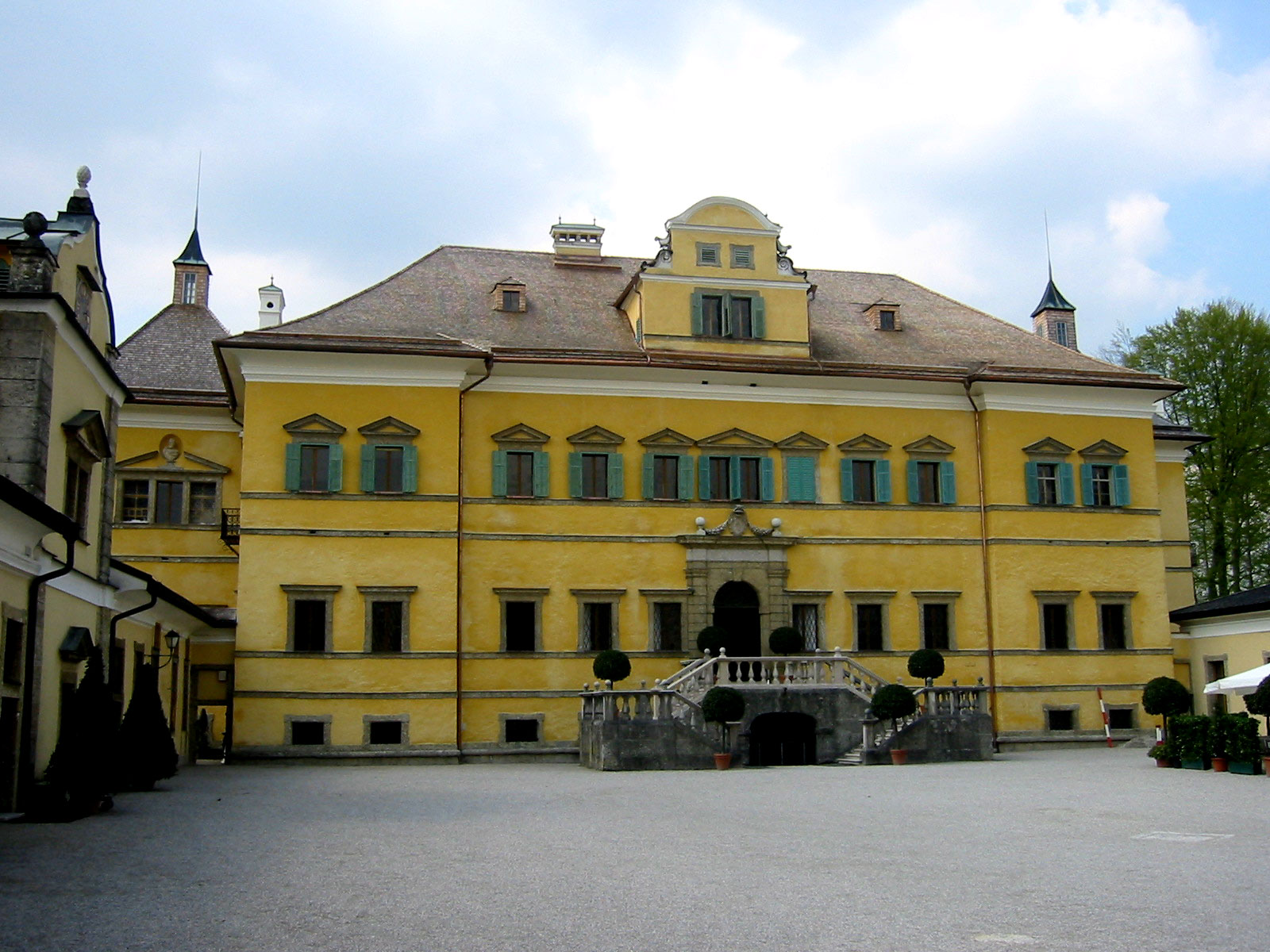
Schloss Hellbrunn is an early Baroque villa located on the southern outskirts of Salzburg, Austria. Commissioned by Prince-Archbishop Markus Sittikus von Hohenems and designed by the architect Santino Solari, the palace was completed in 1615. It was intended primarily as a day residence for summer leisure, rather than a permanent living space, reflecting the extravagant tastes of the Salzburg prince-archbishops.
The palace is most renowned for its extensive pleasure grounds, which feature the famous 'jeux d'eau' or water games. These elaborate hydraulic systems, including hidden fountains, water-powered mechanical theaters, and grottoes, were designed to surprise and entertain guests. The surrounding parkland and the nearby Hellbrunn Zoo further contribute to the site's historical function as a center for courtly recreation and hunting.
Key Facts
- Materials
- Stone, Stucco, Marble
- Civilization
- Austrian (Prince-Archbishopric of Salzburg)
- Accessibility
- Ground floor and gardens are accessible; upper floors require stairs
- Date(s)
- 1613-1615
- Condition
- Well-preserved, open to the public as a museum
- Original Function
- Summer day residence and pleasure palace
- Key Figures
- Markus Sittikus von Hohenems, Santino Solari
Commission and Construction
1613-1615Prince-Archbishop Markus Sittikus commissioned the palace shortly after his accession. He tasked the Italian architect Santino Solari with creating a villa that emphasized leisure, entertainment, and the mastery of water, leading to the rapid construction of the main building and the initial water features.
Courtly Life and Entertainment
17th-18th centuryFor over a century, Hellbrunn served as the primary venue for the social life of the Salzburg court. The prince-archbishops hosted lavish banquets and hunts, utilizing the water games to amuse their guests, often incorporating practical jokes involving hidden water jets.
Modern Preservation
20th century - presentIn the modern era, the palace and its grounds were opened to the public. Extensive restoration projects have focused on preserving the delicate 17th-century hydraulic systems and the original interior frescoes, ensuring the site remains one of the most intact examples of Mannerist and early Baroque garden design in Europe.
Cultural Significance
Hellbrunn Palace represents the height of Mannerist garden design, where nature is manipulated through technology to provide amusement. It serves as a testament to the absolute power and playful sophistication of the Salzburg prince-archbishops, standing in contrast to the more formal, rigid palace designs of the era.
Interpretive Notes
Scholarly debates and areas of uncertainty
There is ongoing academic discussion regarding the extent to which the water games were intended as purely recreational versus symbolic representations of the Prince-Archbishop's control over the natural elements and his divine right to rule.
Visiting Information
Entry Rules
Open daily from late March to early November. Tickets are required for palace tours and the water games. Guided tours are mandatory for the interior of the palace.
Best Times to Visit
Late spring and summer months are ideal to experience the water games in full operation. Mornings are recommended to avoid peak tourist crowds.
Photography
Photography is permitted in the gardens and exterior. Flash photography is prohibited inside the palace interiors.
Preservation Notes
Visitors are advised to be cautious near the water features, as the hydraulic systems are original and sensitive. Do not touch the historic frescoes or furniture.
Nearby POIs
5 shownSources & Further Reading
- [1]Hellbrunn: The Pleasure Palace of the Prince-Archbishops — Salzburg Palace Administration. Salzburg Tourism Board (2021)View
- [2]Mannerist Gardens and Hydraulic Engineering in Central Europe — H. W. Lang. Journal of Garden History (1998)
Key Facts
- Materials
- Stone, Stucco, Marble
- Civilization
- Austrian (Prince-Archbishopric of Salzburg)
- Accessibility
- Ground floor and gardens are accessible; upper floors require stairs
- Date(s)
- 1613-1615
- Condition
- Well-preserved, open to the public as a museum
- Original Function
- Summer day residence and pleasure palace
- Key Figures
- Markus Sittikus von Hohenems, Santino Solari