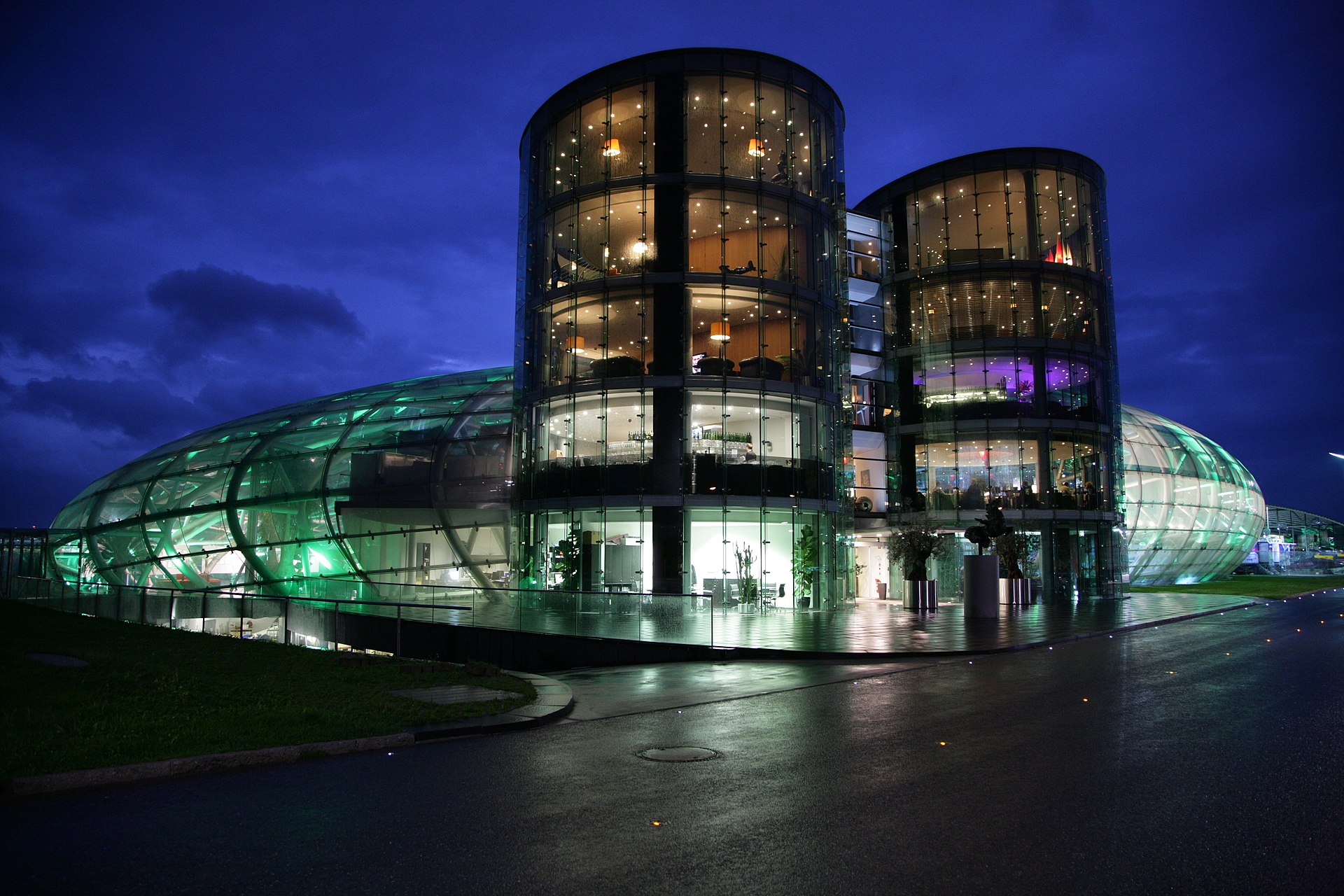
Hangar-7 is a unique exhibition space located at Salzburg Airport in Austria, commissioned by Dietrich Mateschitz, the founder of Red Bull. The structure is renowned for its innovative architectural design, featuring a massive glass-and-steel dome that houses the 'Flying Bulls' collection of historic aircraft, as well as a rotating display of Formula 1 racing cars and contemporary art installations.
Beyond its role as a technical museum, the facility functions as a multifunctional event space and culinary destination. Its design emphasizes transparency and light, creating a stark contrast between the industrial nature of the machinery on display and the fluid, organic geometry of the building itself.
Key Facts
- Materials
- Steel, Glass, Concrete
- Civilization
- Modern Austrian
- Accessibility
- Fully wheelchair accessible
- Date(s)
- 2001-2003
- Condition
- Excellent, fully operational
- Original Function
- Aircraft hangar and exhibition space
- Key Figures
- Dietrich Mateschitz, Volkmar Burgstaller
Conception and Design
2001The project was initiated by Dietrich Mateschitz to house his growing collection of vintage aircraft. Architect Volkmar Burgstaller was tasked with creating a structure that would serve as both a functional hangar and an aesthetic exhibition space.
Construction
2001-2003The construction involved the assembly of 1,200 tons of steel and 380 tons of glass. The design utilizes a self-supporting shell structure, allowing for a vast, column-free interior space that accommodates large aircraft.
Opening and Expansion
2003-PresentHangar-7 officially opened in August 2003. Since its inception, it has expanded its scope to include a high-end restaurant, bars, and a lounge, becoming a significant cultural and tourist landmark in Salzburg.
Cultural Significance
Hangar-7 represents a fusion of corporate branding, aviation history, and architectural innovation. It has become a symbol of the Red Bull brand's influence on global sports and culture, while simultaneously serving as a prominent example of modern 21st-century engineering in Austria.
Interpretive Notes
Scholarly debates and areas of uncertainty
Discussions surrounding Hangar-7 often focus on the intersection of private corporate museums and public cultural spaces, specifically regarding the commercialization of heritage sites and the architectural impact of private-sector-funded landmarks on regional landscapes.
Visiting Information
Entry Rules
Open daily. Admission is free. Visitors are subject to security checks upon entry. No specific dress code is enforced, though the venue hosts upscale dining areas.
Best Times to Visit
Weekdays during mid-morning or late afternoon to avoid peak weekend tourist traffic. The site is particularly striking during sunset when the glass structure reflects the changing light.
Photography
Personal photography is permitted. Commercial photography or professional filming requires prior authorization from the Hangar-7 management.
Preservation Notes
The facility is maintained to high standards. Visitors are requested to refrain from touching the exhibits and to remain within designated walking paths to ensure the safety of the aircraft and vehicles.
Nearby POIs
5 shownSources & Further Reading
- [1]Hangar-7: Architecture and Engineering — Volkmar Burgstaller. Detail Magazine (2004)
- [2]The Flying Bulls: A History — Siegfried Stohr. Red Bull Media House (2015)
Key Facts
- Materials
- Steel, Glass, Concrete
- Civilization
- Modern Austrian
- Accessibility
- Fully wheelchair accessible
- Date(s)
- 2001-2003
- Condition
- Excellent, fully operational
- Original Function
- Aircraft hangar and exhibition space
- Key Figures
- Dietrich Mateschitz, Volkmar Burgstaller