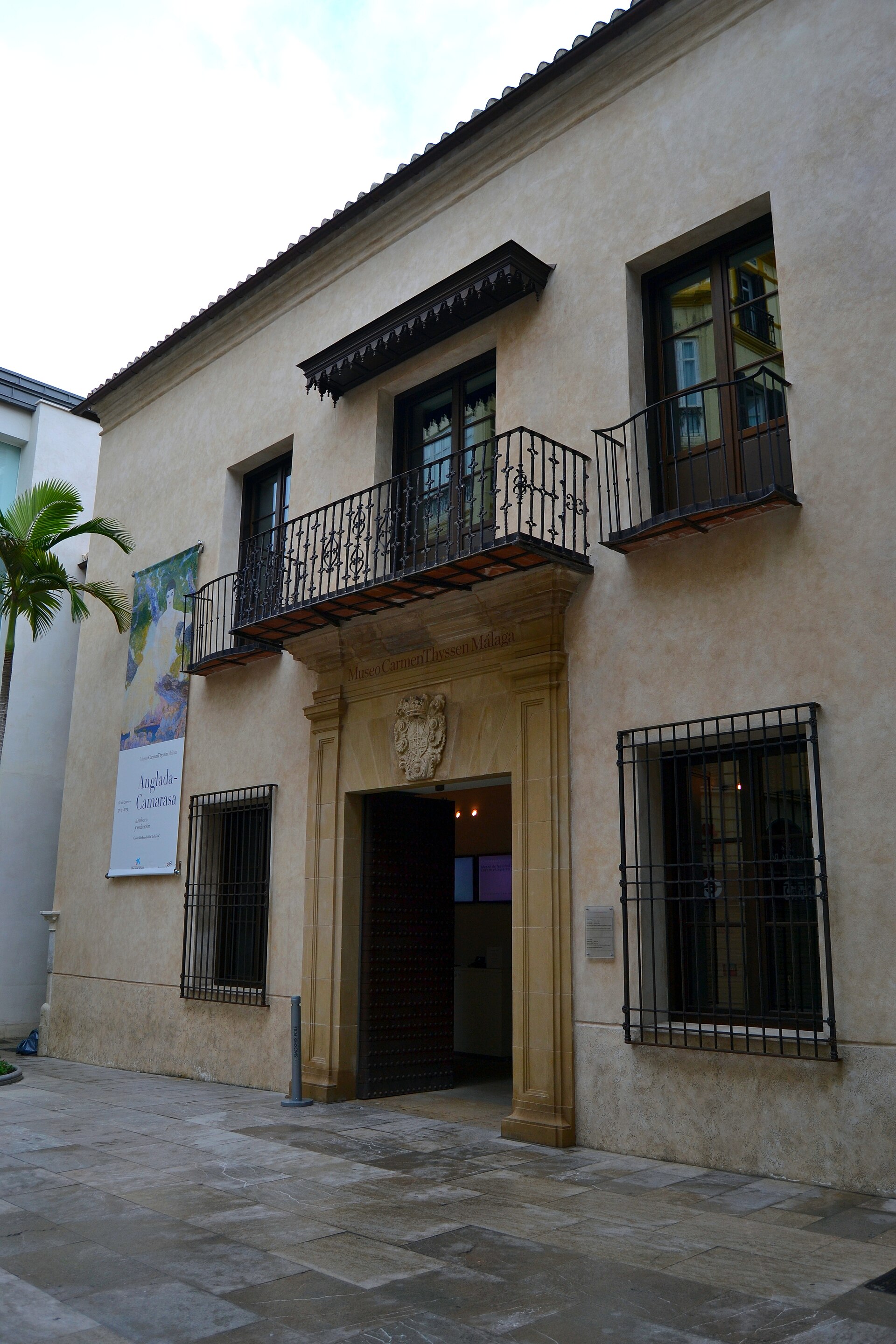
The Museo Carmen Thyssen is an art museum located in the historic center of Málaga, Spain. Housed within the restored Palacio de Villalón, a 16th-century building, the museum is dedicated primarily to 19th-century Spanish painting, with a specific emphasis on Andalusian artists. The collection provides a comprehensive overview of the evolution of Spanish art from the Romantic period through the early 20th century.
The museum's permanent collection is based on the private holdings of Carmen Cervera, the Baroness Thyssen-Bornemisza. It features significant works by masters such as Joaquín Sorolla, Ignacio Zuloaga, and Francisco de Zurbarán, organized to highlight thematic shifts in landscape, costumbrismo, and portraiture during a transformative era in Spanish history.
Key Facts
- Materials
- Stone, Brick, Glass
- Civilization
- Spanish
- Accessibility
- Fully accessible
- Date(s)
- 16th century (Palacio de Villalón); 2011 (Museum opening)
- Condition
- Restored and active
- Original Function
- Palace
- Key Figures
- Carmen Cervera, Baron Hans Heinrich Thyssen-Bornemisza
The Palacio de Villalón
16th CenturyThe museum is situated in the Palacio de Villalón, a Renaissance-style palace that served as the residence of the Villalón family. The building underwent significant modifications over the centuries before being acquired by the city of Málaga for the purpose of housing the art collection.
Restoration and Foundation
2007-2011Extensive architectural restoration was conducted to adapt the historic palace into a modern museum space. The project integrated the original 16th-century structure with contemporary exhibition galleries, culminating in the museum's official inauguration in March 2011.
Collection Expansion
2011-PresentSince its opening, the museum has established itself as a cultural anchor in Málaga. It continues to curate temporary exhibitions that contextualize the permanent collection within broader European art movements, maintaining a focus on the regional identity of Andalusian painting.
Cultural Significance
The museum plays a vital role in the cultural revitalization of Málaga, contributing to the city's reputation as a major European art destination. By focusing on 19th-century Spanish painting, it fills a specific niche in the national art landscape, preserving works that define the aesthetic and social values of the period.
Interpretive Notes
Scholarly debates and areas of uncertainty
Discussions often center on the classification of 'Andalusian' art versus broader Spanish national identity, as well as the challenges of balancing the preservation of the 16th-century palace architecture with the requirements of a modern, climate-controlled art gallery.
Visiting Information
Entry Rules
Open Tuesday to Sunday. Tickets can be purchased online or at the box office. Concessions are available for students, seniors, and groups.
Best Times to Visit
Weekday mornings are generally quieter. The museum is a popular destination during the summer months and local festivals.
Photography
Non-commercial photography is permitted without flash or tripods in the permanent collection galleries. Specific temporary exhibitions may prohibit photography.
Preservation Notes
Maintain a respectful distance from all artworks. Large bags and backpacks must be stored in the provided lockers.
Nearby POIs
5 shownSources & Further Reading
- [1]Museo Carmen Thyssen Málaga: Guía de la Colección — Lourdes Moreno. Museo Carmen Thyssen Málaga (2011)View
- [2]The Thyssen-Bornemisza Collection: A History — Tomàs Llorens. Fundación Colección Thyssen-Bornemisza (2004)
Key Facts
- Materials
- Stone, Brick, Glass
- Civilization
- Spanish
- Accessibility
- Fully accessible
- Date(s)
- 16th century (Palacio de Villalón); 2011 (Museum opening)
- Condition
- Restored and active
- Original Function
- Palace
- Key Figures
- Carmen Cervera, Baron Hans Heinrich Thyssen-Bornemisza