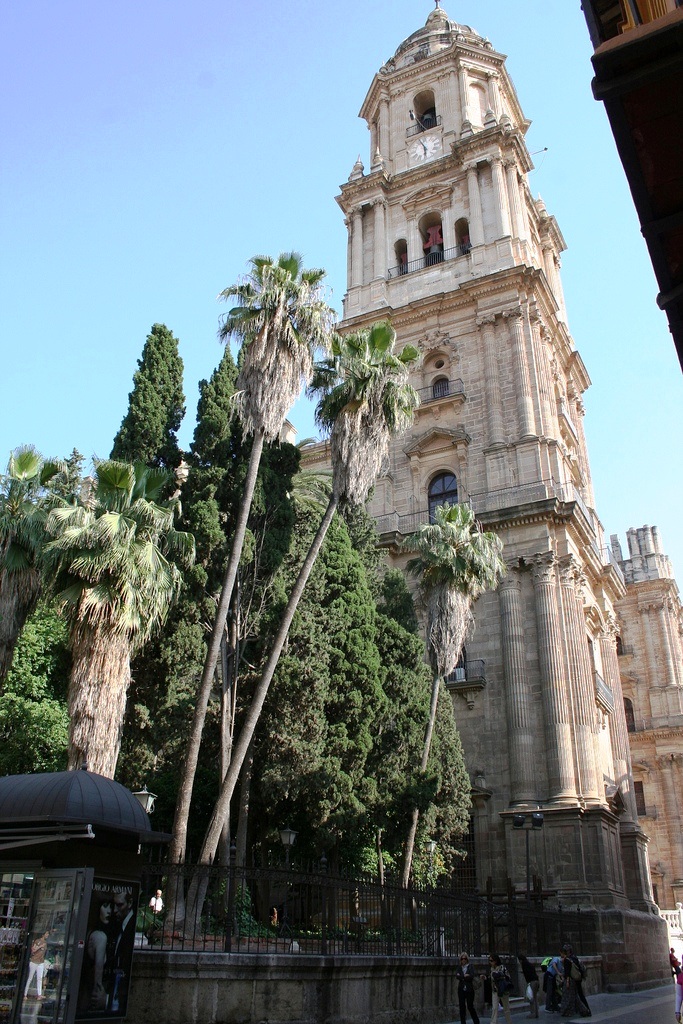
The Cathedral of the Incarnation in Málaga is a prominent religious structure built between 1528 and 1782. Constructed on the site of a former Almohad mosque following the Reconquista, the cathedral serves as a primary example of Spanish Renaissance architecture, though its long construction period resulted in the integration of various stylistic elements, including Baroque features in its facade and interior.
The cathedral is famously known as 'La Manquita' (The One-Armed Lady) due to its unfinished state. While the original plans called for two symmetrical towers, construction of the second tower was halted in the late 18th century, leaving the building with only its northern bell tower completed. This architectural asymmetry has become a defining feature of the Málaga skyline.
Key Facts
- Materials
- Stone, Marble, Brick
- Civilization
- Spanish
- Accessibility
- Ground floor accessible; limited access to upper levels
- Date(s)
- 1528 - 1782
- Condition
- Active religious site and museum
- Original Function
- Cathedral
- Key Figures
- Diego de Siloé, Pedro de Mena
Foundations and Early Construction
1528-1550sFollowing the Christian conquest of Málaga in 1487, the site of the main mosque was designated for a new cathedral. Construction began in 1528 under the direction of Diego de Siloé, who implemented a design heavily influenced by the Renaissance style.
Stylistic Evolution
17th-18th centuryAs construction progressed over centuries, the design evolved to incorporate Baroque elements. The facade and the interior choir stalls, featuring intricate wood carvings by Pedro de Mena, reflect the artistic shifts occurring during this period.
The Unfinished Tower
1782Construction was officially halted in 1782 due to a lack of funds. The southern tower remained incomplete, leading to the local moniker 'La Manquita'. Despite various proposals over the centuries to finish the structure, it remains in its asymmetrical state today.
Cultural Significance
The cathedral stands as a symbol of the transition from Islamic to Christian rule in Andalusia. Its presence in the city center marks the historical shift in power and religious identity that defined the post-Reconquista era in southern Spain.
Locally, the cathedral is a central point of civic pride. The nickname 'La Manquita' reflects a deep-seated local affection for the building's unique, albeit incomplete, silhouette, which serves as the most recognizable landmark in the city.
Interpretive Notes
Scholarly debates and areas of uncertainty
There is ongoing academic discussion regarding the original structural intent of the cathedral's roof and the extent to which the lack of funding was the sole cause for the cessation of the second tower, with some historians suggesting that structural concerns regarding the weight of the stone vaults may have also played a role.
Visiting Information
Entry Rules
Open daily for visitors and worshipers. Tickets are required for tourist access, which includes the cathedral interior and the museum. Modest dress is requested.
Best Times to Visit
Early morning or late afternoon to avoid the peak heat and cruise ship crowds. The cathedral is particularly atmospheric during evening choral services.
Photography
Photography is permitted for personal use without flash. Tripods and professional equipment require prior authorization.
Preservation Notes
The building is subject to ongoing maintenance due to the age of the stone and the impact of coastal humidity. Visitors are asked to respect cordoned-off areas and refrain from touching the historic wood carvings.
Nearby POIs
5 shownSources & Further Reading
- [1]Málaga Cathedral: History and Architecture — Juan Temboury. Editorial Arguval (1995)
- [2]The Renaissance in Spain — George Kubler. Yale University Press (1982)
Key Facts
- Materials
- Stone, Marble, Brick
- Civilization
- Spanish
- Accessibility
- Ground floor accessible; limited access to upper levels
- Date(s)
- 1528 - 1782
- Condition
- Active religious site and museum
- Original Function
- Cathedral
- Key Figures
- Diego de Siloé, Pedro de Mena