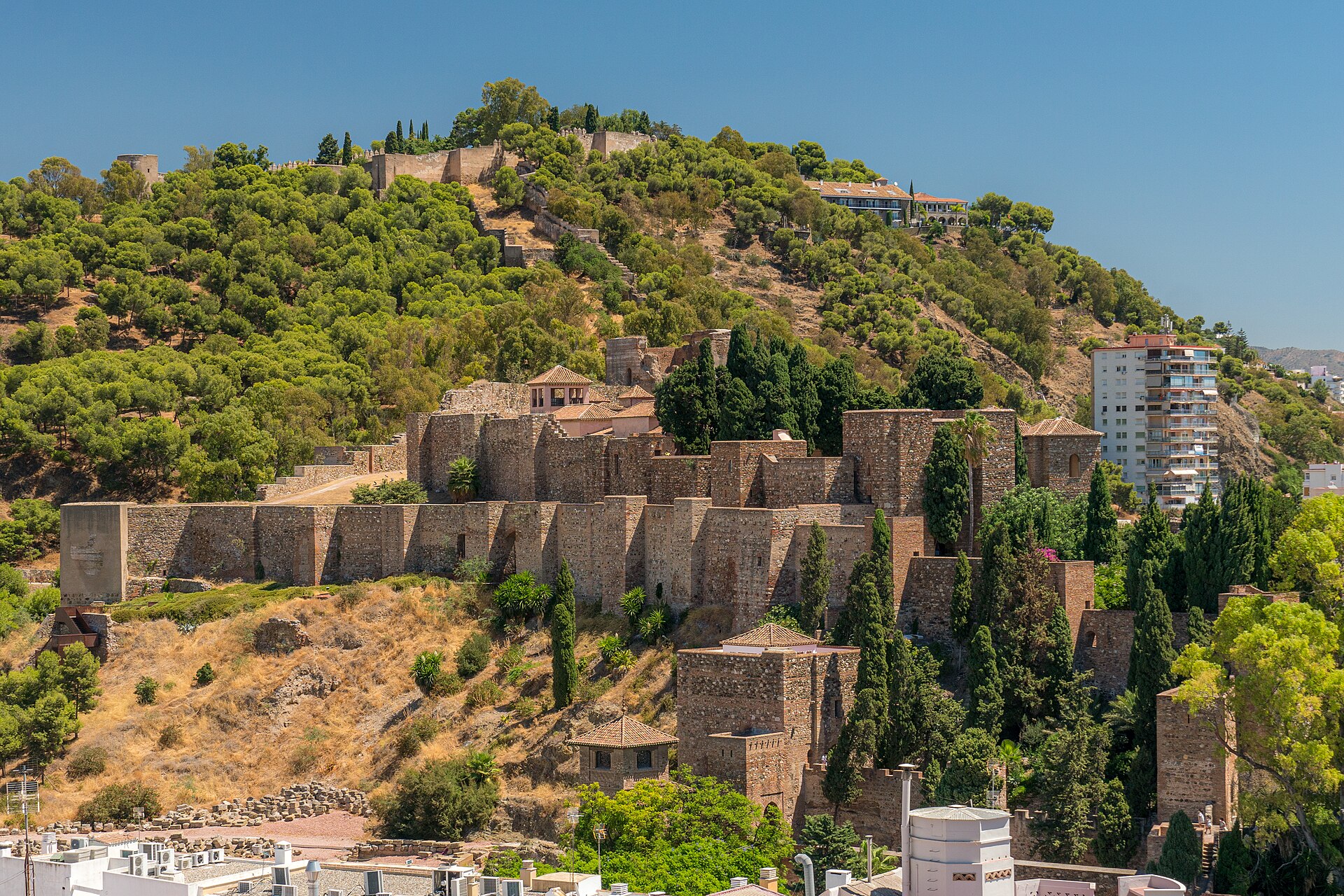
The Alcazaba of Málaga is a palatial fortification built during the 11th century by the Hammudid dynasty. Situated on a hill overlooking the city and the Mediterranean Sea, it represents one of the best-preserved examples of military architecture from the Taifa period in Al-Andalus. The structure was built upon the foundations of an earlier Roman fortress, incorporating repurposed Roman materials such as columns and capitals into its defensive walls and arches.
The complex is characterized by its double-walled enclosure and a series of interconnected courtyards, gardens, and fountains. Following the Christian conquest of Málaga in 1487, the site underwent various modifications, though it retained its core Islamic layout. Today, it serves as a primary historical landmark and cultural site, connected to the nearby Gibralfaro Castle by a fortified corridor known as the Coracha.
Key Facts
- Materials
- Stone, Brick, Roman marble columns
- Civilization
- Moorish (Taifa of Malaga)
- Accessibility
- Partially accessible; steep inclines and uneven stone paths
- Date(s)
- 11th century
- Condition
- Well-preserved and restored
- Original Function
- Military fortress and royal palace
- Key Figures
- Badis ben Habus, Catholic Monarchs
Origins and Roman Foundations
1st century BCE - 10th century CEThe site was originally occupied by a Roman fortress, evidenced by the discovery of Roman-era cisterns and architectural elements embedded within the later Islamic walls.
Taifa Construction
11th centuryThe current fortress was commissioned by the Hammudid dynasty. It was designed as a defensive stronghold for the city, featuring sophisticated gate systems and a palace complex.
Nasrid Expansion
13th - 15th centuryDuring the Nasrid period, the Alcazaba was significantly expanded and embellished with typical Andalusian decorative elements, including intricate stucco work and lush interior gardens.
Post-Conquest and Modern Era
1487 - PresentAfter the Catholic Monarchs captured Málaga, the site served various military and residential purposes. Extensive restoration efforts in the 20th century cleared later additions to reveal the original Islamic architectural features.
Cultural Significance
The Alcazaba is a symbol of Málaga's multi-layered history, reflecting the transition from Roman antiquity to the Islamic period and the subsequent Christian integration. It serves as a vital link to the city's Moorish heritage and is a central element of the local identity, representing the architectural sophistication of Al-Andalus.
Interpretive Notes
Scholarly debates and areas of uncertainty
There is ongoing academic discussion regarding the exact extent of the Roman structures beneath the Islamic layers, as well as the original layout of the palace chambers before the 15th-century Christian modifications.
Visiting Information
Entry Rules
Open daily. Tickets can be purchased at the entrance or online. Modest dress is recommended. Security checks are in place at the main gate.
Best Times to Visit
Early morning or late afternoon to avoid peak heat and cruise ship crowds. Spring and autumn offer the most comfortable temperatures for walking the steep paths.
Photography
Personal photography is permitted. Tripods and commercial equipment require prior authorization from the municipal authorities.
Preservation Notes
The site features uneven terrain and steep stone steps. Visitors are advised to wear comfortable footwear. Do not climb on walls or touch delicate stucco decorations.
Nearby POIs
5 shownSources & Further Reading
- [1]The Alcazaba of Malaga: A History — Marion Reder Gadow. University of Malaga Press (2005)
- [2]Islamic Architecture in Al-Andalus — Jerrilynn Dodds. Yale University Press (1992)
Key Facts
- Materials
- Stone, Brick, Roman marble columns
- Civilization
- Moorish (Taifa of Malaga)
- Accessibility
- Partially accessible; steep inclines and uneven stone paths
- Date(s)
- 11th century
- Condition
- Well-preserved and restored
- Original Function
- Military fortress and royal palace
- Key Figures
- Badis ben Habus, Catholic Monarchs