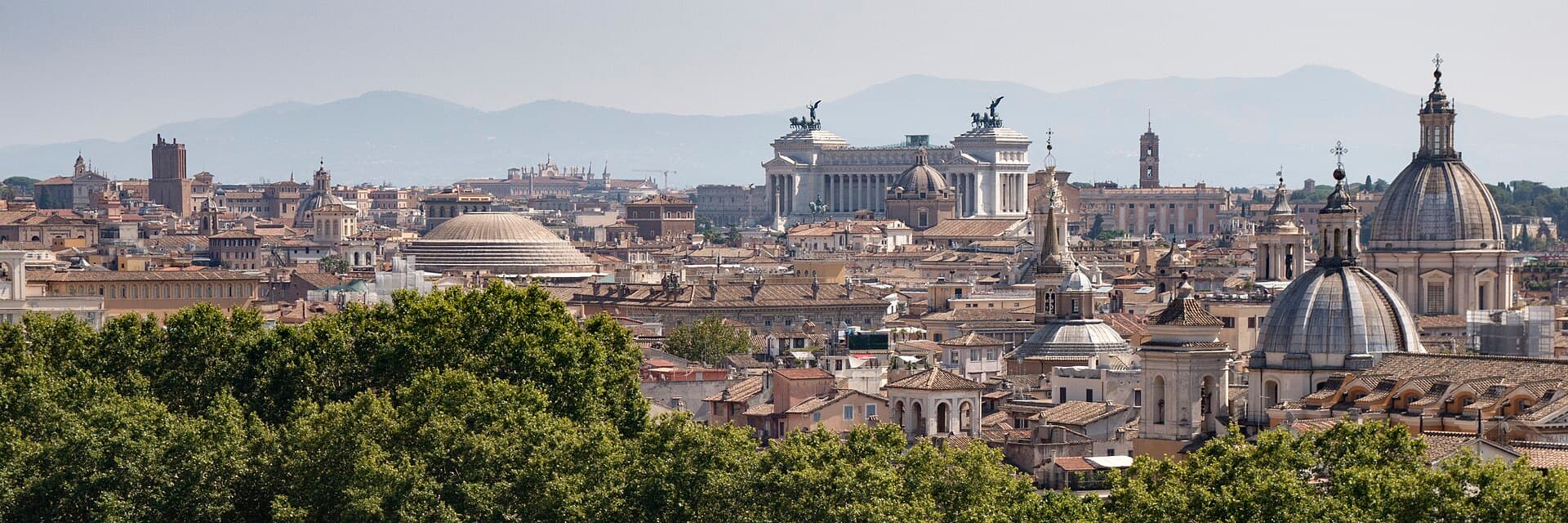
Rome: The Eternal City and the Heart of an Empire
Explore the city that shaped an empire, influenced a continent, and preserved nearly three thousand years of history within its streets, monuments, and neighborhoods.
 Daniel Romanov
Rome: The Eternal City and the Heart of an Empire
Rome is often called the Eternal City, a title earned through nearly three thousand years of continuous history. From the legendary founding of the city on the banks of the Tiber River to its role as the capital of a global empire, Rome has shaped politics, culture, religion, and architecture across continents.
Today, visitors encounter a city where ancient temples stand beside Renaissance palaces, early Christian churches occupy former Roman buildings, and archaeological sites emerge throughout modern neighborhoods. Few places in the world offer such a direct connection to the past. Every street, piazza, and monument reveals another chapter in a story that continues to influence the modern world.
From Legend to Republic
According to Roman tradition, the city was founded in 753 BC by Romulus, who became its first king after defeating his twin brother Remus. While archaeology tells a more complex story of gradual settlement, the legend remains central to Rome's identity.
Over the centuries, Rome grew from a small settlement into the center of the Roman Republic. Through military expansion, political innovation, and economic development, the republic extended its influence across the Italian Peninsula and eventually throughout the Mediterranean.
The institutions created during this period (including the Senate, magistracies, and legal systems) would leave a lasting impact on political thought long after the republic itself disappeared.
The Rise of the Roman Empire
The transition from republic to empire transformed Rome into one of the most powerful cities in human history.
Following decades of civil conflict, Augustus emerged as Rome's first emperor in 27 BC. Under his rule and that of his successors, the empire expanded across Europe, North Africa, and the Middle East.
Rome became the administrative center of a vast territory connected by roads, trade networks, military infrastructure, and shared institutions. Wealth from across the empire flowed into the capital, funding monumental construction projects that continue to define the city's landscape today.
The empire's influence extended far beyond military power. Roman law, engineering, architecture, language, and urban planning shaped societies across multiple continents and continue to influence modern civilization.
The Colosseum and the Spectacle of Rome
No monument is more closely associated with ancient Rome than the Colosseum.
Completed in AD 80 during the reign of Emperor Titus, the amphitheater could hold tens of thousands of spectators. Gladiatorial contests, animal hunts, public executions, and theatrical performances drew crowds from across the city.
The structure remains one of the greatest achievements of Roman engineering. Its sophisticated system of entrances, seating arrangements, and underground mechanisms demonstrates the remarkable capabilities of Roman architects and builders.
Although centuries of earthquakes and stone removal damaged the monument, the Colosseum continues to serve as one of the most recognizable symbols of the ancient world.
The Political Heart of the Ancient City
Just beyond the Colosseum lies the Roman Forum, once the political, religious, and commercial center of Roman public life.
For centuries, citizens gathered here to hear speeches, conduct business, celebrate military victories, and participate in religious ceremonies. Temples, basilicas, government buildings, and monuments filled the area, creating the symbolic heart of Roman civilization.
Walking through the Forum today provides a unique opportunity to experience the spaces where some of history's most significant political decisions were made.
The hill the Forum is located on, Palatine Hill, was also the location where Romulus founded the city itself, according to Roman legend.
The Legacy of Roman Engineering
Rome's success depended not only on military power but also on extraordinary engineering achievements.
Aqueducts transported fresh water across vast distances, supplying public baths, fountains, and private homes. Roads connected distant provinces to the capital, facilitating trade, communication, and military movement.
The influence of Roman engineering can still be observed throughout the city. Ancient bridges continue to cross the Tiber River, while remnants of aqueducts remain visible in parks and suburban districts.
Structures such as the Pantheon demonstrate the sophistication of Roman construction techniques. Originally built as a temple and later converted into a church, the Pantheon possesses the world's largest unreinforced concrete dome, a feat that continues to impress architects and engineers nearly two thousand years after its construction.
Rome and the Rise of Christianity
As the Roman Empire evolved, Rome became one of Christianity's most important centers.
Tradition holds that both Saint Peter and Saint Paul were martyred in the city during the first century. Over time, Rome emerged as the seat of the papacy and a major destination for pilgrims from across Europe.
The establishment of Christianity transformed the urban landscape. Temples were converted, churches were constructed, and new religious institutions emerged throughout the city.
Among the most significant landmarks is St. Peter's Basilica, located within Vatican City. Built over the traditional burial site of Saint Peter, the basilica remains one of the most important Christian sites in the world.
Its immense scale, artistic treasures, and historical significance attract millions of visitors every year.
Renaissance Rome
Following the challenges of the medieval period, Rome experienced a remarkable cultural revival during the Renaissance.
Popes commissioned artists, architects, and scholars to transform the city into a center of learning and artistic achievement. Some of history's most celebrated figures worked in Rome during this period, including Michelangelo, Raphael, and Donato Bramante.
Their contributions helped shape many of the city's most famous landmarks, from churches and palaces to public squares and fountains.
The Renaissance reinforced Rome's position as a cultural capital and left an enduring architectural legacy that continues to define the city's appearance.
Squares, Fountains, and Everyday Life
While Rome's ancient monuments attract global attention, much of the city's charm lies in its public spaces.
Historic piazzas function as gathering places where residents and visitors alike experience daily life. Streets lined with cafés, markets, and small businesses connect neighborhoods that have evolved over centuries.
Among the most celebrated landmarks is the Trevi Fountain. Completed during the eighteenth century, the fountain combines Baroque artistry with Rome's long relationship to water infrastructure.
Nearby, the Piazza Navona occupies the site of an ancient Roman stadium, illustrating how layers of history continue to shape the modern city.
Tastes of Rome
Roman cuisine reflects centuries of local tradition and regional influences.
Among the city's most famous dishes is cacio e pepe, a simple yet iconic pasta prepared with pecorino cheese and black pepper. Other staples include carbonara, amatriciana, and supplì, fried rice croquettes often enjoyed as street food.
Traditional trattorias throughout the city continue to preserve culinary practices that connect modern Romans with generations of local history.
Food in Rome is not simply a matter of dining; it forms part of the city's cultural identity and everyday social life.
Why Rome Continues to Matter
Few cities have influenced world history as profoundly as Rome.
The city served as the center of an empire that shaped law, governance, language, architecture, and culture across vast regions of the world. It later became one of Christianity's most important centers and played a pivotal role in the Renaissance, a movement that transformed European intellectual and artistic life.
Today, Rome remains a place where multiple eras coexist. Ancient monuments stand beside medieval churches, Renaissance palaces, and modern neighborhoods, creating an urban landscape unlike any other.
A City Beyond Time
What makes Rome extraordinary is not simply the number of monuments it contains but the continuity of its story.
The city has survived invasions, political upheavals, economic transformations, and centuries of change while maintaining its position as one of the world's great cultural capitals. Every street reveals traces of earlier generations, and every monument contributes to a narrative spanning nearly three thousand years.
For travelers interested in history, archaeology, architecture, religion, and culture, Rome offers an experience that few destinations can match. It is not merely a city to visit; it is a place where the foundations of much of the modern world remain visible in stone.