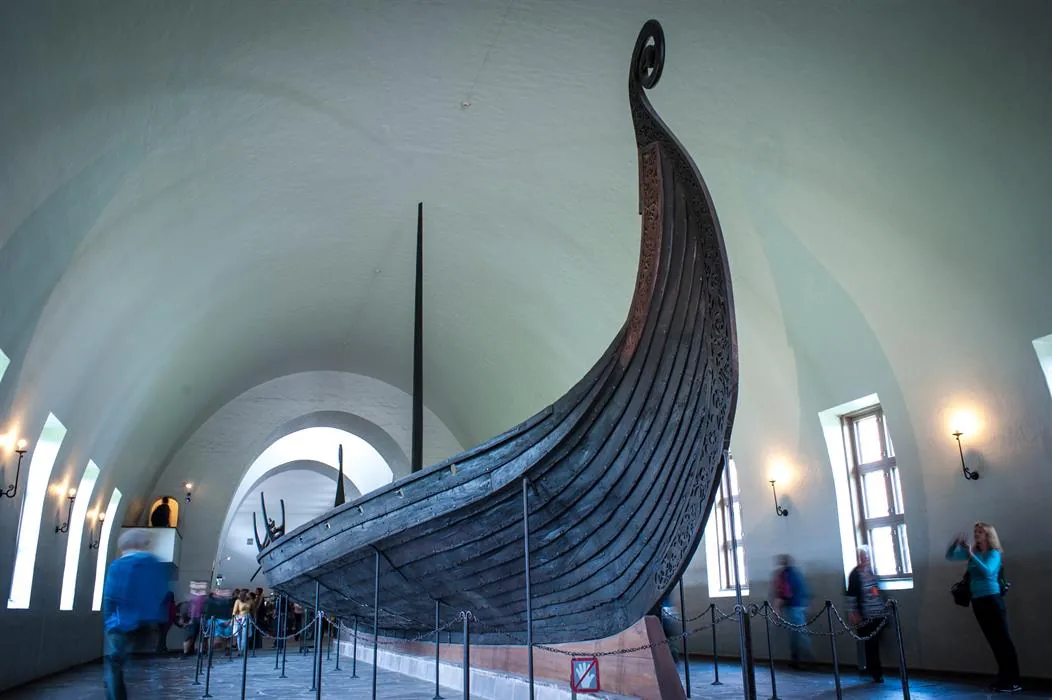
The Viking Ship Museum in Oslo, part of the Museum of Cultural History, houses the world's best-preserved Viking Age ships. The collection features the Oseberg, Gokstad, and Tune ships, all of which were discovered in large burial mounds near the Oslo Fjord. These vessels, dating back to the 9th century, were unearthed alongside a significant collection of grave goods, including sledges, carts, and intricate wood carvings.
The museum building, designed by Arnstein Arneberg, was specifically constructed to house these artifacts. It is currently undergoing a major expansion and renovation project to create the new 'Museum of the Viking Age,' which will provide enhanced climate control and structural support for the fragile wooden vessels, ensuring their preservation for future generations.
Key Facts
- Materials
- Oak, Iron, Brick, Concrete
- Civilization
- Norse
- Accessibility
- N/A (Currently closed)
- Date(s)
- 1926
- Condition
- Closed for major renovation and expansion
- Original Function
- Museum
- Key Figures
- Arnstein Arneberg, Gabriel Gustafson, Haakon Shetelig
Discovery and Excavation
1867-1904The Gokstad ship was excavated in 1880, followed by the Oseberg ship in 1904. These discoveries provided unprecedented insight into Viking maritime technology and burial customs, as the ships had been used as burial chambers for high-status individuals.
Museum Construction
1913-1932Architect Arnstein Arneberg was commissioned to design a dedicated facility to house the ships. The Oseberg wing was completed in 1926, and the remaining wings were finished by 1932, creating a cross-shaped building designed to display the vessels in their entirety.
Modern Preservation and Expansion
2021-PresentThe museum closed in 2021 to facilitate the construction of a new, larger facility. The project aims to integrate the original historic building with a modern structure, allowing for better conservation of the ships and the display of a much larger portion of the museum's extensive collection.
Cultural Significance
The Viking Ship Museum serves as the primary repository for Norway's maritime heritage. The ships are central to the national identity, representing the technical sophistication and expansive reach of Viking Age society. They are among the most significant archaeological finds in Northern Europe, offering a tangible connection to the burial rituals and social hierarchy of the 9th century.
Interpretive Notes
Scholarly debates and areas of uncertainty
There is ongoing academic discussion regarding the optimal preservation methods for the ships, which suffer from the degradation of the original wood due to the chemicals used in early 20th-century conservation efforts. Scholars also debate the specific social status and identities of the individuals buried within the Oseberg and Gokstad mounds.
Visiting Information
Entry Rules
The museum is currently closed to the public for construction. It is expected to reopen as the Museum of the Viking Age in 2026/2027.
Best Times to Visit
N/A (Currently closed)
Photography
N/A (Currently closed)
Preservation Notes
The site is currently a construction zone. The artifacts are being carefully monitored and prepared for relocation into the new facility.
Nearby POIs
11 shownSources & Further Reading
- [1]The Viking Ship Museum: The Oseberg, Gokstad and Tune Ships — Museum of Cultural History. University of Oslo (2020)View
- [2]Viking Age Ships and Shipbuilding — Anton Wilhelm Brøgger, Haakon Shetelig. Dreyers Forlag (1951)
Key Facts
- Materials
- Oak, Iron, Brick, Concrete
- Civilization
- Norse
- Accessibility
- N/A (Currently closed)
- Date(s)
- 1926
- Condition
- Closed for major renovation and expansion
- Original Function
- Museum
- Key Figures
- Arnstein Arneberg, Gabriel Gustafson, Haakon Shetelig