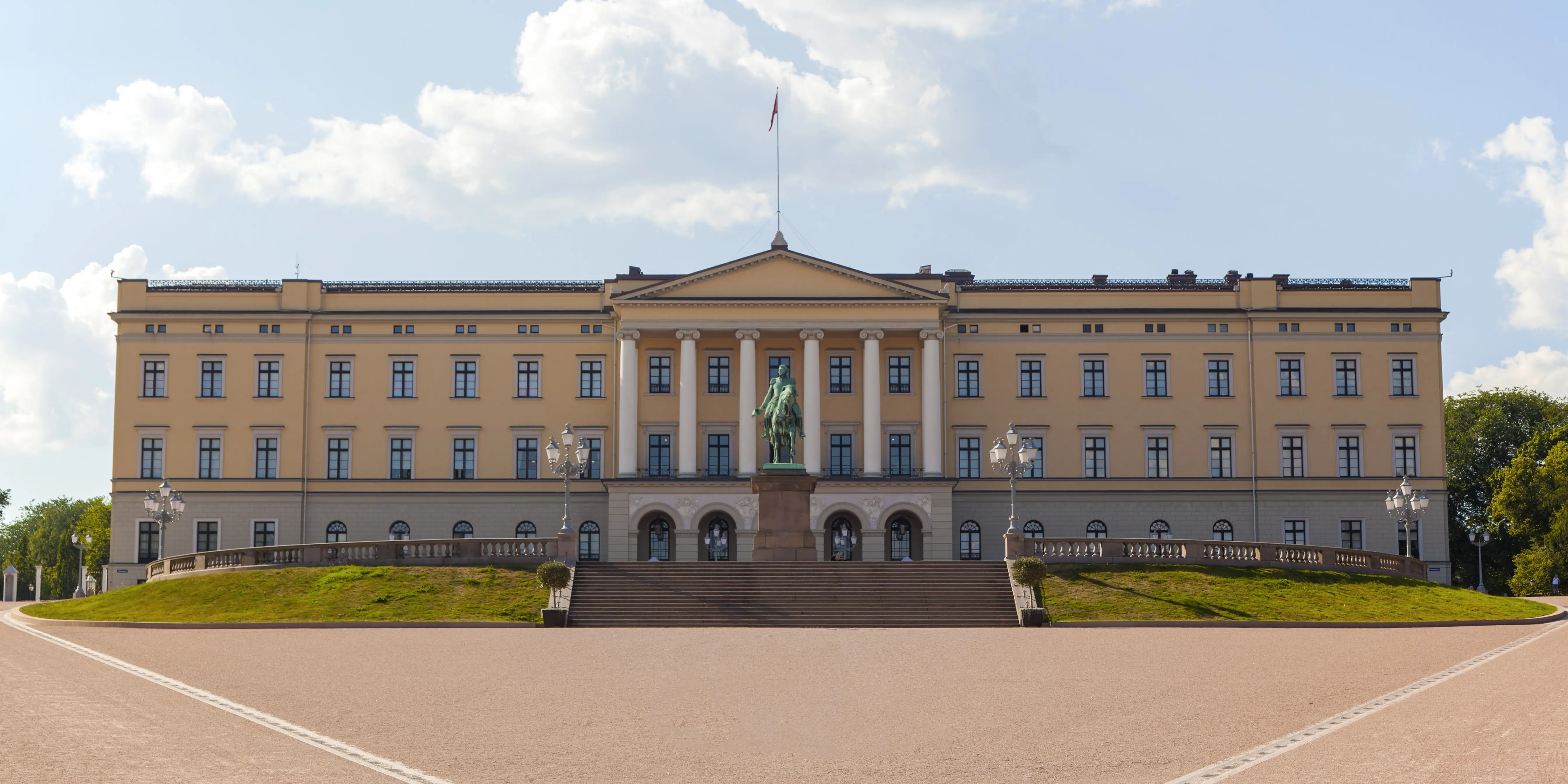
The Royal Palace in Oslo serves as the official residence of the Norwegian monarch. Constructed between 1824 and 1849, the building was designed by the Danish-born architect Hans Linstow for King Charles III John, who served as King of Norway and Sweden. The palace is situated at the end of Karl Johans gate, the city's main thoroughfare, and acts as a focal point for the capital's urban layout.
Architecturally, the palace is a prominent example of Neoclassicism, characterized by its symmetrical facade and restrained ornamentation. While it serves as the primary administrative center for the monarchy, it also functions as a venue for state events and official receptions. The surrounding Palace Park is a public space that provides a green buffer between the royal grounds and the surrounding city center.
Key Facts
- Materials
- Brick, Stucco, Granite
- Civilization
- Norwegian
- Accessibility
- Limited public access to interior via guided tours in summer
- Date(s)
- 1824-1849
- Condition
- Well-preserved, active royal residence
- Original Function
- Royal residence
- Key Figures
- King Charles III John, Hans Linstow, King Haakon VII
Planning and Construction
1824-1849The project was initiated by King Charles III John to provide a suitable residence for the monarch in the Norwegian capital. Hans Linstow was commissioned as the architect, and construction faced significant delays due to budget constraints and political debates regarding the necessity of the palace.
Early Royal Use
1849-1905The palace was officially inaugurated in 1849 by King Oscar I. During the period of the Union between Sweden and Norway, the palace was used periodically by the monarchs, though they spent the majority of their time in Stockholm.
Independence and Modernization
1905-presentFollowing the dissolution of the union in 1905, King Haakon VII became the first monarch to use the palace as a permanent, year-round residence. Throughout the 20th and 21st centuries, the palace has undergone several major renovation projects to modernize its infrastructure while preserving its historical character.
Cultural Significance
The Royal Palace is a central symbol of Norwegian sovereignty and the continuity of the constitutional monarchy. It serves as the site for the annual Constitution Day celebrations, where the royal family greets the children's parade from the main balcony, a tradition that reinforces the bond between the monarchy and the public.
Beyond its political role, the palace and its surrounding park are integral to Oslo's cultural identity, providing a historical anchor in the city's modern urban landscape. The site is a focal point for national mourning and celebration, reflecting the evolving relationship between the state and the crown.
Interpretive Notes
Scholarly debates and areas of uncertainty
Debates surrounding the palace often focus on the architectural influence of the Swedish-Norwegian union period and the extent to which the building's design reflects a distinctly Norwegian identity versus the broader Scandinavian Neoclassical tradition.
Visiting Information
Entry Rules
The palace interior is open to the public via guided tours during the summer season only. Tickets must be purchased in advance. Security screening is mandatory for all visitors.
Best Times to Visit
Summer months (late June to mid-August) for interior tours. The Palace Park is open year-round and is best visited during daylight hours.
Photography
Photography is strictly prohibited inside the palace during guided tours. Exterior photography of the palace and park is permitted.
Preservation Notes
The building is subject to ongoing maintenance by the Norwegian government. Visitors must remain with their tour group at all times and are prohibited from touching historical furnishings or surfaces.
Nearby POIs
11 shownSources & Further Reading
- [1]
- [2]Slottet: Historien om det norske kongehuset — Geir Thomas Risåsen. Cappelen Damm (2019)
Key Facts
- Materials
- Brick, Stucco, Granite
- Civilization
- Norwegian
- Accessibility
- Limited public access to interior via guided tours in summer
- Date(s)
- 1824-1849
- Condition
- Well-preserved, active royal residence
- Original Function
- Royal residence
- Key Figures
- King Charles III John, Hans Linstow, King Haakon VII