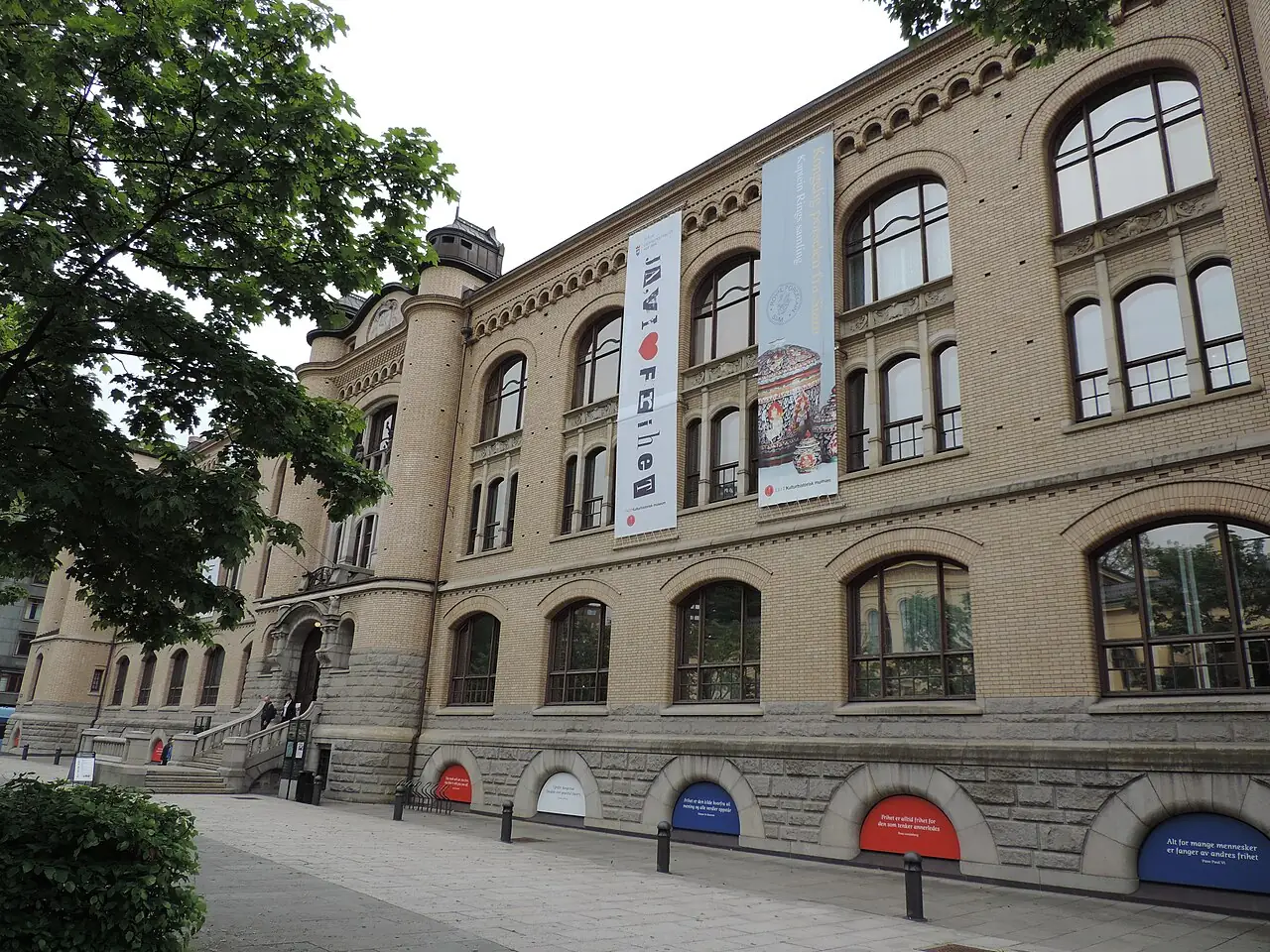
The Museum of Cultural History (Kulturhistorisk museum) in Oslo is a university museum affiliated with the University of Oslo. It houses one of Norway's most extensive collections of historical artifacts, spanning from the Stone Age to the modern era. The institution is particularly noted for its significant holdings related to the Norwegian Middle Ages and its comprehensive ethnographic collections.
The museum's collections are distributed across several locations, with the main building in downtown Oslo housing the Egyptian collection, medieval church art, and various temporary exhibitions. It serves as a primary center for archaeological research and the preservation of Norway's cultural heritage, playing a vital role in academic study and public education regarding the nation's past.
Key Facts
- Materials
- Brick, Granite
- Civilization
- Norwegian
- Accessibility
- Wheelchair accessible
- Date(s)
- 1902
- Condition
- Active, well-maintained
- Original Function
- Historical and ethnographic museum
- Key Figures
- Henrik Bull
Establishment
1902The museum building was designed by architect Henrik Bull and completed in 1902. It was originally intended to house the university's historical collections, which had grown significantly throughout the 19th century.
Institutional Evolution
1999-2004The museum was formally established as an independent unit under the University of Oslo in 1999, consolidating several previously separate archaeological and ethnographic collections into a single administrative body.
Modern Development
21st CenturyThe museum continues to serve as a hub for archaeological research in Norway. Recent efforts have focused on the digitization of collections and the planning of the new Viking Age Museum, which will house the Oseberg and Gokstad ships.
Cultural Significance
The museum is central to the understanding of Norwegian national identity, particularly through its preservation of medieval ecclesiastical art and Viking-era artifacts. It acts as a bridge between academic archaeological research and the general public, fostering a deeper appreciation for Norway's cultural trajectory within the broader European context.
Interpretive Notes
Scholarly debates and areas of uncertainty
Ongoing academic discourse surrounds the provenance and ethical display of the museum's Egyptian collection, as well as the challenges of balancing the preservation of fragile medieval wooden artifacts with the demands of public exhibition.
Visiting Information
Entry Rules
Open Tuesday to Sunday. Tickets can be purchased online or at the entrance. Standard museum conduct applies; no food or drink in exhibition halls.
Best Times to Visit
Weekday mornings are generally quieter. The museum is a popular destination during the summer tourist season and school holidays.
Photography
Personal photography is permitted for non-commercial use without flash. Tripods are prohibited.
Preservation Notes
Do not touch artifacts or display cases. Maintain a respectful distance from all exhibits to ensure the longevity of the items.
Nearby POIs
11 shownSources & Further Reading
- [1]
- [2]The History of the University Museums in Oslo — Bjarne Rogan. University of Oslo Press (2011)
Key Facts
- Materials
- Brick, Granite
- Civilization
- Norwegian
- Accessibility
- Wheelchair accessible
- Date(s)
- 1902
- Condition
- Active, well-maintained
- Original Function
- Historical and ethnographic museum
- Key Figures
- Henrik Bull