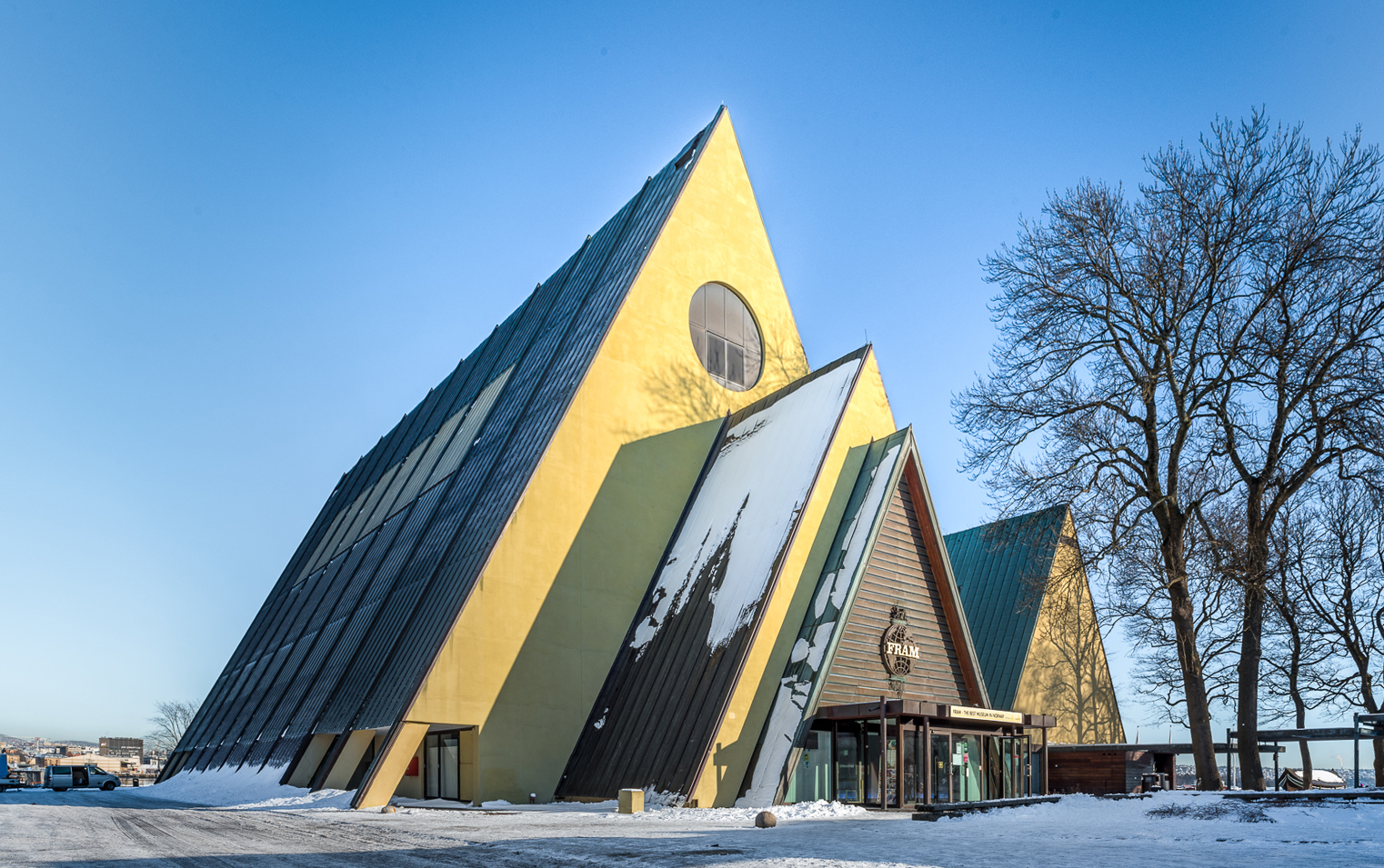
The Fram Museum, located on the Bygdøy peninsula in Oslo, is dedicated to the history of Norwegian polar exploration. The museum's centerpiece is the original polar exploration ship 'Fram', which was commissioned by Fridtjof Nansen and used in three major expeditions between 1893 and 1912. The vessel is housed within a purpose-built A-frame structure that allows visitors to board and explore the ship's interior, including the cabins, engine room, and cargo holds.
In addition to the Fram, the museum features extensive exhibits on the expeditions of Roald Amundsen, Otto Sverdrup, and other polar pioneers. The displays include original equipment, navigational instruments, and personal artifacts, providing a comprehensive look at the survival techniques and scientific research conducted during the heroic age of polar exploration.
Key Facts
- Materials
- Timber, Steel, Glass
- Civilization
- Norwegian
- Accessibility
- Fully wheelchair accessible
- Date(s)
- 1936
- Condition
- Well-preserved, active museum
- Original Function
- Maritime museum
- Key Figures
- Fridtjof Nansen, Roald Amundsen, Otto Sverdrup
The Ship Fram
1892-1912Designed by Colin Archer, the Fram was built with a rounded hull to withstand the crushing pressure of Arctic pack ice. It served as the vessel for Nansen's North Pole expedition, Sverdrup's Canadian Arctic expedition, and Amundsen's South Pole expedition.
Museum Foundation
1936The museum was inaugurated on May 20, 1936, to preserve the vessel and honor the achievements of the Norwegian explorers who had used it to map unknown regions of the globe.
Expansion and Modernization
2006-presentIn 2006, the Gjøa building was added to the museum complex to house the ship Gjøa, the first vessel to navigate the Northwest Passage. The museum continues to update its interactive exhibits to engage contemporary audiences with polar history.
Cultural Significance
The Fram Museum serves as a cornerstone of Norwegian national identity, celebrating the nation's historical role in polar exploration. It highlights the intersection of scientific discovery, endurance, and national pride, reflecting Norway's deep-rooted connection to the sea and the extreme environments of the poles.
Interpretive Notes
Scholarly debates and areas of uncertainty
Debates occasionally arise regarding the ethics of historical polar exploration, specifically the impact of expeditions on indigenous populations in the Arctic and the environmental legacy of early 20th-century exploration methods.
Visiting Information
Entry Rules
Open daily. Tickets can be purchased online or at the entrance. No specific dress code required.
Best Times to Visit
Weekdays during the shoulder season (May or September) to avoid peak cruise ship traffic and school holiday crowds.
Photography
Personal photography is permitted. Tripods and commercial filming require prior authorization from museum management.
Preservation Notes
Visitors are requested to refrain from touching the ship's original wooden surfaces and to follow marked paths within the vessel to prevent wear on the historic structure.
Nearby POIs
11 shownSources & Further Reading
- [1]
- [2]Nansen and the Fram — Roland Huntford. Modern Library (2001)
Key Facts
- Materials
- Timber, Steel, Glass
- Civilization
- Norwegian
- Accessibility
- Fully wheelchair accessible
- Date(s)
- 1936
- Condition
- Well-preserved, active museum
- Original Function
- Maritime museum
- Key Figures
- Fridtjof Nansen, Roald Amundsen, Otto Sverdrup