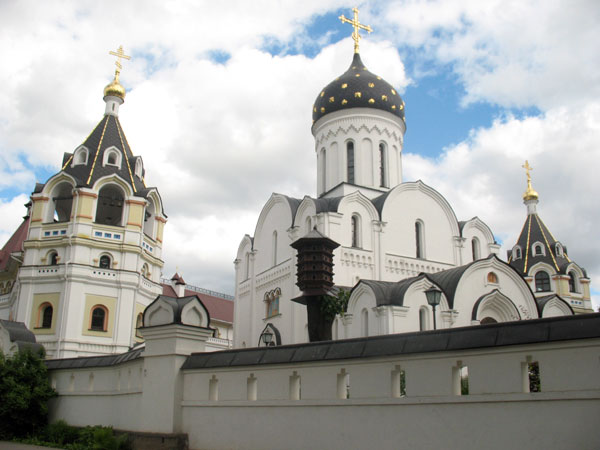
St. Elisabeth Convent is an active Eastern Orthodox convent located on the outskirts of Minsk, Belarus. Founded in 1999, it is unique for its integration of monastic life with extensive social outreach programs, including the operation of rehabilitation centers for the homeless and those struggling with addiction.
The architectural complex is designed in the Byzantine style, characterized by multiple churches featuring traditional onion domes and intricate brickwork. The convent is also a significant center for religious arts, housing workshops where nuns and laypeople produce iconography, vestments, and liturgical metalwork that are distributed to Orthodox communities globally.
Key Facts
- Materials
- Brick, Concrete, Copper
- Civilization
- Belarusian Orthodox
- Accessibility
- Ground level access to main churches
- Date(s)
- 1999 - present
- Condition
- Active, well-maintained
- Original Function
- Monastic community and social ministry
- Key Figures
- Archpriest Andrei Lemeshonok
Founding and Vision
1999The convent was established in 1999 under the guidance of Archpriest Andrei Lemeshonok. Unlike traditional secluded monasteries, it was founded with a specific mission to provide spiritual and physical support to the marginalized populations of Minsk.
Architectural Development
2000s - 2010sThroughout the early 21st century, the convent grounds expanded with the construction of several churches, including the Church of St. Elisabeth and the Church of the Icon of the Mother of God 'Derzhavnaya'. The architecture draws heavily on Byzantine and early Russian traditions.
Modern Expansion
2020 - presentThe convent continues to operate as a major pilgrimage site and a hub for traditional religious crafts. Its workshops have gained international recognition for the quality of their liturgical art, which supports the convent's ongoing social welfare initiatives.
Cultural Significance
The convent serves as a vital center for contemporary Belarusian Orthodoxy, bridging the gap between monastic tradition and modern social service. It is widely recognized for its role in providing shelter and employment to vulnerable individuals, making it a focal point for charitable work in the region.
Culturally, the site is a repository of traditional religious craftsmanship. The workshops preserve ancient techniques of icon painting and embroidery, ensuring these skills are passed down to new generations of artisans within the Orthodox tradition.
Interpretive Notes
Scholarly debates and areas of uncertainty
Discussions surrounding the convent often focus on the intersection of monastic autonomy and social work. Scholars debate the extent to which the convent's large-scale commercial production of religious goods influences the traditional ascetic nature of monastic life.
Visiting Information
Entry Rules
Open daily to the public. Visitors are expected to dress modestly, with women encouraged to wear head coverings and skirts, and men to avoid shorts. Photography is permitted in the courtyard but restricted inside the churches during services.
Best Times to Visit
Early morning for Divine Liturgy or late afternoon for evening vespers. Weekends are typically busier with local pilgrims.
Photography
No photography allowed inside the churches during liturgical services. Respect the privacy of the monastics and those residing in the rehabilitation centers.
Preservation Notes
Maintain silence while on the grounds. Do not enter restricted monastic living quarters. Follow all posted signage regarding areas accessible to visitors.
Nearby POIs
11 shown- Belarusian Great Patriotic War Museum4.4 km
- Maksim Bahdanovich Literary Museum5.4 km
- Holy Spirit Cathedral5.8 km
- Minsk City History Museum5.9 km
- Mini Museum6.1 km
- Belarusian National Arts Museum6.6 km
- Church of Saints Simon and Helena6.6 km
- Government House6.7 km
- Belarusian National History and Culture Museum6.7 km
- National Library of Belarus7.5 km
- Loshitsa Manor12 km
Sources & Further Reading
- [1]
- [2]Orthodoxy in Belarus: A Contemporary Overview — Natallia Vasilevich. Journal of Orthodox Studies (2018)
Key Facts
- Materials
- Brick, Concrete, Copper
- Civilization
- Belarusian Orthodox
- Accessibility
- Ground level access to main churches
- Date(s)
- 1999 - present
- Condition
- Active, well-maintained
- Original Function
- Monastic community and social ministry
- Key Figures
- Archpriest Andrei Lemeshonok
Nearby POIs
11 shown- Belarusian Great Patriotic War Museum4.4 km
- Maksim Bahdanovich Literary Museum5.4 km
- Holy Spirit Cathedral5.8 km
- Minsk City History Museum5.9 km
- Mini Museum6.1 km
- Belarusian National Arts Museum6.6 km
- Church of Saints Simon and Helena6.6 km
- Government House6.7 km
- Belarusian National History and Culture Museum6.7 km
- National Library of Belarus7.5 km
- Loshitsa Manor12 km