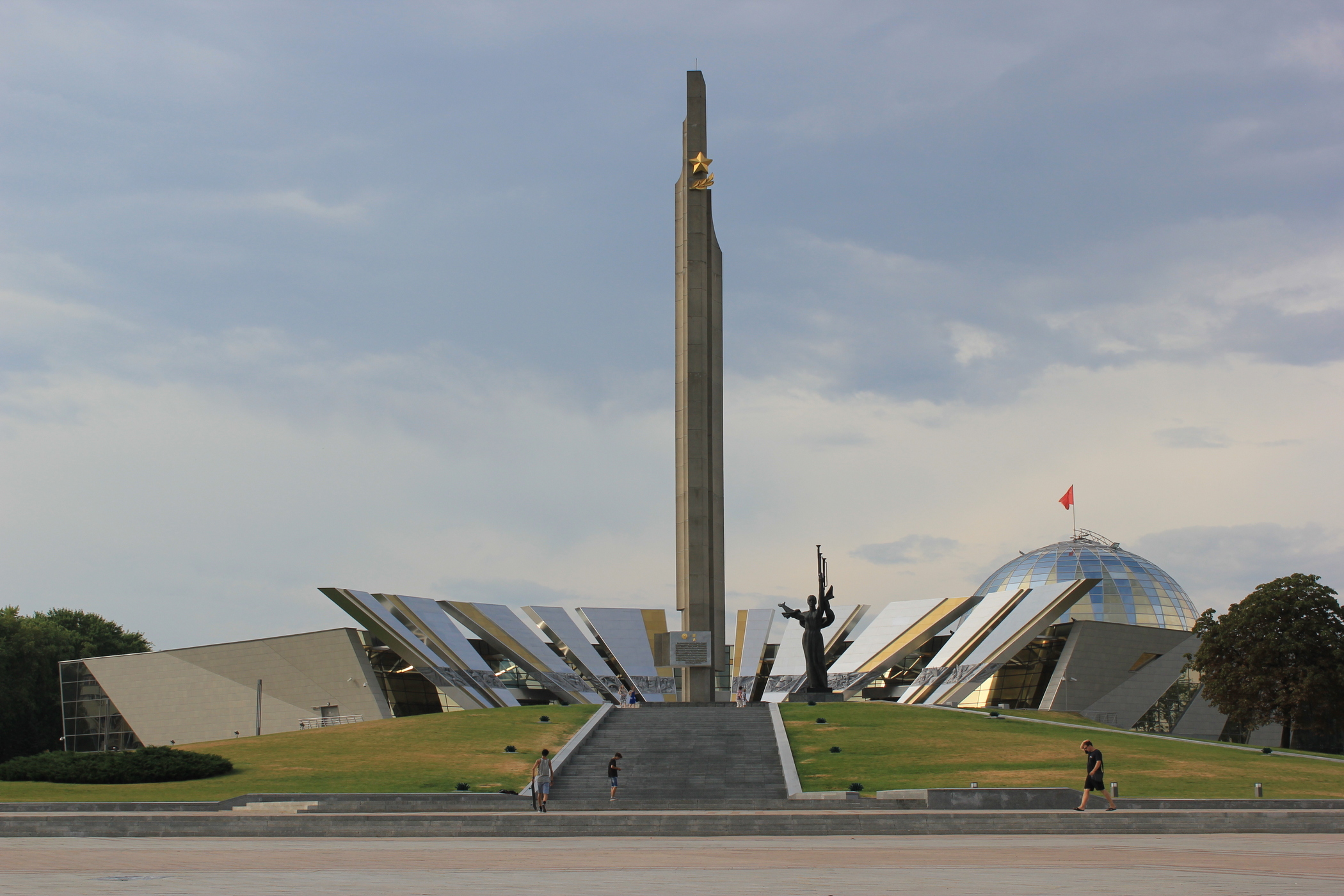
The Belarusian Great Patriotic War Museum is a major cultural institution in Minsk dedicated to the history of the Second World War, specifically the conflict on the Eastern Front. Established in 1944, it is one of the first museums in the world to document the events of the war while the conflict was still ongoing.
The current facility, opened in 2014, features a modern architectural design with four main wings representing the four years of the war. Its extensive collection includes over 140,000 artifacts, ranging from military hardware and personal correspondence to detailed dioramas depicting the Nazi occupation of Belarus and the subsequent liberation by Soviet forces.
Key Facts
- Materials
- Glass, Steel, Concrete
- Civilization
- Belarusian
- Accessibility
- Fully wheelchair accessible
- Date(s)
- 2010-2014
- Condition
- Active, well-maintained
- Original Function
- War memorial and historical museum
- Key Figures
- Pyotr Masherov
Establishment during Wartime
1944The museum was founded in 1944 following the liberation of Minsk. It was initially housed in the House of Trade Unions, collecting artifacts from partisan movements and the front lines while the war was still active.
Post-War Development
1945-1966After the war, the museum expanded its collection significantly. In 1966, it moved to a dedicated building on October Square, which served as its primary location for nearly five decades.
Relocation and Modernization
2010-2014Construction of the current state-of-the-art facility began in 2010 near the Minsk Hero City Obelisk. The new museum opened in 2014, offering a vastly expanded exhibition space and modern multimedia capabilities.
Cultural Significance
The museum serves as the primary site for national memory regarding the Great Patriotic War, a defining event in Belarusian history. It emphasizes the scale of the partisan resistance movement and the immense human cost of the occupation, playing a central role in state-sponsored historical education and commemorative events.
Interpretive Notes
Scholarly debates and areas of uncertainty
Debates exist regarding the museum's narrative focus, which prioritizes the Soviet-centric perspective of the war. Some international historians argue that the exhibits minimize the complexities of the occupation period and the role of local collaboration, focusing primarily on the heroic narrative of the partisan struggle.
Visiting Information
Entry Rules
Open Tuesday through Sunday. Tickets can be purchased at the entrance or via the official website. Guided tours are available in multiple languages.
Best Times to Visit
Weekday mornings are generally less crowded. The museum is particularly significant during the lead-up to May 9th (Victory Day).
Photography
Personal photography is permitted without flash. Professional or commercial photography requires prior authorization from museum administration.
Preservation Notes
Visitors are requested to maintain a respectful demeanor given the commemorative nature of the site. Large bags must be left in the cloakroom.
Nearby POIs
11 shown- Maksim Bahdanovich Literary Museum1.5 km
- Minsk City History Museum1.7 km
- Holy Spirit Cathedral1.7 km
- Mini Museum2.2 km
- Church of Saints Simon and Helena2.3 km
- Government House2.3 km
- Belarusian National History and Culture Museum2.5 km
- Belarusian National Arts Museum2.5 km
- St Elisabeth Convent4.4 km
- National Library of Belarus7.3 km
- Loshitsa Manor7.7 km
Sources & Further Reading
- [1]The Belarusian Great Patriotic War Museum: Official Guide — Museum Administration. Belarusian Ministry of Culture (2015)View
- [2]Memory and Identity in Post-Soviet Belarus — David R. Marples. University of Alberta Press (2014)
Key Facts
- Materials
- Glass, Steel, Concrete
- Civilization
- Belarusian
- Accessibility
- Fully wheelchair accessible
- Date(s)
- 2010-2014
- Condition
- Active, well-maintained
- Original Function
- War memorial and historical museum
- Key Figures
- Pyotr Masherov
Nearby POIs
11 shown- Maksim Bahdanovich Literary Museum1.5 km
- Minsk City History Museum1.7 km
- Holy Spirit Cathedral1.7 km
- Mini Museum2.2 km
- Church of Saints Simon and Helena2.3 km
- Government House2.3 km
- Belarusian National History and Culture Museum2.5 km
- Belarusian National Arts Museum2.5 km
- St Elisabeth Convent4.4 km
- National Library of Belarus7.3 km
- Loshitsa Manor7.7 km