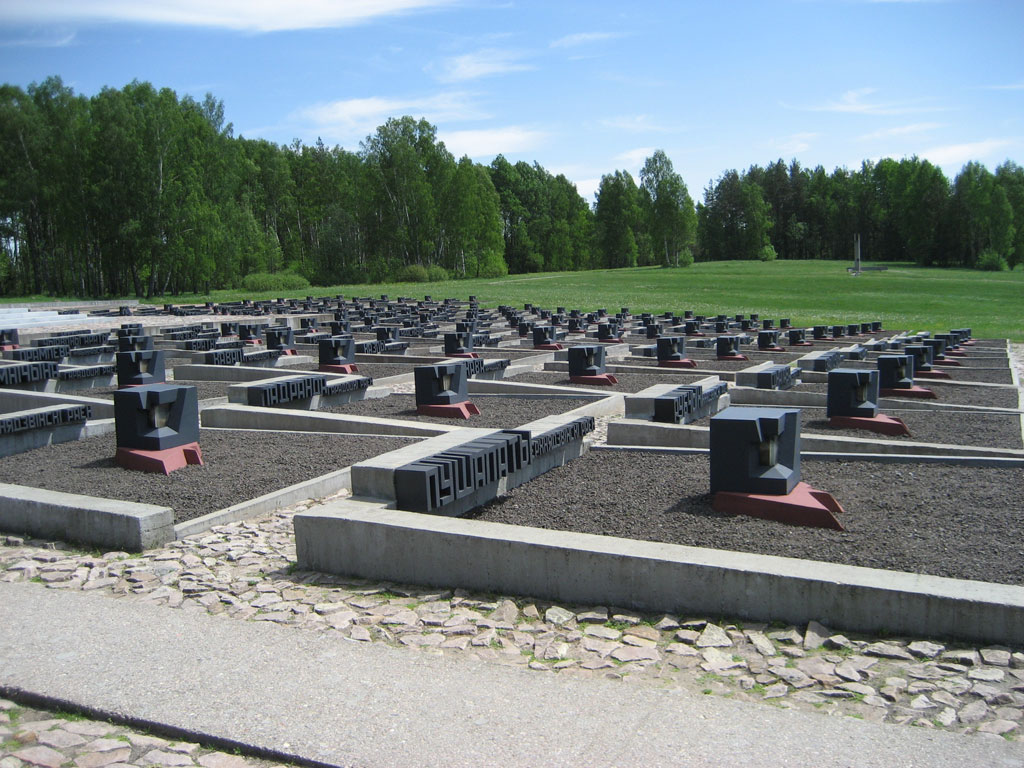
The National Memorial of the Republic of Belarus serves as a solemn site dedicated to the victims of the Great Patriotic War. It commemorates the immense human cost and the resistance efforts against Nazi occupation during the conflict, functioning as a central location for state-level remembrance ceremonies and public reflection.
The complex is characterized by a prominent central obelisk and an eternal flame, which serves as the focal point for commemorative activities. The architectural design follows the tradition of Soviet monumentalism, emphasizing scale and symbolic austerity to evoke the gravity of the historical events it honors.
Key Facts
- Materials
- Concrete, Granite, Metal
- Civilization
- Soviet / Belarusian
- Accessibility
- Ground level access
- Date(s)
- 20th century
- Condition
- Well-maintained
- Original Function
- War memorial
- Key Figures
Historical Context
1941-1945The memorial honors the period of the Great Patriotic War, during which Belarus suffered catastrophic losses and widespread destruction under Nazi occupation. The site was established to preserve the memory of the civilian and military casualties sustained during this era.
Establishment
Late 20th centuryThe monument was constructed as part of a broader national effort to institutionalize the memory of the war. It was designed to serve as a permanent site for state commemorations and to provide a space for public mourning.
Modern Significance
PresentToday, the site remains a key location for national holidays, including Victory Day. It continues to be maintained by the state as a symbol of national resilience and historical continuity.
Cultural Significance
The memorial is a cornerstone of Belarusian national identity, reflecting the country's deep historical connection to the events of the Second World War. It functions as a site of collective memory, where the state and citizens engage in the ritualized remembrance of the struggle against fascism.
Locally, the site is visited by veterans, families, and school groups, serving an educational role in passing down the history of the war to younger generations. Its presence in the landscape reinforces the narrative of Belarus as a nation that endured and overcame significant historical trauma.
Interpretive Notes
Scholarly debates and areas of uncertainty
Discussions regarding the site often center on the evolution of memory politics in post-Soviet Belarus. Scholars examine how the memorial's narrative has been adapted to fit contemporary state ideologies while maintaining its original function as a site of mourning.
Visiting Information
Entry Rules
Open to the public daily. No entry fee. Visitors are expected to maintain a respectful demeanor appropriate for a memorial site.
Best Times to Visit
May 9th (Victory Day) for major ceremonies, though the site is crowded. Early mornings on weekdays offer the most quiet atmosphere for reflection.
Photography
Personal photography is permitted. Commercial photography or filming for media purposes requires prior authorization from local authorities.
Preservation Notes
Visitors are requested to refrain from climbing on the monument structures and to remain on designated paths. The eternal flame area is a restricted zone for maintenance and safety.
Nearby POIs
2 shownSources & Further Reading
- [1]The Great Patriotic War in Belarusian Memory — David R. Marples. University of Alberta Press (2014)
- [2]Monuments and Memory in Post-Soviet States — Sergei Zhuk. Journal of Slavic Military Studies (2018)
Key Facts
- Materials
- Concrete, Granite, Metal
- Civilization
- Soviet / Belarusian
- Accessibility
- Ground level access
- Date(s)
- 20th century
- Condition
- Well-maintained
- Original Function
- War memorial
- Key Figures