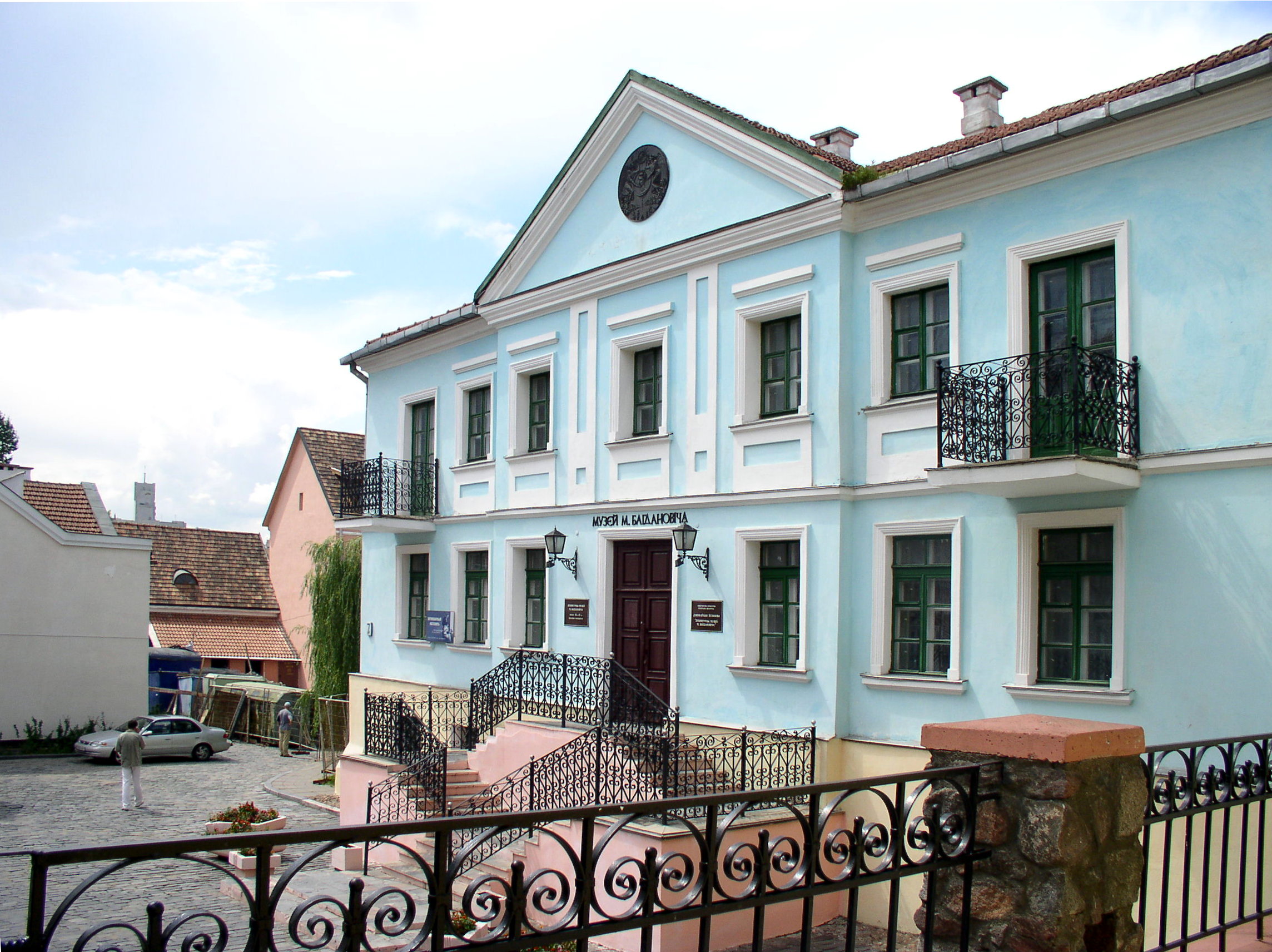
The Maksim Bahdanovich Literary Museum is a cultural institution in Minsk, Belarus, dedicated to the life and literary legacy of Maksim Bahdanovich (1891–1917), one of the most significant figures in Belarusian literature. Established in 1981, the museum is located in the historic Trinity Hill district, housed in a building that reflects the architectural character of the 19th-century city.
The museum's collection preserves the poet's personal belongings, original manuscripts, rare editions of his works, and photographs documenting his short but influential career. It serves as a center for literary research and public education, hosting exhibitions that explore the development of Belarusian national identity and the cultural atmosphere of the early 20th century.
Key Facts
- Materials
- Brick, Plaster
- Civilization
- Belarusian
- Accessibility
- Ground floor accessible
- Date(s)
- 1981
- Condition
- Well-maintained
- Original Function
- Literary Museum
- Key Figures
- Maksim Bahdanovich
Establishment
1981The museum was founded to commemorate the 90th anniversary of the birth of Maksim Bahdanovich, aiming to preserve the heritage of the poet who played a pivotal role in the Belarusian national revival.
Collection Development
1981-PresentOver the decades, the museum has expanded its holdings through the acquisition of family archives, correspondence, and rare publications, becoming the primary repository for research into Bahdanovich's life.
Modern Role
ContemporaryToday, the museum functions as a cultural hub, organizing literary readings, academic conferences, and temporary exhibitions that connect the poet's work to contemporary Belarusian culture.
Cultural Significance
The museum is central to the preservation of Belarusian literary heritage. Maksim Bahdanovich is revered for his ability to synthesize European modernist trends with Belarusian folk traditions, and the museum acts as a site of national memory, fostering appreciation for the Belarusian language and literature.
Interpretive Notes
Scholarly debates and areas of uncertainty
Discussions among scholars often focus on the interpretation of Bahdanovich's later works and the extent of his influence on the subsequent generation of Belarusian writers, as well as the preservation of his original manuscripts held across various international archives.
Visiting Information
Entry Rules
Open Tuesday through Sunday. Tickets can be purchased at the entrance. Guided tours are available upon request.
Best Times to Visit
Weekdays during morning hours are generally quieter for visitors interested in detailed study of the exhibits.
Photography
Personal photography is permitted without flash. Professional photography requires prior administrative approval.
Preservation Notes
Visitors are requested to refrain from touching the display cases and to maintain a quiet environment to preserve the museum's atmosphere.
Nearby POIs
11 shown- Holy Spirit Cathedral0.3 km
- Minsk City History Museum0.5 km
- Mini Museum0.7 km
- Belarusian National Arts Museum1.1 km
- Belarusian National History and Culture Museum1.3 km
- Church of Saints Simon and Helena1.4 km
- Belarusian Great Patriotic War Museum1.5 km
- Government House1.5 km
- St Elisabeth Convent5.4 km
- National Library of Belarus6.4 km
- Loshitsa Manor6.5 km
Sources & Further Reading
- [1]Maksim Bahdanovich: The Poet of the Belarusian Revival — V. A. Kovalenko. Belarusian Science Publishing (2001)
- [2]Literary Museums of Belarus — Ministry of Culture of the Republic of Belarus. State Museum History of Belarusian Literature (2015)
Key Facts
- Materials
- Brick, Plaster
- Civilization
- Belarusian
- Accessibility
- Ground floor accessible
- Date(s)
- 1981
- Condition
- Well-maintained
- Original Function
- Literary Museum
- Key Figures
- Maksim Bahdanovich
Nearby POIs
11 shown- Holy Spirit Cathedral0.3 km
- Minsk City History Museum0.5 km
- Mini Museum0.7 km
- Belarusian National Arts Museum1.1 km
- Belarusian National History and Culture Museum1.3 km
- Church of Saints Simon and Helena1.4 km
- Belarusian Great Patriotic War Museum1.5 km
- Government House1.5 km
- St Elisabeth Convent5.4 km
- National Library of Belarus6.4 km
- Loshitsa Manor6.5 km