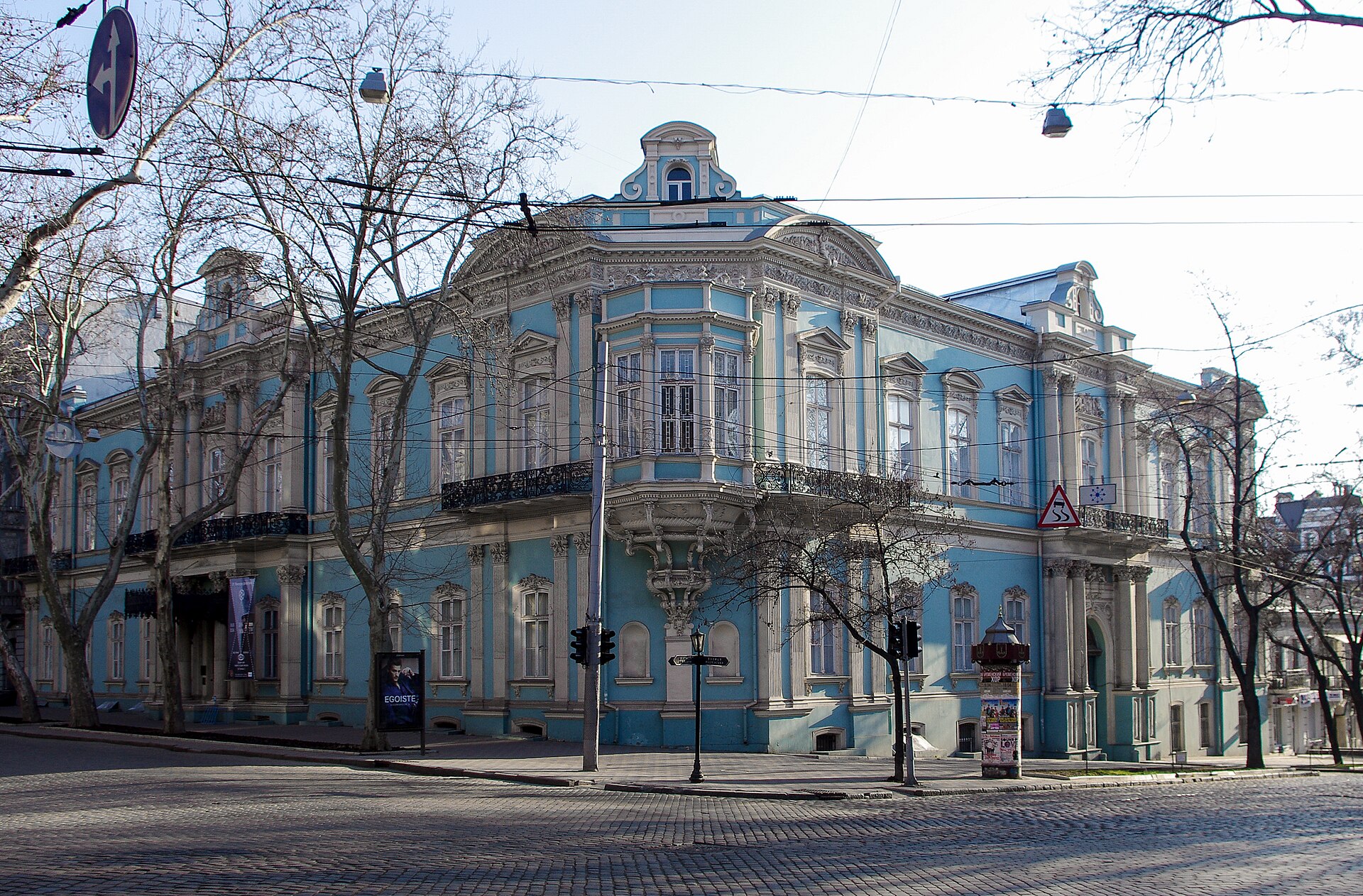
The Odessa Museum of Western and Eastern Art is housed in the historic Abaza Palace, a late 19th-century architectural landmark designed by architect Ludwig Otton. The museum was established in 1923, drawing its initial collection from private holdings confiscated during the post-revolutionary period, including items previously owned by the Naryshkin, Gagarin, and Tolstoy families.
The collection spans a vast chronological and geographical range, featuring European paintings, sculptures, and decorative arts from the 16th to the 20th centuries, alongside significant artifacts from East Asian cultures. The museum serves as a primary repository for Western European art in southern Ukraine, maintaining a diverse inventory that includes works by masters such as Caravaggio, Mignard, and Hals.
Key Facts
- Materials
- Stone, Stucco, Marble
- Civilization
- Russian Empire
- Accessibility
- Limited accessibility for mobility-impaired visitors due to historic architecture
- Date(s)
- 1856-1858
- Condition
- Active museum, currently undergoing preservation efforts
- Original Function
- Private residence (Abaza Palace)
- Key Figures
- Alexander Abaza, Ludwig Otton
The Abaza Palace
1856-1858The building was commissioned by Alexander Abaza, a prominent Odessa merchant and public figure. Designed by architect Ludwig Otton, the palace represents the eclectic style popular in 19th-century Odessa, blending Renaissance and Baroque influences.
Establishment of the Museum
1923Following the Russian Revolution, the Soviet authorities nationalized private art collections across the city. The museum was founded to consolidate these disparate works, utilizing the former Abaza Palace as its permanent home.
Wartime and Preservation
20th-21st CenturyThe museum survived the turbulence of World War II and the subsequent Soviet era. In recent years, the institution has focused on digital cataloging and international cooperation to preserve its collection against the threats posed by regional conflict.
Cultural Significance
The museum is a cornerstone of Odessa's cultural identity, reflecting the city's historical status as a cosmopolitan hub of trade and intellectual exchange. It preserves the legacy of the aristocratic families who shaped the city's development, while providing the public with access to global art history.
Interpretive Notes
Scholarly debates and areas of uncertainty
There is ongoing academic discussion regarding the provenance of specific items within the collection, particularly those acquired during the mass nationalizations of the 1920s. Researchers continue to work on identifying the original owners and the legal history of these acquisitions.
Visiting Information
Entry Rules
Open Tuesday through Sunday. Tickets are available at the entrance. Visitors are requested to refrain from touching exhibits and to follow standard museum conduct.
Best Times to Visit
Weekday mornings are recommended to avoid weekend crowds and to allow for a quieter viewing experience.
Photography
Non-commercial photography is permitted without flash. Professional photography or filming requires prior administrative approval.
Preservation Notes
The historic building requires careful climate control. Visitors are asked to avoid large bags and to adhere to designated walking paths to protect the original flooring and interior finishes.
Nearby POIs
5 shownSources & Further Reading
- [1]Odessa Museum of Western and Eastern Art: Official Guide — Museum Curatorial Staff. Odessa City Press (2015)
- [2]Architecture of Odessa: The Abaza Palace — V. Pilyavsky. Optimum (2008)
Key Facts
- Materials
- Stone, Stucco, Marble
- Civilization
- Russian Empire
- Accessibility
- Limited accessibility for mobility-impaired visitors due to historic architecture
- Date(s)
- 1856-1858
- Condition
- Active museum, currently undergoing preservation efforts
- Original Function
- Private residence (Abaza Palace)
- Key Figures
- Alexander Abaza, Ludwig Otton