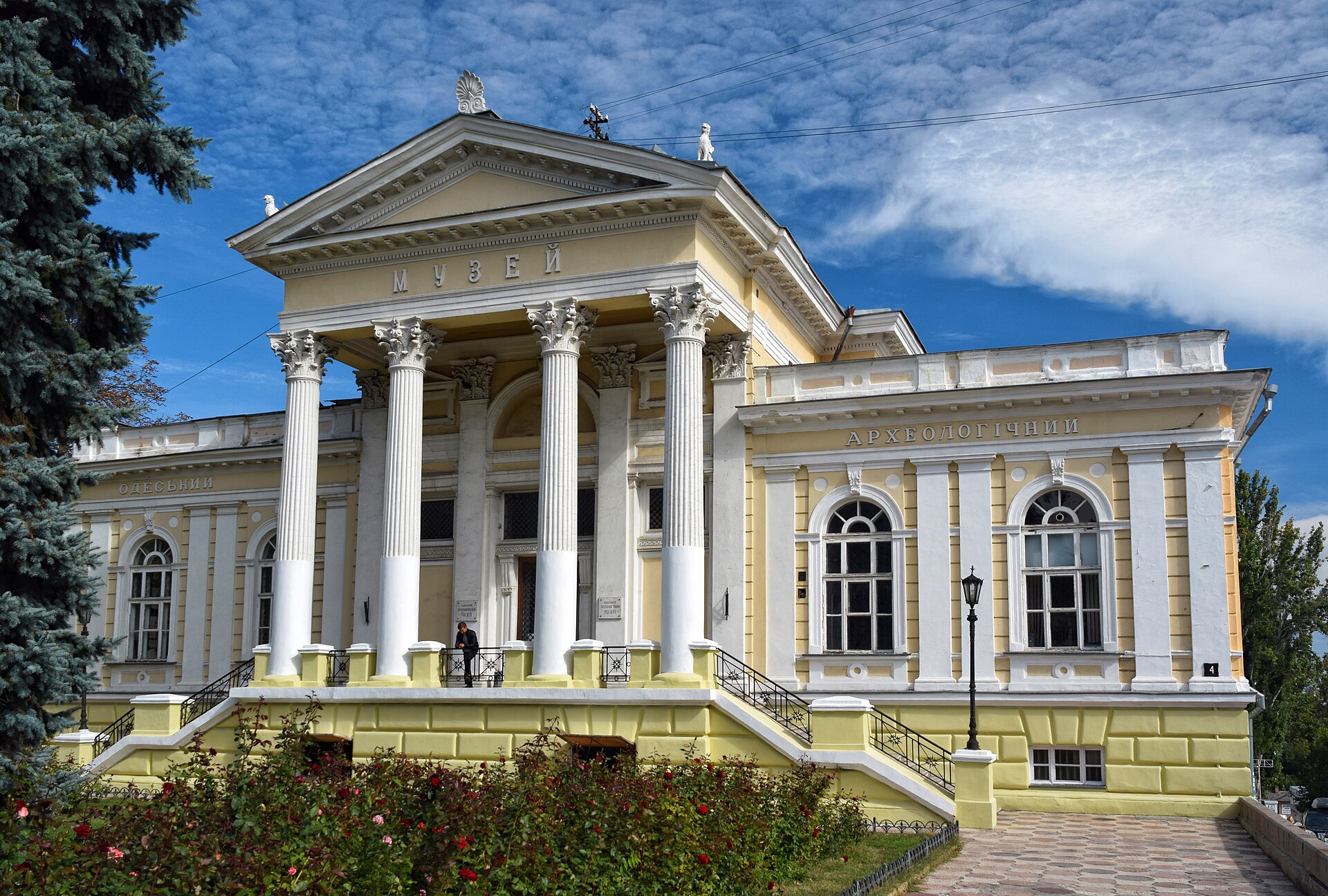
The Odessa Archaeological Museum is one of the oldest archaeological institutions in Ukraine, founded in 1825. It serves as a primary research center for the study of human history in the Northern Black Sea region, housing a vast collection that spans from the Paleolithic era to the Middle Ages.
The museum's collection includes significant artifacts from the ancient Greek colonies of the Black Sea, such as Olbia, Tyras, and Chersonesus. It is particularly noted for its extensive numismatic collection and its holdings of Scythian and Sarmatian gold, which provide critical insights into the nomadic cultures that once dominated the Eurasian steppes.
Key Facts
- Materials
- Stone, Brick, Stucco
- Civilization
- Russian Empire
- Accessibility
- Limited accessibility for mobility-impaired visitors
- Date(s)
- 1883 (current building)
- Condition
- Active, currently operating under wartime safety protocols
- Original Function
- Museum and scientific society
- Key Figures
- Ivan Blaramberg, Alexander von Nordmann
Foundation and Early Years
1825The museum was established by the Odessa Society of History and Antiquities, making it one of the first museums in the Russian Empire. Its initial collection was formed through donations from local collectors and archaeological finds from the surrounding southern steppes.
Construction of the Current Building
1883To accommodate the growing collection, a dedicated museum building was constructed in the neoclassical style, designed by architect Felix Gonsiorovsky. This building remains the museum's home today.
Soviet Era Expansion
20th CenturyDuring the Soviet period, the museum's holdings were significantly expanded through systematic excavations of ancient Greek settlements along the Black Sea coast and the integration of various private collections into the state repository.
Modern Challenges
2022-PresentFollowing the Russo-Ukrainian war, the museum has implemented strict preservation measures to protect its artifacts from potential damage, limiting public access and relocating sensitive items to secure storage.
Cultural Significance
The museum is a cornerstone of Odessa's cultural identity, preserving the complex multi-ethnic history of the Black Sea region. It acts as a vital link between the ancient civilizations of the Mediterranean and the development of early Slavic states.
Beyond its role as a repository, the museum remains a center for academic research, fostering international collaboration in archaeology and history. It is a symbol of the region's historical continuity despite the geopolitical shifts that have defined the area for centuries.
Interpretive Notes
Scholarly debates and areas of uncertainty
There is ongoing academic discussion regarding the provenance and classification of certain Scythian gold artifacts, particularly concerning their stylistic influences from both Greek and Persian traditions. Additionally, the interpretation of trade routes between the Greek colonies and the local nomadic tribes remains a subject of active research.
Visiting Information
Entry Rules
Open Tuesday through Sunday, 10:00 to 17:00. Visitors must comply with local security regulations and air raid protocols. Tickets are available at the entrance.
Best Times to Visit
Weekday mornings are recommended to avoid crowds and ensure a quieter viewing experience.
Photography
Personal photography is permitted without flash. Professional photography requires prior authorization from the museum administration.
Preservation Notes
Do not touch the artifacts or display cases. Due to the current security situation, some galleries may be closed or exhibits may be temporarily removed for safekeeping.
Nearby POIs
5 shownSources & Further Reading
- [1]The Odessa Archaeological Museum: A History — V. V. Stanko. Odessa University Press (2005)
- [2]Antiquities of the Northern Black Sea — O. D. Tsetskhladze. Oxford University Press (1998)
Key Facts
- Materials
- Stone, Brick, Stucco
- Civilization
- Russian Empire
- Accessibility
- Limited accessibility for mobility-impaired visitors
- Date(s)
- 1883 (current building)
- Condition
- Active, currently operating under wartime safety protocols
- Original Function
- Museum and scientific society
- Key Figures
- Ivan Blaramberg, Alexander von Nordmann