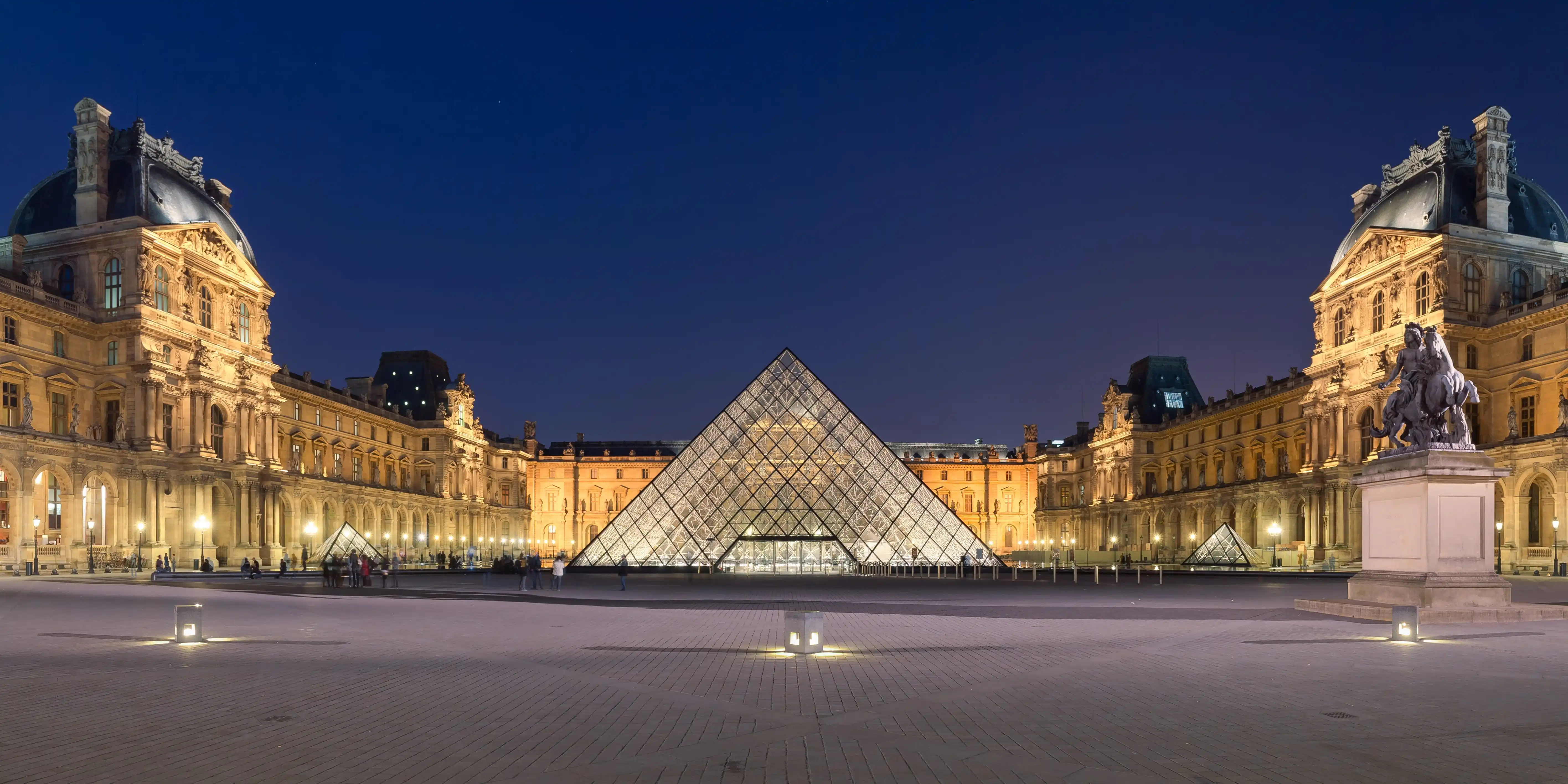
The Musée du Louvre is a national art museum housed in the former Louvre Palace in Paris. Originally constructed as a medieval fortress in the late 12th century under Philip II, the complex was expanded and transformed into a royal residence before becoming a public museum during the French Revolution in 1793. Today, it holds one of the largest and most historically significant art collections in the world, spanning antiquity to the 19th century.
Key Facts
- Materials
- Limestone, Glass (modern pyramid), Marble
- Civilization
- Kingdom of France; French Republic
- Date(s)
- Fortress: c. 1190; Museum established: 1793
- Condition
- Operational national museum
- Original Function
- Royal fortress and palace
- Key Figures
- Philip II, Francis I, Louis XIV, Napoleon I, I. M. Pei
Medieval Fortress
c. 1190Philip II constructed the original fortress to defend Paris from potential invasion. Portions of the medieval foundations remain visible in the museum’s lower levels.
Royal Palace Expansion
16th-17th centuriesUnder Francis I and subsequent monarchs, the fortress was transformed into a Renaissance and later classical palace. The royal art collections began expanding significantly during this period.
Revolutionary Transformation
1793During the French Revolution, the palace was converted into a public museum. Confiscated royal and church collections formed the foundation of the museum’s holdings.
Modernization and the Pyramid
1984-1989Architect I. M. Pei designed the glass pyramid entrance as part of the Grand Louvre project, modernizing circulation and expanding exhibition space.
Cultural Significance
The Louvre represents the transformation of royal collections into a public national institution, reflecting the political and cultural shifts of the French Revolution. Its collections, including works such as the Mona Lisa and the Venus de Milo, position it as a central institution in the global history of art.
Interpretive Notes
Scholarly debates and areas of uncertainty
Scholars debate the ethics of art acquisition during the Napoleonic era and the restitution of objects obtained through imperial expansion. The integration of I. M. Pei’s pyramid within the historic palace complex also generated architectural and preservation debates.
Visiting Information
Entry Rules
Paid admission required. Timed-entry tickets recommended. Security screening in place. Closed on Tuesdays.
Best Times to Visit
Early weekday mornings or late evenings (when extended hours are offered) reduce crowd density.
Photography
Personal photography permitted in permanent collections without flash. Temporary exhibitions may have additional restrictions.
Preservation Notes
Climate control and conservation measures regulate environmental conditions within galleries. Visitors must not touch artworks.
Nearby POIs
11 shownSources & Further Reading
- [1]The Louvre: The Many Lives of the World's Most Famous Museum — James Gardner. Grove Press (2020)
- [2]The Louvre — Georges Poisson. Abbeville Press (2000)
Key Facts
- Materials
- Limestone, Glass (modern pyramid), Marble
- Civilization
- Kingdom of France; French Republic
- Date(s)
- Fortress: c. 1190; Museum established: 1793
- Condition
- Operational national museum
- Original Function
- Royal fortress and palace
- Key Figures
- Philip II, Francis I, Louis XIV, Napoleon I, I. M. Pei