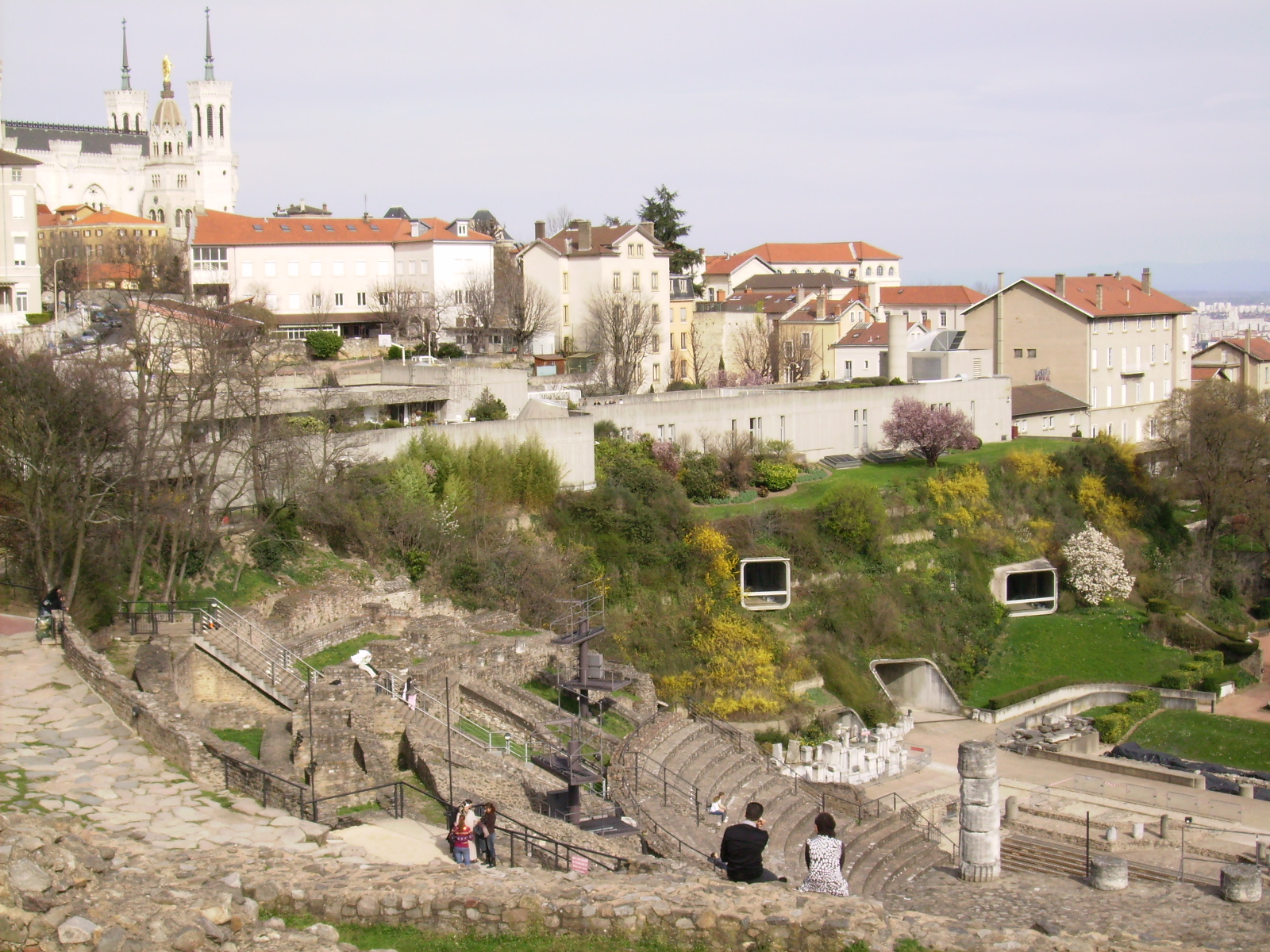
The Lugdunum museum is an archaeological facility built directly into the hillside of Fourvière in Lyon, France. Designed by architect Bernard Zehrfuss and opened in 1975, the structure is integrated into the landscape to overlook the adjacent Roman theaters, preserving the site of the ancient city of Lugdunum, which served as the capital of the Three Gauls.
The museum houses an extensive collection of artifacts recovered from the site, including the famous Claudian Tablet, mosaics, statues, and everyday objects that illustrate the urban, political, and religious life of the Roman colony. Its architecture is characterized by a concrete spiral ramp that guides visitors through the history of the city, connecting the museum's interior galleries to the outdoor archaeological park.
Key Facts
- Materials
- Concrete, Glass, Steel
- Civilization
- Roman
- Accessibility
- Fully wheelchair accessible
- Date(s)
- 1975
- Condition
- Active
- Original Function
- Archaeological museum
- Key Figures
- Bernard Zehrfuss, Augustus, Claudius
Foundation of Lugdunum
43 BCEThe Roman colony of Lugdunum was founded by Lucius Munatius Plancus on the Fourvière hill. It quickly became the administrative and economic hub of Roman Gaul due to its strategic location at the confluence of the Rhône and Saône rivers.
Imperial Prosperity
1st-2nd century CEDuring the early Empire, the city flourished as a major center of power. It was the birthplace of emperors Claudius and Caracalla, and featured monumental architecture including the grand theaters that remain visible today.
Museum Establishment
1975The modern museum was inaugurated to consolidate the archaeological findings from the Fourvière site. The building was designed to minimize visual impact on the historic hillside while providing a comprehensive narrative of the city's Roman past.
Cultural Significance
Lugdunum represents the intersection of Roman administrative power and local Gallic culture. The museum serves as a vital repository for the identity of Lyon, emphasizing its status as a former imperial capital and a crossroads of European history.
Interpretive Notes
Scholarly debates and areas of uncertainty
Debates persist regarding the exact layout of the ancient city's forum and the extent of the Romanization process among the local indigenous populations, as archaeological evidence continues to be re-evaluated through new excavation techniques.
Visiting Information
Entry Rules
Open Tuesday to Sunday. Tickets can be purchased on-site or online. Guided tours are available for the museum and the adjacent archaeological park.
Best Times to Visit
Weekday mornings to avoid school groups and weekend crowds. The outdoor theater area is best visited in late spring or early autumn.
Photography
Personal photography is permitted without flash or tripods. Professional photography requires prior authorization.
Preservation Notes
The museum maintains strict climate control for sensitive artifacts. Visitors are requested to refrain from touching display cases and to follow marked paths in the archaeological park.
Nearby POIs
8 shownSources & Further Reading
- [1]
- [2]The Roman City of Lugdunum — A. Audin. Presses Universitaires de Lyon (1981)
Key Facts
- Materials
- Concrete, Glass, Steel
- Civilization
- Roman
- Accessibility
- Fully wheelchair accessible
- Date(s)
- 1975
- Condition
- Active
- Original Function
- Archaeological museum
- Key Figures
- Bernard Zehrfuss, Augustus, Claudius