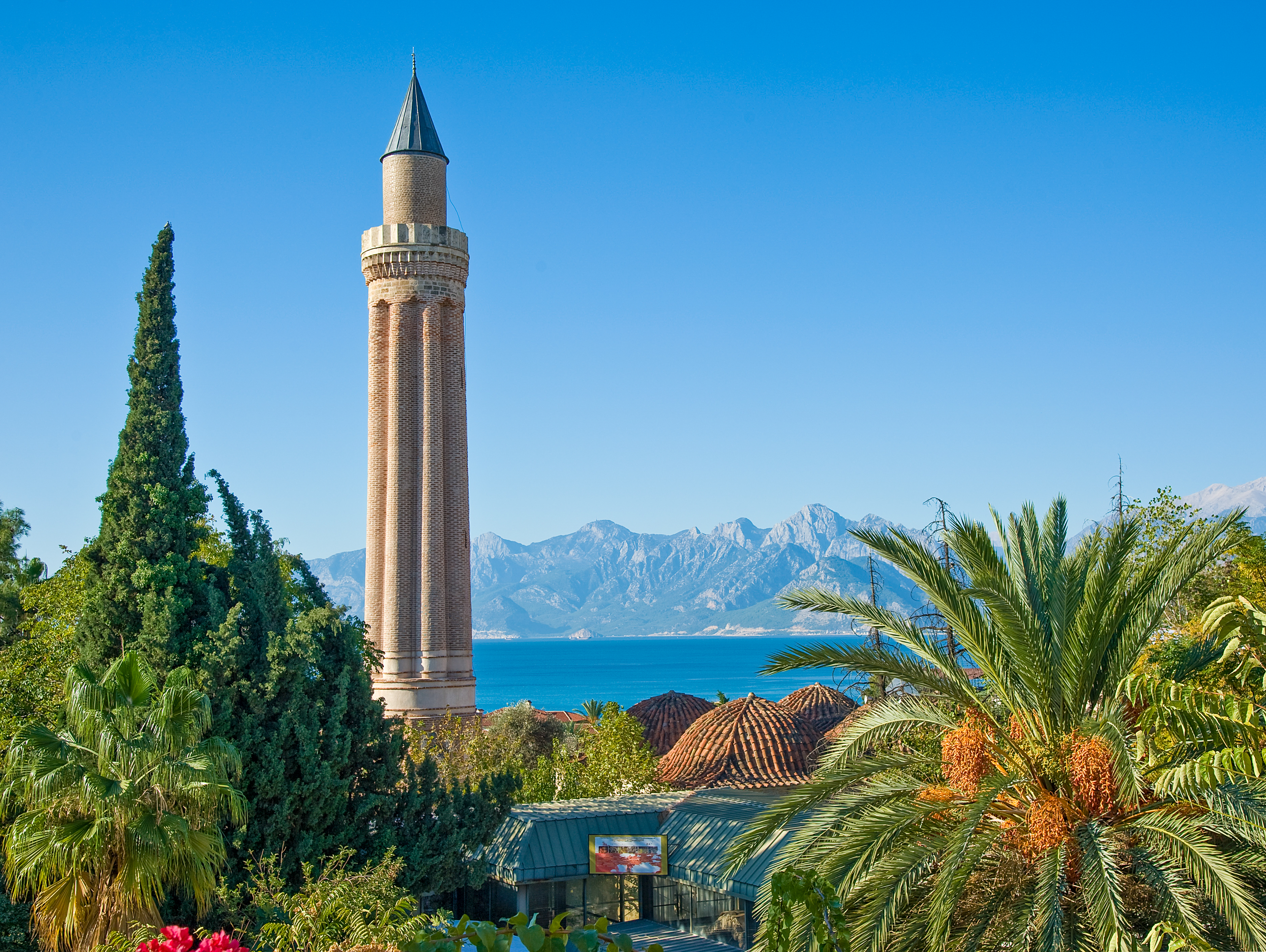
The Yivli Minaret Mosque, also known as the Alaaddin Mosque, is a historic religious complex located in the Kaleiçi district of Antalya. Commissioned by the Seljuk Sultan Kayqubad I in the early 13th century, the structure is most notable for its iconic fluted minaret, which stands 38 meters tall and serves as a primary landmark of the city. The minaret is constructed of brick and decorated with turquoise tiles, showcasing the sophisticated masonry techniques of the Seljuk era.
The mosque complex underwent significant reconstruction in the 14th century under the Hamidid dynasty, which added the current six-domed prayer hall. The site represents a synthesis of Seljuk architectural traditions and later regional styles, serving as a testament to the cultural and religious evolution of Antalya throughout the medieval period.
Key Facts
- Materials
- Brick, Turquoise tiles, Stone
- Civilization
- Seljuk Empire
- Accessibility
- Ground level access, limited interior space
- Date(s)
- 1230 CE (minaret); 1373 CE (mosque)
- Condition
- Well-preserved, active place of worship
- Original Function
- Congregational Mosque
- Key Figures
- Kayqubad I, Mehmed Bey
Seljuk Foundation
13th centuryThe minaret was commissioned by the Seljuk Sultan Kayqubad I. It was designed as a symbol of Seljuk authority in the newly conquered port city of Antalya, utilizing the distinctive fluted design that gives the structure its name.
Hamidid Reconstruction
14th centuryFollowing the decline of the Seljuk Sultanate, the mosque was rebuilt in 1373 by the Hamidid ruler Mehmed Bey. This phase saw the construction of the current six-domed prayer hall, which replaced the original Seljuk-era structure.
Modern Preservation
20th century - presentThe complex underwent extensive restoration in the 1950s and again in the 2010s to stabilize the masonry and preserve the original turquoise tile work. It currently functions as both an active mosque and a cultural museum site.
Cultural Significance
The Yivli Minaret is the primary symbol of Antalya, representing the city's transition from a Byzantine port to a major center of Islamic culture under the Seljuks. It serves as a focal point for the historic Kaleiçi district and remains a vital site for local religious practice and historical tourism.
Interpretive Notes
Scholarly debates and areas of uncertainty
There is ongoing academic discussion regarding the original appearance of the mosque before the 14th-century Hamidid reconstruction. While the minaret is firmly attributed to the Seljuk period, the exact layout of the original prayer hall remains a subject of archaeological speculation.
Visiting Information
Entry Rules
Open daily. As an active mosque, visitors should dress modestly. Entry is free, but the site is closed to tourists during daily prayer times and Friday noon prayers.
Best Times to Visit
Early morning or late afternoon to avoid the heat of the Antalya sun and peak tourist crowds in the surrounding Kaleiçi streets.
Photography
Photography is permitted in the courtyard and exterior. Flash photography is prohibited inside the prayer hall during active worship.
Nearby POIs
8 shownSources & Further Reading
- [1]The Art and Architecture of the Seljuks — Robert Hillenbrand. Yale University Press (1994)
- [2]Anatolian Seljuk Architecture — Oktay Aslanapa. Turkish Ministry of Culture (1971)
Key Facts
- Materials
- Brick, Turquoise tiles, Stone
- Civilization
- Seljuk Empire
- Accessibility
- Ground level access, limited interior space