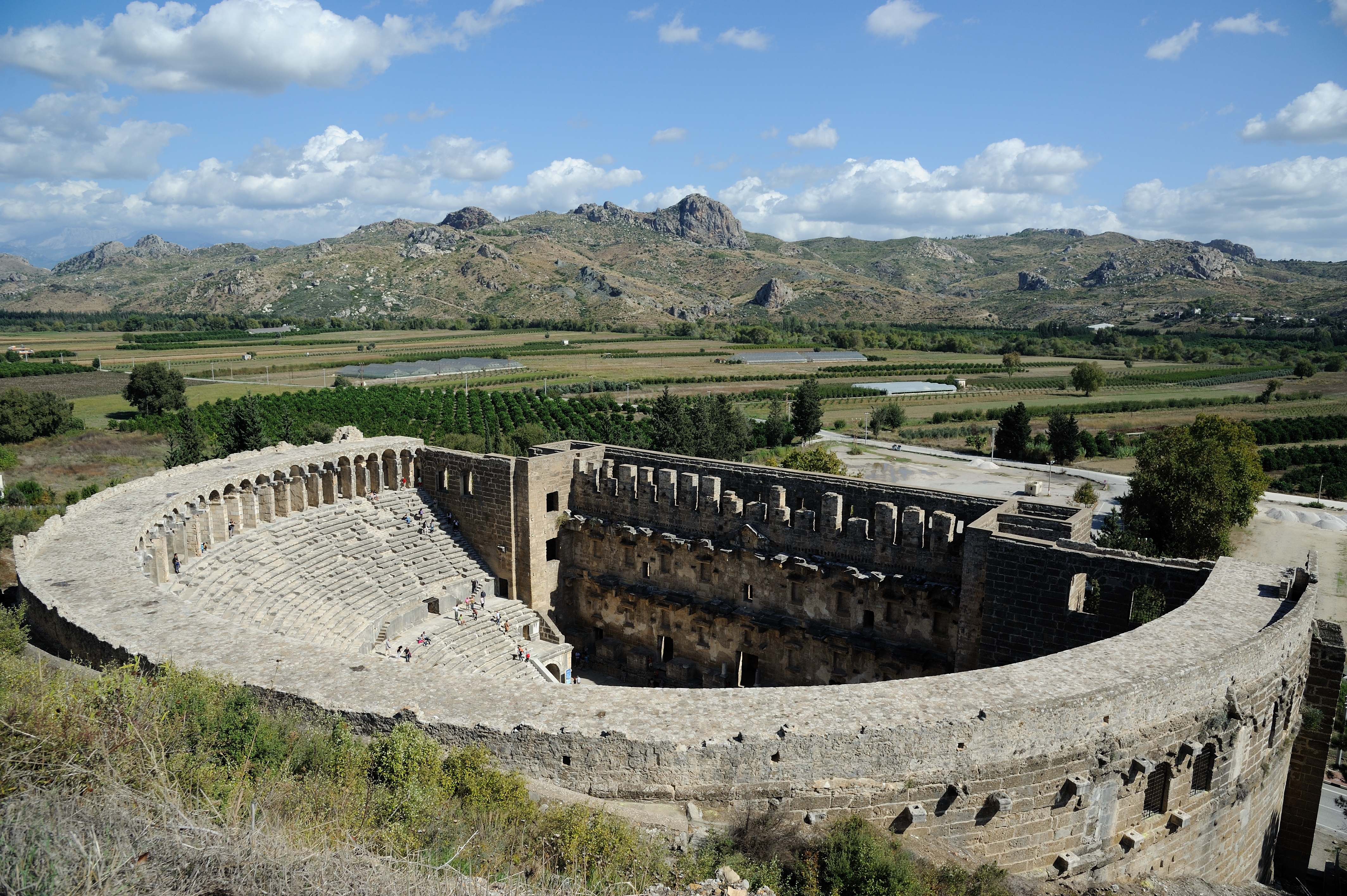
The Roman Theatre of Aspendos is widely considered one of the best-preserved ancient theatres in the world. Located in the ancient city of Aspendos in modern-day Serik, Turkey, it was constructed during the reign of Emperor Marcus Aurelius in the 2nd century CE. The structure is celebrated for its remarkably intact scaenae frons (stage wall), which retains its original height and architectural ornamentation.
Designed by the architect Zeno, the theatre features a massive auditorium built into the hillside, capable of seating approximately 15,000 spectators. Its sophisticated design provides exceptional acoustics, a feature that has allowed the venue to remain in active use for contemporary musical and theatrical performances, including the annual Aspendos International Opera and Ballet Festival.
Key Facts
- Materials
- Limestone, Marble
- Civilization
- Roman
- Accessibility
- Partial; steep stone seating may be difficult for those with limited mobility
- Date(s)
- 161-180 CE
- Condition
- Exceptionally well-preserved; active venue
- Original Function
- Theatrical performances and public spectacles
- Key Figures
- Marcus Aurelius, Zeno of Aspendos
Construction and Patronage
2nd century CEThe theatre was commissioned by two local brothers, A. Curtius Crispinus and A. Curtius Auspicatus, and dedicated to the gods and the imperial family during the reign of Marcus Aurelius. It was designed by the local architect Zeno.
Byzantine and Seljuk Use
5th-13th centuryFollowing the decline of the Roman Empire, the theatre was repurposed for various civic and religious functions. During the Seljuk period, the stage building was renovated and used as a caravanserai, which contributed to the preservation of the structure by protecting it from total abandonment.
Modern Preservation
20th century - presentIn the 1930s, Mustafa Kemal Atatürk visited the site and ordered its restoration. Since then, it has been maintained as a cultural landmark and continues to host major international festivals, balancing its role as an archaeological site with its function as a modern performance space.
Cultural Significance
The theatre serves as a primary symbol of Roman architectural engineering in Asia Minor. Its survival is often attributed to the Seljuk-era repurposing, which prevented the site from being used as a quarry for later construction, a fate that befell many other ancient structures in the region.
Today, it is a cornerstone of Turkish cultural tourism and a testament to the longevity of Roman civic design. The continued use of the theatre for opera and ballet bridges the gap between ancient public life and modern artistic expression.
Interpretive Notes
Scholarly debates and areas of uncertainty
There is ongoing academic discussion regarding the extent of the Seljuk-era modifications to the stage building. While these interventions are credited with the theatre's preservation, scholars debate how much of the original Roman decorative program was lost or altered during the conversion into a caravanserai.
Visiting Information
Entry Rules
Open daily. Ticket required for entry. Visitors are advised to wear comfortable footwear due to the steep stone steps of the cavea.
Best Times to Visit
Early morning or late afternoon to avoid peak heat and large tour groups. The summer months coincide with the International Opera and Ballet Festival.
Photography
Personal photography is permitted. Professional or commercial filming requires prior authorization from the Ministry of Culture and Tourism.
Nearby POIs
8 shownSources & Further Reading
- [1]
- [2]Aspendos: A History of the City and its Theatre — C. Bayburtluoğlu. Akdeniz University Press (2010)
Key Facts
- Materials
- Limestone, Marble
- Civilization
- Roman
- Accessibility
- Partial; steep stone seating may be difficult for those with limited mobility